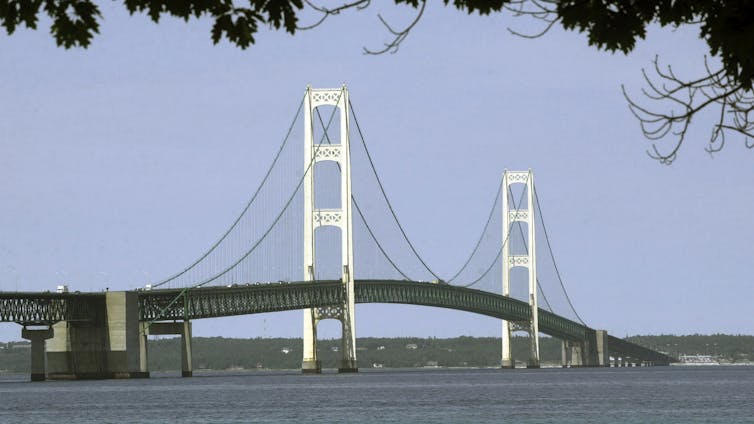
An oil pipeline runs under the Straits of Mackinac, connecting Lake Michigan and Lake Huron and separating Michigan’s Lower Peninsula from its Upper Peninsula.
AP Photo/Carlos OsorioMike Shriberg, University of Michigan
What began as a straightforward question from one water-quality advocate has morphed into a high-stakes battle over an oil pipeline at the highest levels of the U.S. government – with implications that go far beyond the fate of a technical legal conflict.
The question arose after a 2010 Enbridge Energy oil spill in Michigan. The advocate asked what other Michigan waterways were at risk from crude oil spills. But in the wake of, among other issues, two ships doing damage to an underwater section of another Enbridge oil pipeline, the conflict has now come all the way to the U.S. Supreme Court.
As a water policy scholar with a focus on the Great Lakes, I have participated directly in the Line 5 debate as a gubernatorial appointee to an advisory board, as well as analyzed its implications. I see this moment in the Supreme Court as one layer of a complex debate that Line 5 has stirred up about states’ rights, Indigenous rights and the future of the fossil fuel economy.
Enbridge Energy vs. Dana Nessel
The actual issue in front of the Supreme Court is procedural: In 2019, Michigan Attorney General Dana Nessel sued Enbridge in a Michigan state court, seeking to shut down the pipeline, alleging “violations of the public-trust doctrine, common-law public nuisance, and the Michigan Environmental Protection Act.” Federal law allowed Enbridge to seek to move the case to federal court within 30 days of the initial filing.
The specific question before the Supreme Court is a very technical legal one: Even though Enbridge failed to request the move to federal court in a timely way, should that prevent Enbridge from moving it later?
A sensitive waterway
There is no debate that Line 5’s crossing of the Straits of Mackinac – which separate Michigan’s Upper and Lower Peninsulas right where Lakes Michigan and Huron meet – lies within Michigan’s territorial boundaries.
The lawsuits from Nessel and Whitmer are attempting to stop Enbridge from operating the pipeline in this sensitive area of the Great Lakes.
But Enbridge is refusing to shut the pipeline down. The company says the dispute belongs in federal court because state laws and regulations generally do not apply to this pipeline, which carries mostly Canadian oil to mostly Canadian refineries, using Michigan and the Great Lakes as a shortcut. Enbridge maintains that a treaty with Canada supersedes state authority.
The ruling from the Supreme Court will likely be narrow and procedural. However, all parties seem to agree that the decision will also have much wider consequences, including being a key determinant and signal of states’ rights to protect their waterways and other natural resources in the face of industry opposition.
Bad River Band vs. Enbridge Energy
Meanwhile, in Wisconsin, the Line 5 oil pipeline passes through the reservation of the Bad River Band of Lake Superior Chippewa, and the pending legal outcome in a separate federal court case is well beyond procedural.
U.S. District Judge William Conley ruled in 2023 that Enbridge had been trespassing for 10 years and awarded US$3 million in damage payments. Conley gave Enbridge until June 2026 to find an alternative route around the Bad River Band’s land, or shut the pipeline down.
Line 5 cannot operate without the Bad River Band reservation section, but the deeper issue is about Indigenous peoples’ rights to control their own lands and future on reservations. If Enbridge wins, many analysts believe that Indigenous rights to self-determination on reservations will be significantly eroded.
Attempts to reroute
Enbridge has a two-pronged strategy to save Line 5 from decommissioning: fight in the courts against the state of Michigan and the Bad River Band, while simultaneously working to reroute the pipeline around these problematic areas.
In each case, the immediate issue is about the direct environmental impacts of the projects. But also in each case, the underlying battle is about the long-term effects of projects involving fossil fuels. Environmental advocates want the state and federal agencies to consider the permits in light of the potential for more climatic, health and environmental damage from burning the oil the pipeline carries. Enbridge and its allies want to focus narrowly on local ecological impacts and not on the larger debate about the future of fossil fuels.
The bigger debate
As the highest court in the land considers what some might see as a very mundane and localized issue, I believe it’s useful to peel back the layers and see deeper meaning. Jeffrey Insko, an American studies professor at Oakland University and tireless chronicler and analyst of the Line 5 saga, summarizes this depth well:
“If shutting down Line 5 were about nothing more than getting an aging pipeline out of the water, if it weren’t about addressing the climate crisis, about reducing fossil fuel consumption, about a habitable future, about cultivating better relations with the more-than-human world, about respecting Indigenous rights and lifeways, it wouldn’t be a movement worth having. It would just be a technical problem with a technical solution, one that basically accepts the way things are. But shutting down Line 5 is ultimately a step toward changing the way things are.”
The Supreme Court’s ruling may be on technical grounds, but its repercussions could be very wide indeed.
This story was updated Feb. 24, 2026, with the fact that oral arguments at the Supreme Court had concluded.
Mike Shriberg, Professor of Practice & Engagement, School for Environment & Sustainability; Director of the University of Michigan Water Center, University of Michigan
This article is republished from The Conversation under a Creative Commons license.
With temperatures forecasted to run at least 2 degrees higher than historical averages across more than half the country, according to projections from AccuWeather, heat waves may lead to soaring air-conditioning bills this summer.
“The summer is when we see homeowners strategizing about how to keep their homes cool and comfortable while sticking to their household budgets,” said Michael Williford, HVAC service manager at Hiller Plumbing, Heating, Cooling & Electrical. “We work with customers to keep their current HVAC systems running smoothly or upgrade to more efficient systems, which can make a huge difference in their utility bills. In addition, there are many other ways homeowners can keep their energy costs down during the hot summer months.”
Consider these smart, practical, cost-cutting tips for dialing down your energy bills.
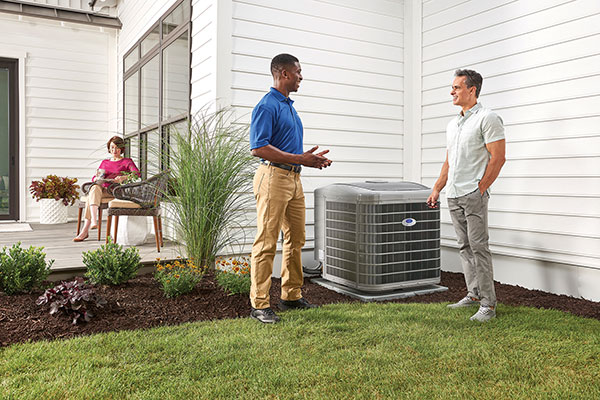
Service HVAC Systems Regularly To ensure the best cooling performance and efficiency possible, find a licensed contractor to keep your heating and cooling system well-maintained and serviced throughout the year. There are some tasks many homeowners can handle on their own, like keeping outdoor units free of debris and changing air filters. However, bringing in a professional 1-2 times a year for maintenance and to ensure proper function of ductwork and electrical components is also essential.
Use Appliances During Non-Peak Hours
Rather than using stoves, ovens and clothing dryers in the afternoon hours, consider doing so early in the morning or late in the evening. Peak time for many electricity providers is noon-6 p.m., meaning using appliances that heat up your home outside of this timeframe when conventional heating and cooling systems are likely running full throttle can help lower energy costs.
Upgrade Your Systems to an Energy-Saving Heat Pump
The Inflation Reduction Act (IRA) incentivizes homeowners who opt for energy-efficient HVAC upgrades, including qualified heat pumps, which can boost seasonal energy efficiency ratios and increase efficiencies. For example, Mitsubishi Electric heat pumps provide more energy-efficient cooling that may equal cost and energy savings as well as a reduced carbon footprint for homeowners. These systems are equipped with inverter or variable-speed technology that allows systems to automatically ramp up or down the required amount of energy depending on the room’s capacity. Although annual savings vary, some homeowners can save as much as $1,000 per year by switching to an all-electric heat pump.
Fire Up the Grill
When temperatures soar, use the grill for cooking to help lower energy usage and save on air-conditioning costs. Alternatively, toaster ovens, air fryers and slow cookers use less energy than larger conventional stoves or ovens. Get creative by cooking a pizza in a chiminea or smoking favorite meats as alternatives to using your oven.
Stop Cooling Empty Rooms
One mistake many homeowners make is forgetting to adjust their temperature settings when leaving the house. Whether you’re headed to the beach for the weekend or just headed to work for the day, blasting the air conditioner in an empty house can result in unnecessarily high utility bills. Multi-zone, all-electric heat pumps like those from Mitsubishi Electric allow homeowners to set the comfort level and adjust the temperature in each room, so you don’t have to waste energy cooling unoccupied rooms. With a smartphone app, you can even adjust the settings remotely.
Install a Smart Electric Panel
Installing a smart electrical panel alongside an all-electric heat pump enables homeowners to monitor and control energy consumption on-site or remotely using a smartphone for better overall efficiency and utility cost savings.
Harness the Sun’s Energy with Solar Panels
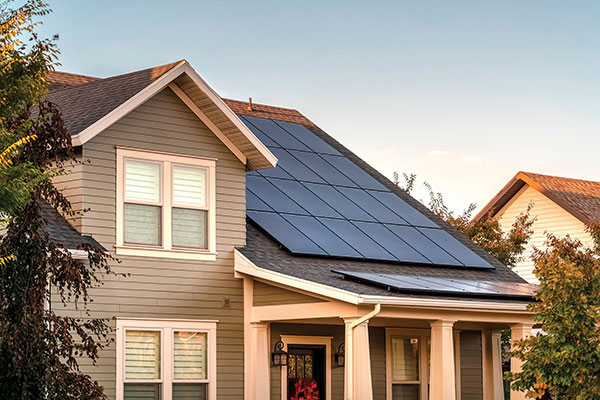
According to the Office of Energy Efficiency & Renewable Energy, the amount of sunlight that strikes the Earth’s surface in 90 minutes could power the world’s total energy usage for a full year. Investing in solar panels can help decrease energy bills and increase your home’s sustainability. Additionally, some utility providers and government entities, including the IRA, offer incentives to help reduce installation costs. Plus, solar-sourced power pairs well with all-climate heat pumps, which require minimal electricity to operate.
Find more ideas to dial down energy usage (and bills) this summer at MitsubishiComfort.com.
With temperatures forecasted to run at least 2 degrees higher than historical averages across more than half the country, according to projections from AccuWeather, heat waves may lead to soaring air-conditioning bills this summer.
“The summer is when we see homeowners strategizing about how to keep their homes cool and comfortable while sticking to their household budgets,” said Michael Williford, HVAC service manager at Hiller Plumbing, Heating, Cooling & Electrical. “We work with customers to keep their current HVAC systems running smoothly or upgrade to more efficient systems, which can make a huge difference in their utility bills. In addition, there are many other ways homeowners can keep their energy costs down during the hot summer months.”
Consider these smart, practical, cost-cutting tips for dialing down your energy bills.
Service HVAC Systems Regularly To ensure the best cooling performance and efficiency possible, find a licensed contractor to keep your heating and cooling system well-maintained and serviced throughout the year. There are some tasks many homeowners can handle on their own, like keeping outdoor units free of debris and changing air filters. However, bringing in a professional 1-2 times a year for maintenance and to ensure proper function of ductwork and electrical components is also essential.
Use Appliances During Non-Peak Hours
Rather than using stoves, ovens and clothing dryers in the afternoon hours, consider doing so early in the morning or late in the evening. Peak time for many electricity providers is noon-6 p.m., meaning using appliances that heat up your home outside of this timeframe when conventional heating and cooling systems are likely running full throttle can help lower energy costs.
Upgrade Your Systems to an Energy-Saving Heat Pump
The Inflation Reduction Act (IRA) incentivizes homeowners who opt for energy-efficient HVAC upgrades, including qualified heat pumps, which can boost seasonal energy efficiency ratios and increase efficiencies. For example, Mitsubishi Electric heat pumps provide more energy-efficient cooling that may equal cost and energy savings as well as a reduced carbon footprint for homeowners. These systems are equipped with inverter or variable-speed technology that allows systems to automatically ramp up or down the required amount of energy depending on the room’s capacity. Although annual savings vary, some homeowners can save as much as $1,000 per year by switching to an all-electric heat pump.
Fire Up the Grill
When temperatures soar, use the grill for cooking to help lower energy usage and save on air-conditioning costs. Alternatively, toaster ovens, air fryers and slow cookers use less energy than larger conventional stoves or ovens. Get creative by cooking a pizza in a chiminea or smoking favorite meats as alternatives to using your oven.
Stop Cooling Empty Rooms
One mistake many homeowners make is forgetting to adjust their temperature settings when leaving the house. Whether you’re headed to the beach for the weekend or just headed to work for the day, blasting the air conditioner in an empty house can result in unnecessarily high utility bills. Multi-zone, all-electric heat pumps like those from Mitsubishi Electric allow homeowners to set the comfort level and adjust the temperature in each room, so you don’t have to waste energy cooling unoccupied rooms. With a smartphone app, you can even adjust the settings remotely.
Install a Smart Electric Panel
Installing a smart electrical panel alongside an all-electric heat pump enables homeowners to monitor and control energy consumption on-site or remotely using a smartphone for better overall efficiency and utility cost savings.
Harness the Sun’s Energy with Solar Panels
According to the Office of Energy Efficiency & Renewable Energy, the amount of sunlight that strikes the Earth’s surface in 90 minutes could power the world’s total energy usage for a full year. Investing in solar panels can help decrease energy bills and increase your home’s sustainability. Additionally, some utility providers and government entities, including the IRA, offer incentives to help reduce installation costs. Plus, solar-sourced power pairs well with all-climate heat pumps, which require minimal electricity to operate.
Find more ideas to dial down energy usage (and bills) this summer at MitsubishiComfort.com.
Updating your HVAC (heating, ventilation and air conditioning) system to cool your home in a smart and sustainable way involves several steps that not only improve energy efficiency but also reduce environmental impact.
Consider these tips from the heating and cooling experts at Carrier to help make your cooling system more eco-friendly:
Upgrade to an Energy-Efficient HVAC System. If your HVAC system is outdated, consider replacing it with a more energy-efficient model. Look for systems with an Energy Star or high SEER2 (seasonal energy efficiency ratio) rating, which indicates better energy efficiency. The higher the SEER2 rating, the more efficient the unit. Financial incentives for installing a higher-efficiency system are available through the Inflation Reduction Act of 2022. You can also shop for rebates from manufacturers and utility companies.
Look for a Carbon-Free HVAC System. Heat pumps, ductless and VRF (variable refrigerant flow) systems that run on electricity and use low global-warming potential refrigerant, like Carrier’s Puron Advance, can help reduce your home’s negative impact on the environment.
Install a Smart Thermostat. A smart thermostat can be programmed based on your preferences and adjust temperatures automatically. These devices can be controlled remotely through smartphones and help reduce energy consumption by cooling your home only when necessary.
Conduct Regular Maintenance. Keep your HVAC system running efficiently with regular maintenance. This includes cleaning or replacing air filters every 1-3 months, checking refrigerant levels, cleaning outside condenser coils and ensuring the system’s components are in good, working condition and the airflow is not blocked.
Seal and Insulate. Improve your home’s insulation to maintain a consistent temperature. Seal windows, doors and any gaps or cracks to prevent cool air from escaping. This can significantly reduce the workload on your HVAC system.
Use Ceiling Fans. Ceiling fans can help circulate cool air throughout your home, allowing you to set the thermostat at a higher temperature without sacrificing comfort, thus saving energy.
Add Window Treatments. Use blinds, shades or curtains to block out sunlight and reduce heat gain during the hottest parts of the day. This simple step can make a big difference in how much your air conditioner needs to work.
Upgrade to a Variable-Speed Compressor. Traditional compressors operate at full power or not at all. However, a variable-speed compressor can adjust its output to match your cooling needs precisely, resulting in better efficiency, energy savings and improved indoor comfort.
Ventilate Properly. Ensure proper ventilation in your home, especially in areas like the kitchen and bathroom, to remove excess heat and humidity, which can reduce the need for air conditioning.
Update Roofing. If you’re replacing your roof, consider cool roofing materials that reflect more sunlight and absorb less heat than standard roofing materials, reducing the heat that enters your home.
By implementing these strategies, you can improve or update your HVAC system to cool your home more sustainably. Not only do these steps help the environment, they can also lead to lower energy bills and improved indoor comfort. Always consult with an HVAC professional to determine the best and most efficient options for your home and needs.
Find more information and tips to sustainably cool your home at Carrier.com.
(Joan Casanova) Have you ever wondered what’s in your favorite packaged foods, grabbed a box from your pantry, read the ingredients and realized you still didn’t know what you’re eating? The ingredients in some processed foods can read like a chemist’s shopping list. Now imagine if backyard birds could read. What would they say about the ingredients in the food you feed them?
A growing number of Americans are choosing natural foods for their pets; nearly one-third say they prefer natural products, according to PetFoodIndustry.com. People who feed wild birds also want to know they’re feeding the most natural and nutritious options. It’s hard to be confident when reading the mystifying ingredient list on feed bags makes you feel like a bird brain.
With an abundance of options, ranging from commercial bird feeds to small-batch varieties, understanding the differences can help bird lovers make informed choices to meet wild birds’ nutritional needs while considering factors like sustainability and quality.
The wild bird experts at Cole’s Wild Bird Products, Co. offer these tips to ensure you’re feeding your feathered friends a healthy, natural diet.
While commercial bird feeds aim to provide basic nutrition for birds, the quality and nutritional content can vary. Some mixes contain a high proportion of less desirable seeds and fillers, offering limited nutritional value.
Small batch bird feeds prioritize nutritional content, using premium ingredients rich in essential nutrients, fats and proteins. This can provide birds with a more balanced diet, promoting overall health and vitality.
Avoid commercial bird feeds that are full of cheap fillers, such as red milo, millet, cracked corn, oats and wheat. Fillers lack nutritional value and birds will kick them right out of the feeder.
Instead, select small batch, natural feed comprised of top-of-the-crop seeds which contain no chemicals or mineral oil like Cole’s and bypass seed coated with them. Some commercial bird feeds are coated with mineral oil and mixed with crushed rock to add “vitamins.” Current regulations allow manufacturers to list nutritional components of mineral oil (iron, zinc) and crushed rock (vitamin A, calcium carbonate) separately, which can make the ingredients look more impressive. Mineral oil makes birdseed shiny and helps hide dirt and dust, and crushed rock adds weight to the product.
Take note of ingredients you can’t read; often it’s an indication the ingredient is synthetic or lab engineered. Ingredients like menadione sodium bisulfite complex and thiamine mononitrate aren’t found in natural foods; they’re man-made versions of vitamins. The rule of thumb for buying all-natural is “If you can't read it, don't feed it.”
Focus on serving feed with an ingredient list you can read and understand. For instance, Cole’s Sunflower Meats contains nothing but shelled sunflower seeds and White Millet contains 100% white millet. Super simple, right?
Study birds visiting your feeders and research feed they prefer or buy feed from a reputable company that’s done that work for you. For example, Cole’s offers select natural seed choices developed and based on research about what birds actually eat. Feed is specifically formulated to attract certain species of birds as well as the largest number of birds. No cheap filler seeds are used and seed is cleaned to ensure quality – no sticks and dirt. When you know and serve what backyard birds prefer, they’ll keep coming back for more.
Supplement seed with natural foods you have at home. For example, woodpeckers love raw peanuts, mockingbirds love fruit and chickadees savor suet. Soak raisins and currants in water overnight then serve or purchase blends with a dried fruit and nut mixture, like Nutberry suet. To attract orioles, skewer halved oranges on a spike near feeders.
Buy feed from companies specializing in wild bird food. Some offer bird feed as a side product of pet products or grass seed producers. Conversely, Cole’s exclusively produces and sells products for feeding backyard birds. Seeds are packaged like human food in “Harvest Fresh Lock” packaging so seeds don’t lose nutritional content or dry out and spoil.
To learn more about all-natural feed options with ingredients even birds could understand, visit coleswildbird.com.
Rents across the U.S. have climbed to staggering levels in recent years. Millions of renters spend more than 30% of their income on rent and utilities, a situation that housing experts call being cost burdened.
High rents affect almost all segments of the population but are an especially heavy burden for immigrants, particularly those who have not yet become U.S. citizens. Immigrants, both documented and undocumented, play important roles in the U.S. economy. They often provide the cheapest labor in the riskiest of industries. Yet they are still not broadly accepted or supported in many U.S. cities.
We are geographers who study housing market issues, including racial-ethnic diversity and housing affordability. Our research on Nashville, which has emerged as an immigrant metropolis in the Southern U.S., suggests that foreign-born residents who are not yet citizens are far more burdened by high rents than other groups.
Many immigrant workers in Nashville spend more than 50% of their incomes on rent. This makes it hard for them to afford education and job training, healthy food, health care and other necessities that can help them participate as productive residents. Heavy rent burdens undermine their ability to have a higher standard of living and to be included in mainstream society.
As immigrants increasingly fan out across the U.S., we believe cities receiving new foreign-born residents should anticipate a growing need for affordable housing.
A 2022 study found that immigrant families in San Diego faced some of the highest rent burdens in the surrounding county.
Today about 37% of U.S. homes are occupied by renters. By 2020, almost 46% of U.S. renters paid more than 30% of their household income toward rent. As of June 2021, the median monthly rent in the 50 largest U.S. cities was $1,575 – an 8.1% increase from June 2020.
The heaviest rent burdens fall disproportionately on minorities. Almost 46% of African American-led renter households are rent burdened, compared with 34% of white households.
The COVID-19 pandemic worsened housing insecurity for people of color because of longstanding racially targeted policies and widespread health and economic disparities. Renters of color faced higher cost burdens and eviction rates. In Nashville, this was especially true in Latino and Somali communities.
Foreign-born residents make up 7.15% of the U.S. population today. Most of these immigrants are not citizens, although more than 878,000 people became citizens in 2023. The median length of time these new citizens spent in the U.S. before becoming naturalized was seven years.
Nashville is the largest metropolis in Tennessee and one of the fastest-growing immigrant gateways in the South. It is home to over 37% of Tennessee’s Latino population and has been a major destination for Latinos and other foreign-born residents since the early 2000s.
For our research, we used census data estimates for 2015-19 from the National Historical Geographic Information System covering metro Nashville’s 13 counties, which contain 372 census tracts. We found that Nashville’s most racially and ethnically diverse neighborhoods had the highest levels of rent burden.
This includes census tracts with high shares of foreign-born residents who are not yet citizens, especially if those residents are Black or Latino. Our analysis of the 37 census tracts (10% of the region’s total) with the largest shares of foreign-born residents who are not yet citizens shows that the average monthly rent paid by a household in these tracts was $1,306.20, compared with $1,288.70 metrowide.
In the 37 tracts with the largest shares of Latino residents and Black residents, we found that about 21% of households spent more than 50% of their household income on rent.
Our findings corroborate other scholarly analyses of Nashville’s Somali refugees, who tend to be clustered in communities that also house other diverse groups, including Egyptians and other African immigrants. In these areas, gentrification and urban renewal have forced several Black and Somali communities from ownership into renting.
More encouragingly, we found that tracts with newer housing stock, built since 2000, have relatively lower rent burdens even though those tracts are home to many Black and non-Asian minority residents. This suggests that newer development has an important role to play in mitigating rent, especially in suburban, relatively affordable locations. In the 37 census tracts with the most foreign-born residents who are not yet citizens, about 28% of the total housing stock was built in 2000 or later, compared with 23% across Nashville.
Federal, state and city officials break ground in 2022 on a mixed-income residential development at Cayce Place, Nashville’s largest subsidized housing property. The city is replacing aging structures on the site, built between 1941 and 1954.Metropolitan Development and Housing Agency, CC BY-ND
Easing rent burdens
One of the best ways to mitigate rent burdens is to build more housing and create affordable housing. However, communities sometimes oppose affordable housing projects and pro-development zoning because of fears of crime, traffic congestion or populations viewed as undesirable. Nashville is not immune to this syndrome.
However, critics argue that the council gives too much weight to anti-development arguments. And there is little discussion of specific ways to help groups that are ineligible for benefits and assistance that are available to U.S. citizens.
Members of the Tennessee Immigrant & Refugee Rights Coalition celebrate on March 26, 2019, after the defeat of a state bill that would have barred most landlords from renting housing to people in the U.S. illegally.AP Photo/Jonathan Mattise
A priority for cities
Our research shows that creating more rental opportunities can help reduce rent burdens for all. We see great potential to take this research further through community-based investigations of local nuances that may add to rent burdens, especially factors and processes that can’t be adequately captured in quantitative data analysis. Many local actors have important roles to play, including elected officials and local nonprofits and community organizations that work to promote rights for immigrants and refugees.
Given the important role that immigrants play in filling jobs and contributing to local economies, we believe that helping them afford housing is a smart strategy, especially for growth-oriented cities.
Madhuri Sharma, Associate Professor of Geography, University of Tennessee and Mikhail Samarin, Lecturer in Geography and Sustainability, University of Tennessee
This article is republished from The Conversation under a Creative Commons license.
Is nuclear power a necessary part of the energy transition away from fossil fuels? As the debate rages on, new technologies and smaller reactors may be shifting the balance.
By Nicola Jones
In an online video from Ultra Safe Nuclear Corporation, a cartoon simulation shows a tsunami wiping out one of their future nuclear power stations and cutting off power. What happens next? Not much: The reactor quietly shuts itself down. “It cools off just by sitting there, no moving parts or fluids, no operator actions,” says the reassuring video. “We’ve designed a reactor that is inherently safe no matter the events.”
The Seattle-based Ultra Safe and dozens of other companies like it are at the forefront of a global nuclear energy revival. As the world urgently needs to wean itself off fossil fuels, reduce greenhouse gas emissions and get the planet’s temperature under control, policymakers, companies and researchers are reexamining nuclear energy as a green alternative that can help bolster the power produced by renewables like wind and solar. Today the industry is emerging from a period of stagnation, with a promise to double or triple its capacity by 2050.
That revival is undergirded by two hot technology trends. Companies like Ultra Safe are aiming to build small modular reactors (SMRs) designed to be just a fraction of the size of former plants, to reduce both building costs and the scope of possible disasters. And many are aiming to utilize new technologies designed to make meltdown accidents impossible and to create less long-lived waste.
This video (from Ultra Safe Nuclear Corporation, a nuclear power company) shows the safety features built into a design for a small modular reactor.
CREDIT: ULTRA SAFE NUCLEAR CORPORATION
But the surge in interest is not without controversy. As with everything in the nuclear landscape, debate rages about whether society actually needs nuclear to tackle climate change, and whether the new systems are as shiny as they seem — with reasonable arguments for and against every promise and risk. Some say the new technologies could offer a fantastic solution to our energy woes; others say nuclear is beset with so many environmental, social and economic problems that it is best abandoned in favor of other ways to meet the globe’s energy demands.
The next few years will decide what course nuclear power takes in the world’s energy future. “This is a moment of truth,” says Francesca Giovannini, a nuclear policy expert at the Harvard Kennedy School. Over the next few decades, nuclear power is “either going to make it, or that industry is fundamentally done for. ... It’s 50/50 how this goes.”
Ups and downs in nuclear power output
Nuclear power poses some obvious risks — meltdown accidents, nuclear fuel being diverted to weapons programs, environmental issues posed by mining for uranium, the problems of storing nuclear waste. Against a backdrop of such concerns, alongside shifting economics of energy production, nuclear power production started to level off in the early 2000s and even dipped briefly after the Fukushima power plant accident of 2011. Some nations, most notably Germany, decided to shutter their nuclear programs entirely. But global nuclear power production is now starting to inch upward again.
Today, nuclear plants produce about 10 percent of global electricity, making nuclear the second largest source of non-fossil-fuel energy after hydropower. There are about 440 nuclear power plants in operation globally; another 60 or so are now being built, and around 100 are on order or planned.
Most Intergovernmental Panel on Climate Change scenarios for keeping the world below 1.5 degrees Celsius of warming include some kind of increase in nuclear power capacity. In the International Energy Agency’s (IEA) pathway to net zero, global nuclear power production doubles over 2022 levels by 2050. A key reason for this is that nuclear is seen as a good way to provide consistent baseload power to prop up more variable renewable sources of energy like wind or solar. Without nuclear, advocates say, we would need to build far more wind and solar power plants to ensure reliable supplies, doubling or tripling costs over power networks that include nuclear.
Nuclear has plenty of advantages: It produces no carbon emissions (and, counterintuitively, releases less radioactive uranium and other elements into the environment than burning coal does). It takes up a lot less land than renewables, a not insignificant consideration. If the goal is to decarbonize quickly and with as little social pain as possible, “nuclear is essential,” says Kai Vetter, a nuclear physicist at the University of California, Berkeley.
At the UN’s Convention on Climate Change meeting in Dubai in December 2023, more than 20 nations signed a declaration to triple nuclear capacity by 2050. And cash is flowing into this effort. In 2020, the US Department of Energy (DOE) notably gave $160 million for two demonstration plants to get up and running by 2027. And in 2022, the European Union declared that some nuclear projects could call themselves “green” in the same way as renewables, opening the door to environmental financing mechanisms.
But as with almost every issue relating to nuclear power, the arguments in favor of nuclear have their detractors. Public policy expert M.V. Ramana at the University of British Columbia is one of many, for example, who say that baseload power is an outdated concept. A smart, diverse and flexible electric grid, they argue, can assure a reliable power supply by shunting power among sources and storage facilities.
And with the cost of renewables falling fast, today’s economic estimates about the relative costs of power sources may not mean much in the future.
Then there’s the question of safety. The grand total of lives lost from all nuclear power generation to date, while hard to quantify, is certainly far lower than the number of people killed by air pollution related to the burning of fossil fuels; a recent paper by NASA scientists concluded that nuclear power saved roughly 1.8 million lives from 1971 to 2009 thanks to avoided air pollution. By some accounts nuclear power has also proved less deadly than wind power, which has been linked to drownings at offshore wind farm sites and helicopter collisions with turbines.
But fatality is arguably a blunt way to measure the impacts of the nuclear industry, which also include the risk of accidents contaminating large tracts of land, plus numerous other effects related to such things as mining and waste storage. Ramana has documented how the burden of these last issues falls disproportionately on Indigenous anddisempowered communities, working against the goals of social justice. Nuclear power, he writes, “does not fit with any idea of a responsible and cleaner energy system.”
Small and shiny: New nuclear technologies
If we are to pursue nuclear power at the scale called for by the IEA, it will take a herculean effort. The IEA’s pathway requires the world to ramp up from building five big nuclear plants per year to 20 per year over the next decade. Big plants typically cost billions of dollars and come with big financial risks. Westinghouse Electric Company, for example, recently filed for bankruptcy in the face of billions of dollars of cost overruns during the construction of four nuclear plants in the United States.
One plan for reducing those epic and prohibitive costs is to build small modular reactors, ranging from reactors that can be shipped on a truck and produce a couple of hundred megawatts, to tiny single-megawatt sizes that are more akin to hefty diesel generators. The modules could be pre-built in a factory and shipped to a site for installation. All this should make these reactors less frightening prospects for investors (though the end price per unit of electricity might wind up higher than that from a larger nuclear power plant).
A handful of SMRs are already in operation in Russia, China and India. Dozens more are in development. Canada has a national SMR action plan, and as of 2021 there were 10 SMR proposals under review (including one from Ultra Safe).
But so far, the promise of enticingly low costs for SMR builds hasn’t materialized, says Granger Morgan, a physicist and codirector of the Center for Climate and Energy Decision Making at Carnegie Mellon. Morgan has crunched the numbers for nuclear in the US and was disappointed. “I thought SMRs were going to hold much more promise, but we can’t make the numbers wash,” he says.
That message was hammered home in November 2023 when the company NuScale scrapped its high-profile advanced plans to build an underground SMR in Idaho in the face of cost hikes. “Would it be nice to have nuclear? Yes absolutely,” says Morgan. “Will it be affordable? That’s very much an open question.”
Others argue that small isn’t always beautiful. While smaller plants present a smaller risk from smaller potential accidents, this strategy also means more plants overall, which means more facilities to protect against theft and terrorism. “You have way more fissile material dispersed; you will have to secure way more infrastructure,” says Giovannini. “I mean, that becomes a mess.”
Next generation nuclear
While some are focusing on making nuclear plants smaller, there’s a parallel movement to make them safer and more efficient. The next generation of reactor designs — Generation IV, in the industry’s lingo — includes a suite of six major reactor families, all very different from today’s standard, each with many possible variants under development. Much of the attention (particularly in the US) has been focused on three of these: high-temperature gas-cooled, molten salt and sodium-cooled.
The ideas behind these technologies, and even some early-stage power plants, have been around for decades. But the new variants of these old ideas combine novel fuels and designs, promising to be safer, more efficient and environmentally friendly. “They’re doing all kinds of whizz-bang, high-tech stuff,” says Morgan, who has no doubt that newer reactors can be made safer than old ones.
Most existing reactors are water-cooled uranium systems, which were chosen as the dominant technology largely as a quirk of history. Like all reactor types, they have their pros and cons. They need high pressures to stop their coolant waters from boiling off at typical operating temperatures around 300 degrees Celsius. And they are designed to work with relatively slow-moving neutrons — the subatomic particles that collide with nuclear fuel to initiate nuclear fission. Slow-moving neutrons are more likely to interact with fuel particles, but systems that use them are also limited in the kinds of fuels they can use. Catastrophe can strike if the fission reaction runs amok or the reactor gets too hot and the core “melts down,” as happened at Three Mile Island, Chernobyl and Fukushima, spewing radiation into the environment.
The latest models of water-cooled reactors (sometimes called Gen III Plus, including many SMRs) use new design tricks to reduce the number of safety systems that require human intervention, aiming to stop accidents in their tracks automatically. Gen IV reactors, though, use entirely different coolant materials, are usually designed to operate at higher, more efficient temperatures, and often use faster-speed neutrons that can convert the most prevalent natural isotopes of uranium into usable fuel, or even feed on nuclear waste.
High-temperature gas-cooled reactors, for example, run at temperatures up to 950°C, making them 20 to 33 percent more thermally efficient than water-cooled reactors. Since the core materials used in these reactors are typically stable up to 1,600°C, which is hotter than lava, there’s a large margin of safety. The reactor in Ultra Safe’s video is an SMR that falls into this category; its small size helps, too, with passive cooling. Ultra Safe also makes their own fuel pellets, encased in a bespoke material that they say retains radioactive materials even in extreme conditions. They’re hoping to build their first commercial micro-reactor in Canada.
In molten salt reactors, both fuel and coolant are already liquid. So meltdowns, in the traditional sense, are impossible. And liquid-sodium-cooled reactors have a built-in safety feature: If they heat up, the liquid sodium expands and allows more neutrons to escape through the gaps between atoms, so the reaction (which is driven by neutrons) naturally winds down. The US Department of Energy has funded the US company TerraPower (which has Bill Gates as a major investor) to build a demonstration plant of its sodium-cooled Natrium reactor in Wyoming by 2030.
Nuclear waste not, want not
Waste is one area where the new designs really see some significant improvements, says Giovannini. “None of the reactors have entirely solved the problem of nuclear waste, but they do provide some significant solutions in terms of quantity,” she says. The spent fuel from traditional light water reactors needs to be buried in special repositories for hundreds of thousands of years, because of the production of long-lived radioactive byproducts. Some Gen IV reactors, on the other hand, can transform spent fuel into more fissile isotopes and use it for further fission reactions. This can improve efficiency and produce waste that need only be stored for hundreds of years.
Not everyone, though, thinks all these systems are as shiny as they seem. In 2021, the Union of Concerned Scientists published a report entitled “‘Advanced’ Isn’t Always Better,” in which they highlighted issues with safety, sustainability and nuclear proliferation. They concluded that nearly all the Gen IV reactor types “fail to provide significant enough improvements over [light water reactors] to justify their considerable risks.”
The report was criticized by some for being ideologically antinuclear, says Giovannini. But, she says, “it was very fair” to point out that new tech comes with new worries. Liquid salt, the report pointed out, is corrosive; liquid sodium metal can burst into flame when in contact with water or air. High-temperature gas-cooled reactors, the report concluded, while tolerant of high temperatures, are “far from meltdown-proof, as some claim.”
Hot idea
Many of these Gen IV systems offer another key benefit: Their higher temperatures can provide not just electricity but also useful heat. This could be used in many industrial processes, such as the production of steel, cement and fertilizer, which currently burn a lot of fossil fuels in their furnaces.
“That heat is pretty much for free,” says Vetter, who sees a particular utility for nuclear heat in desalination, getting clean drinking water out of saltwater as is done at the Diablo Canyon nuclear power plant in California. Indeed, X-energy, a leading US Gen IV nuclear company funded by the DOE, has partnered with Dow chemical company to build its first high-temperature gas-cooled reactor at a Dow chemical production site by 2030. Morgan, though, thinks that most industries will balk at the set-up costs.
Even if Gen IV reactors turn out to be technically superior, though, it may be decades before they can be thoroughly tested, passed by regulators and built at commercial scale. With little time to spare in the fight against climate change, the world might be better off simply ramping up old reactor designs that are already proven, says Esam Hussein, a retired nuclear engineer from the University of Regina, Canada.“We have the operating experience, we have the regulatory framework,” he says. “If the goal is to fight climate change, why don’t you go with the devil you know?”
In response to why we need a devil at all, many are quick to point out that no energy solution is problem-free, including renewables. Giovannini says she agrees with the nuclear industry’s criticism that we have “jumped on renewables in a very uncritical way.” Wind and solar require electronics and battery banks to store their energy; these in turn need elements like lithium and cobalt that can come with environmental and social justice issues from mining. “Nothing is 100 percent safe,” says Vetter.
It is hard for many to swallow data, assurances and statistics about nuclear, given its history and the huge amounts of money at stake. “I think the nuclear industry is selling a bunch of bullshit most of the time,” says Giovannini, who has been critical of how the industry deals with public concerns. But her own main worry about nuclear is “they’re moving too slow.” If companies like Ultra Safe, X-Energy, TerraPower and others are going to help fight climate change with Gen IV technologies and fleets of small reactors, she and others say, they’re going to have to ramp up fast.
Editor’s note: This story was updated on March 20, 2024, to change a name: Granger Morgan was referred to as Granger instead of Morgan in one reference. It was updated on March 21, 2024, to correct the specialty of Esam Hussein. He is a retired nuclear engineer, not a retired nuclear physicist.
Climate change complicates plant choices and care. Early flowering and late freezes can kill flowers like these magnolia blossoms.
Matt Kasson, CC BY-NDMatt Kasson, West Virginia University
With the arrival of spring in North America, many people are gravitating to the gardening and landscaping section of home improvement stores, where displays are overstocked with eye-catching seed packs and benches are filled with potted annuals and perennials.
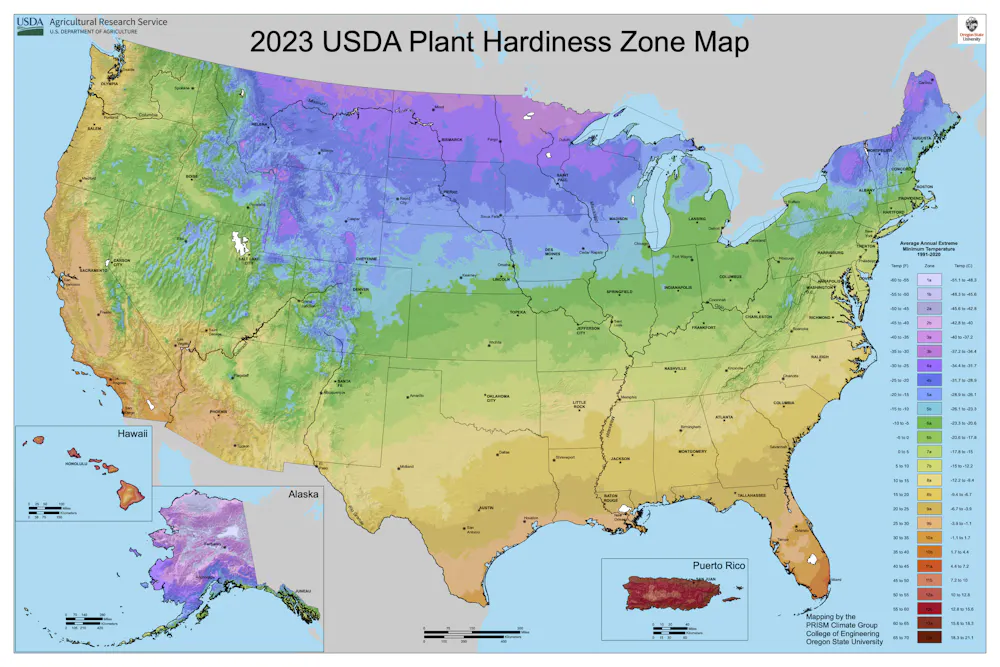
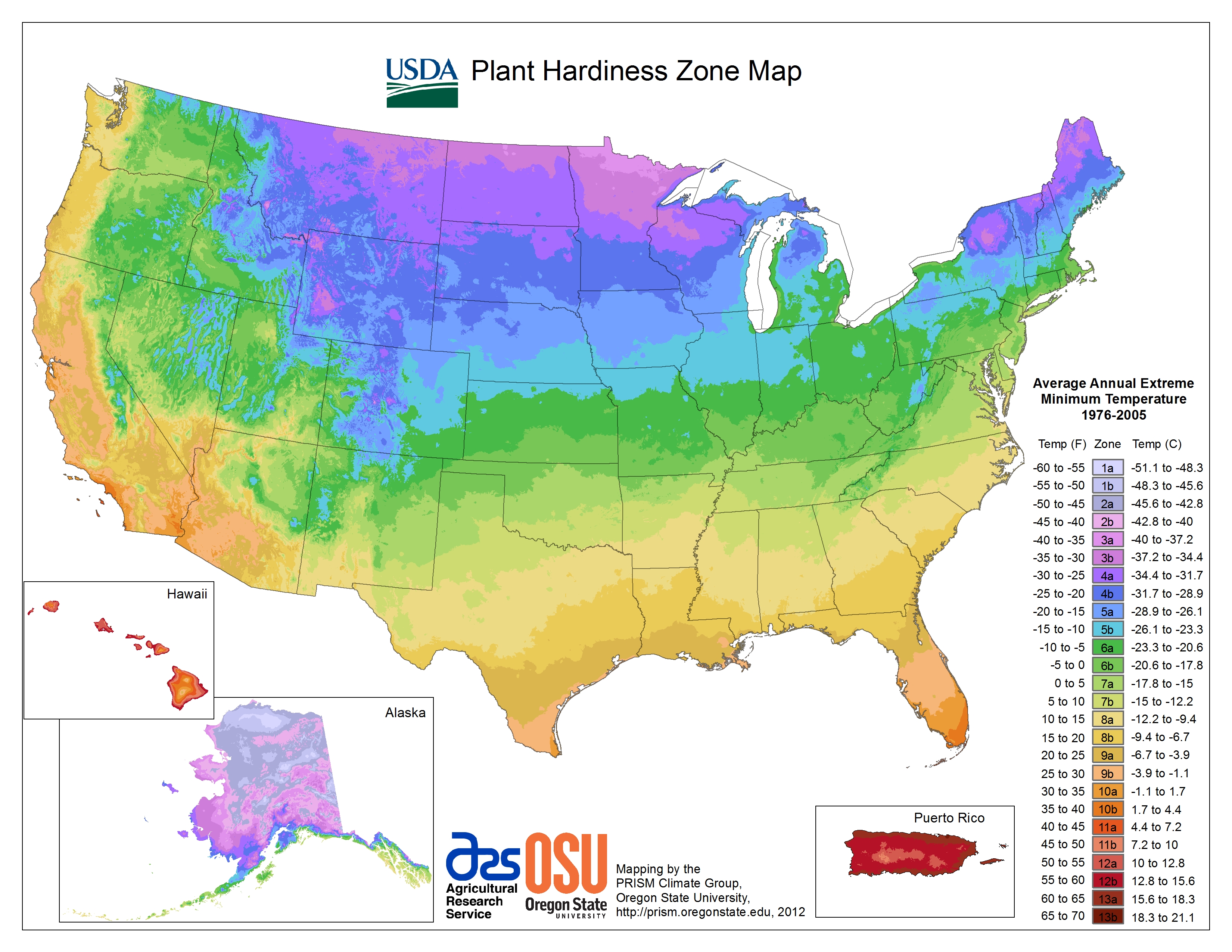
But some plants that once thrived in your yard may not flourish there now. To understand why, look to the U.S. Department of Agriculture’s recent update of its plant hardiness zone map, which has long helped gardeners and growers figure out which plants are most likely to thrive in a given location.
The 2023 USDA plant hardiness zone map shows the areas where plants can be expected to grow, based on extreme winter temperatures. Darker shades (purple to blue) denote colder zones, phasing southward into temperate (green) and warm zones (yellow and orange).USDA
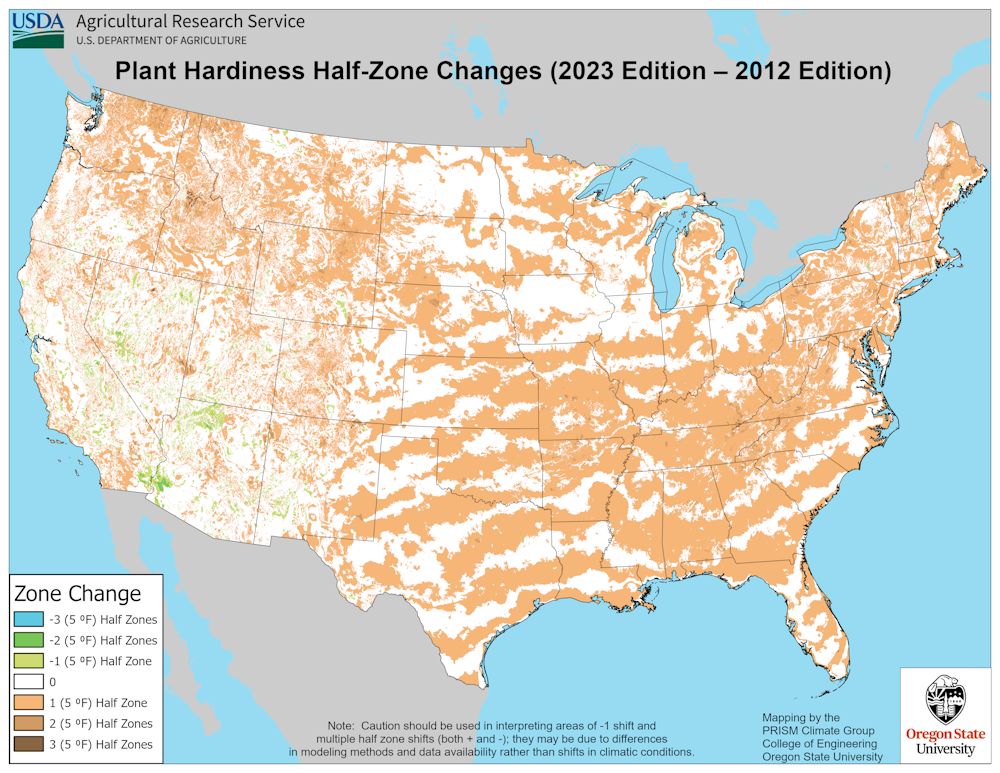
Comparing the 2023 map to the previous version from 2012 clearly shows that as climate change warms the Earth, plant hardiness zones are shifting northward. On average, the coldest days of winter in our current climate, based on temperature records from 1991 through 2020, are 5 degrees Fahrenheit (2.8 Celsius) warmer than they were between 1976 and 2005.
In some areas, including the central Appalachians, northern New England and north central Idaho, winter temperatures have warmed by 1.5 hardiness zones – 15 degrees F (8.3 C) – over the same 30-year window. This warming changes the zones in which plants, whether annual or perennial, will ultimately succeed in a climate on the move.
This map shows how plant hardiness zones have shifted northward from the 2012 to the 2023 USDA maps. A half-zone change corresponds to a tan area. Areas in white indicate zones that experienced minimal change.Prism Climate Group, Oregon State University, CC BY-ND
As a plant pathologist, I have devoted my career to understanding and addressing plant health issues. Many stresses not only shorten the lives of plants, but also affect their growth and productivity.
I am also a gardener who has seen firsthand how warming temperatures, pests and disease affect my annual harvest. By understanding climate change impacts on plant communities, you can help your garden reach its full potential in a warming world.
Hotter summers, warmer winters
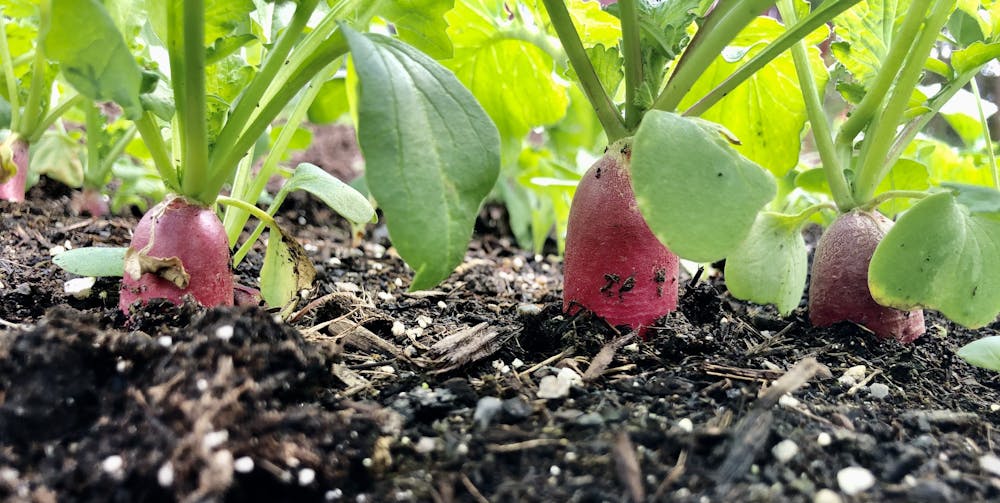
There’s no question that the temperature trend is upward. From 2014 through 2023, the world experienced the 10 hottest summers ever recorded in 174 years of climate data. Just a few months of sweltering, unrelenting heat can significantly affect plant health, especially cool-season garden crops like broccoli, carrots, radishes and kale.
Radishes are cool-season garden crops that cannot withstand the hottest days of summer.Matt Kasson, CC BY-ND
Winters are also warming, and this matters for plants. The USDA defines plant hardiness zones based on the coldest average annual temperature in winter at a given location. Each zone represents a 10-degree F range, with zones numbered from 1 (coldest) to 13 (warmest). Zones are divided into 5-degree F half zones, which are lettered “a” (northern) or “b” (southern).
For example, the coldest hardiness zone in the lower 48 states on the new map, 3a, covers small pockets in the northernmost parts of Minnesota and has winter extreme temperatures of -40 F to -35 F. The warmest zone, 11b, is in Key West, Florida, where the coldest annual lows range from 45 F to 50 F.
On the 2012 map, northern Minnesota had a much more extensive and continuous zone 3a. North Dakota also had areas designated in this same zone, but those regions now have shifted completely into Canada. Zone 10b once covered the southern tip of mainland Florida, including Miami and Fort Lauderdale, but has now been pushed northward by a rapidly encroaching zone 11a.
Many people buy seeds or seedlings without thinking about hardiness zones, planting dates or disease risks. But when plants have to contend with temperature shifts, heat stress and disease, they will eventually struggle to survive in areas where they once thrived.
Successful gardening is still possible, though. Here are some things to consider before you plant:
Annuals versus perennials
Hardiness zones matter far less for annual plants, which germinate, flower and die in a single growing season, than for perennial plants that last for several years. Annuals typically avoid the lethal winter temperatures that define plant hardiness zones.
In fact, most annual seed packs don’t even list the plants’ hardiness zones. Instead, they provide sowing date guidelines by geographic region. It’s still important to follow those dates, which help ensure that frost-tender crops are not planted too early and that cool-season crops are not harvested too late in the year.
California poppies are typically grown as annuals in cool areas, but can survive for several years in hardiness zones 8-10.The Marmot/Flickr, CC BY
User-friendly perennials have broad hardiness zones
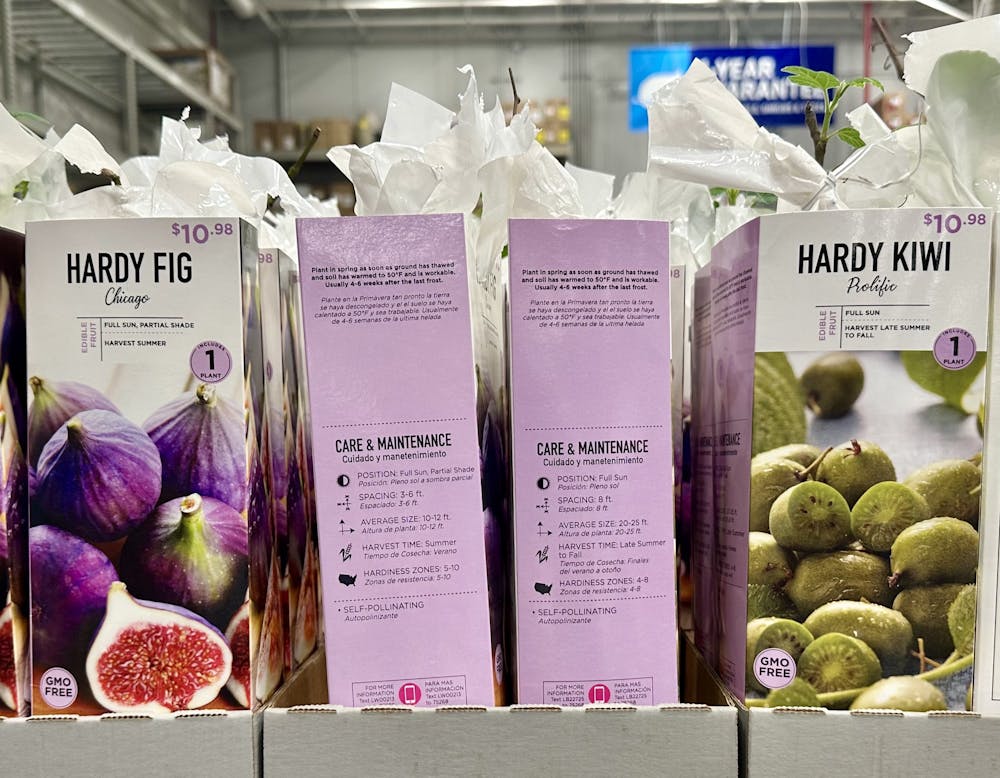
Many perennials can grow across wide temperature ranges. For example, hardy fig and hardy kiwifruit grow well in zones 4-8, an area that includes most of the Northeast, Midwest and Plains states. Raspberries are hardy in zones 3-9, and blackberries are hardy in zones 5-9. This eliminates a lot of guesswork for most gardeners, since a majority of U.S. states are dominated by two or more of these zones.
Nevertheless, it’s important to pay attention to plant tags to avoid selecting a variety or cultivar with a restricted hardiness zone over another with greater flexibility. Also, pay attention to instructions about proper sun exposure and planting dates after the last frost in your area.
Fruit trees are sensitive to temperature fluctuations
Fruit trees have two parts, the rootstock and the scion wood, that are grafted together to form a single tree. Rootstocks, which consist mainly of a root system, determine the tree’s size, timing of flowering and tolerance of soil-dwelling pests and pathogens. Scion wood, which supports the flowers and fruit, determines the fruit variety.
Most commercially available fruit trees can tolerate a wide range of hardiness zones. However, stone fruits like peaches, plums and cherries are more sensitive to temperature fluctuations within those zones – particularly abrupt swings in winter temperatures that create unpredictable freeze-thaw events.
Following planting instructions carefully can maximize plants’ chances of success.Matt Kasson, CC BY-ND
These seesaw weather episodes affect all types of fruit trees, but stone fruits appear to be more susceptible, possibly because they flower earlier in spring, have fewer hardy rootstock options, or have bark characteristics that make them more vulnerable to winter injury.
Perennial plants’ hardiness increases through the seasons in a process called hardening off, which conditions them for harsher temperatures, moisture loss in sun and wind, and full sun exposure. But a too-sudden autumn temperature drop can cause plants to die back in winter, an event known as winter kill. Similarly, a sudden spring temperature spike can lead to premature flowering and subsequent frost kill.
Pests are moving north too
Plants aren’t the only organisms constrained by temperature. With milder winters, southern insect pests and plant pathogens are expanding their ranges northward.
One example is Southern blight, a stem and root rot disease that affects 500 plant species and is caused by a fungus, Agroathelia rolfsii. It’s often thought of as affecting hot Southern gardens, but has become more commonplace recently in the Northeast U.S. on tomatoes, pumpkins and squash, and other crops, including apples in Pennsylvania.
Southern blight (small round fungal structures) at the base of a tomato plant.Purdue University, CC BY-ND
Other plant pathogens may take advantage of milder winter temperatures, which leads to prolonged saturation of soils instead of freezing. Both plants and microbes are less active when soil is frozen, but in wet soil, microbes have an opportunity to colonize dormant perennial plant roots, leading to more disease.
It can be challenging to accept that climate change is stressing some of your garden favorites, but there are thousands of varieties of plants to suit both your interests and your hardiness zone. Growing plants is an opportunity to admire their flexibility and the features that enable many of them to thrive in a world of change.
Matt Kasson, Associate Professor of Mycology and Plant Pathology, West Virginia University
This article is republished from The Conversation under a Creative Commons license.



 To ensure the best cooling performance and efficiency possible,
 Upgrade to an Energy-Efficient HVAC System. If your HVAC system is outdated, consider replacing it with a more energy-efficient model. Look for systems with an Energy Star or high SEER2 (seasonal energy efficiency ratio) rating, which indicates better energy efficiency. The higher the SEER2 rating, the more efficient the unit. Financial incentives for installing a higher-efficiency system are available through the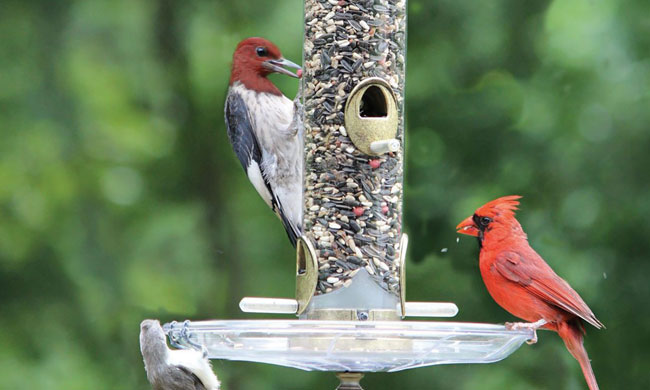
 While commercial bird feeds aim to provide basic nutrition for birds, the quality and nutritional content can vary. Some mixes contain a high proportion of less desirable seeds and fillers, offering limited nutritional value.