Friday, April 14, 2023

What is ‘algospeak’? Inside the newest version of linguistic subterfuge

Social media algorithms are programmed to swoop in and flag certain words. Dmitry Kovalchuk/iStock via Getty Images
Roger J. Kreuz, University of Memphis

A linguistic arms race is raging online – and it isn’t clear who’s winning.

On one side are social networks like Facebook, Instagram and TikTok. These sites have become better and better at identifying and removing language and content that violates their community standards.

Social media users are on the other side, and they’ve come up with coded terminology designed to evade algorithmic detection. These expressions are collectively referred to as “algospeak.”

New terms like these are just the latest development in the history of linguistic concealment. Typically, such codes have been employed by small groups. Given the reach of social media, however, algospeak has the potential to more broadly influence everyday language.

An online standoff

Due to the sheer volume of posted content, social media platforms use algorithms to automatically flag and remove problematic material. The goal is to reduce the spread of misinformation as well as to block content considered offensive or inappropriate.

Yet many people have legitimate reasons for wanting to discuss sensitive topics online.

Victims of sexual assault, for example, may find it therapeutic to discuss their experiences with others. And those who struggle with thoughts of self-harm or suicide can benefit from online communities that provide support. But algorithms may identify and remove such content as a violation of a site’s terms of service.

But those who repeatedly run afoul of a site’s policies may find that their posts have been downranked or made less visible – a process called shadow banning. And repeated violations can lead to a temporary or permanent suspension.

To get past content filters, social media users are making use of coded language instead of the banned terms.

References to sex, for example, might be replaced by an innocuous word like “mascara.” “Unalive” has become an agreed-upon way to refer to death or suicide. “Accountant” takes the place of sex worker. “Corn” stands in for porn. “Leg booty” is LGBTQ.

A history of hidden language

Although circumventing content filters is a relatively new phenomenon, the use of coded terms to conceal one’s meaning is not.

For example, the 19th-century Russian satirist Mikhail Saltykov-Shchedrin made use of “Aesopian,” or allegorical, language. He and others used it to circumvent censorship in Tsarist Russia. For example, the forbidden term “revolution” would be replaced with a phrase like “the big job.”

Many subcultures have developed their own private codes that are only really understood by in-group members. These are referred to by a variety of names, such as argot, cant or slang.

Polari was a private language used by gay men in early 20th-century Britain, at a time when public sentiment against homosexuality was running high. “Rough trade,” for example, referred to a working-class sex partner.

Rhyming slang has also been employed to obfuscate one’s meaning to outsiders. A term like telephone, for example, can be replaced by a rhyming equivalent, such as “dog and bone,” and then shortened to “dog.” In this way, a member of a gang could publicly request that another member call them, and do so even in the presence of the police.

Cockney rhyming slang, which emerged in 19th-century London, is perhaps the best-known example, although there are several others.

Leetspeak evolved in the 1980s, as intrepid internet pioneers ventured online to use bulletin board systems. Some of the workarounds they created to evade moderation are still being used today on sites like TikTok.

This form of linguistic subterfuge typically involves using numbers and symbols as stand-ins for letters. “3” resembles a backwards capital E, “1” looks like a lowercase l, “$” can take the place of the letter s, and so on. The term “leet” itself is often written as “1337.”

Although it’s most commonly used when writing about sex, algospeak has also proven useful in other contexts. For example, it was employed last year in Iran by those protesting the government’s crackdown on dissent. Creative misspellings like “Ir@n” were pressed into service to evade censorship.

Concealment breeds miscommunication

About a decade ago, when emoji became a popular way of augmenting text messages, a new means of circumventing content moderation was born.

As I describe in my recently published book on miscommunication, fruits and vegetables that vaguely resemble parts of the human anatomy were employed to get around policies prohibiting sexual content.

As a result, the humble eggplant and peach emoji took on distinctly new meanings in the online world. And in 2019, both Facebook and Instagram took steps to block their use as sexual stand-ins.

The various social media platforms seem to be caught up in an escalating feud with their users. The sites may block certain terms, but this leads to new algospeak equivalents springing up to take their place.

Different sites have different rules that ban different terms, and what is considered acceptable and what is not is constantly changing.

Keeping up can be a challenge.

In January, the actress Julia Fox made a seemingly insensitive observation regarding a post mentioning “mascara” on TikTok.

Fox was apparently unaware that the term was being used as a stand-in for sexual assault. Fox was called out for her seemingly boorish remark, and a backlash compelled her to issue an apology.

As this linguistic tug of war continues, such misunderstandings seem likely to become more common. And at least some algospeak terms will inevitably spill over into vocabulary used offline.

After all, coded language survives because it is useful. Such terms can, for example, function as dog whistles to taunt one’s political opponents.

Let’s Go Brandon, anyone?

Roger J. Kreuz, Associate Dean and Professor of Psychology, University of Memphis

This article is republished from The Conversation under a Creative Commons license. Read the original article.

Thursday, April 13, 2023

What are passkeys? A cybersecurity researcher explains how you can use your phone to make passwords a thing of the past

Your phone could soon replace your passwords. Xavier Lorenzo/Moment via Getty Images
Sayonnha Mandal, University of Nebraska Omaha

Passwords could soon become passé.

Effective passwords are cumbersome, all the more so when reinforced by two-factor authentication. But the need for authentication and secure access to websites is as great as ever. Enter passkeys.

Passkeys are digital credentials stored on your phone or computer. They are analogous to physical keys. You access your passkey by signing in to your device using a personal identification number (PIN), swipe pattern or biometrics like fingerprint or face recognition. You set your online accounts to trust your phone or computer. To break into your accounts, a hacker would need to physically possess your device and have the means to sign in to it.

As a cybersecurity researcher, I believe that passkeys not only provide faster, easier and more secure sign-ins, they minimize human error in password security and authorization steps. You don’t need to remember passwords for every account and don’t need to use two-factor authentication.

How passkeys work

Passkeys are generated via public-key cryptography. They use a public-private key pair to ensure a mathematically protected private relationship between users’ devices and the online accounts being accessed. It would be nearly impossible for a hacker to guess the passkey – hence the need to physically possess the device the passkey is accessed from.

Passkeys consist of a long private key – a long string of encrypted characters – created for a specific device. Websites cannot access the value of the passkey. Rather, the passkey verifies that a website possesses the corresponding public key. You can use the passkey from one device to access a website using another device. For example, you can use your laptop to access a website using the passkey on your phone by authorizing the login from your phone. And if you lose your phone, the passkey can be stored securely in the cloud with the phone’s other data, which can be restored to a new phone.

Passkeys explained in 76 seconds.

Why passkeys matter

Passwords can be guessed, phished or otherwise stolen. Security experts advise users to make their passwords longer with more characters, mixing alphanumeric and special symbols. A good password should not be in the dictionary or in phrases, have no consecutive letters or numbers, but be memorable. Users should not share them with anyone. Last but not least, users should change passwords every six months at minimum for all devices and accounts. Using a password manager to remember and update strong passwords helps but can still be a nuisance.

Even if you follow all of the best practices to keep your passwords safe, there is no guarantee of airtight security. Hackers are continuously developing and using software exploits, hardware tools and ever-advancing algorithms to break these defenses. Cybersecurity experts and malicious hackers are locked in an arms race.

Passkeys remove the onus from the user to create, remember and guard all their passwords. Apple, Google and Microsoft are supporting passkeys and encourage users to use them instead of passwords. As a result, passkeys are likely to soon overtake passwords and password managers in the cybersecurity battlefield.

However, it will take time for websites to add support for passkeys, so passwords aren’t going to go extinct overnight. IT managers still recommend that people use a password manager like 1Password or Bitwarden. And even Apple, which is encouraging the adoption of passkeys, has its own password manager.

Sayonnha Mandal, Lecturer in Interdisciplinary Informatics, University of Nebraska Omaha

This article is republished from The Conversation under a Creative Commons license.

Is the US in a space race against China?

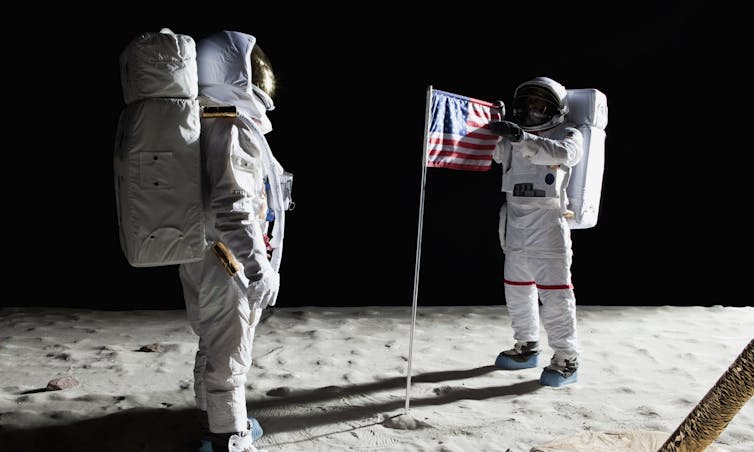
Both the U.S. and China have plans to establish bases on the Moon in the near future. Caspar Benson/fStop via Getty Images
Svetla Ben-Itzhak, Air University

Headlines proclaiming the rise of a new “space race” between the U.S. and China have become common in news coverage following many of the exciting launches in recent years. Experts have pointed to China’s rapid advancements in space as evidence of an emerging landscape where China is directly competing with the U.S. for supremacy.

This idea of a space race between China and the U.S. sounds convincing given the broader narrative of China’s rise, but how accurate is it? As a professor who studies space and international relations, my research aims to quantify the power and capabilities of different nations in space. When I look at various capacities, the data paints a much more complex picture than a tight space race between the U.S. and China. At least for now, the reality looks more like what I call a complex hegemony – one state, the U.S., is still dominating in key space capabilities, and this lead is further amplified by a strong network of partners.

A rocket taking off.
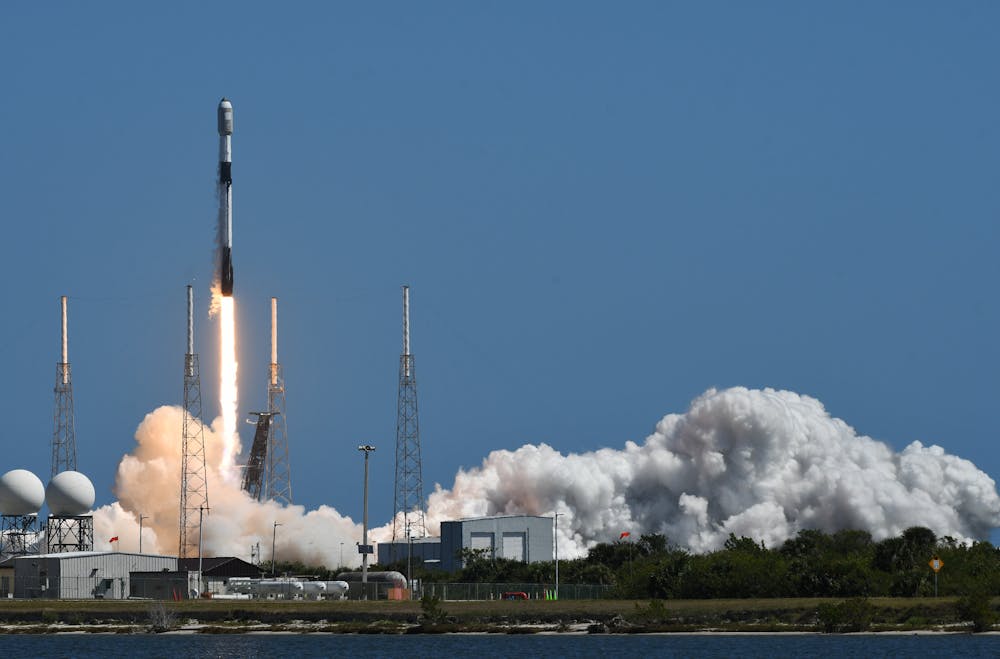
SpaceX rockets carry hundreds of private satellites into orbit each year from the seven active U.S. spaceports. SOPA Images/LightRocket via Getty Images

A clear leader makes for a boring race

Calling the current situation a race implies that the U.S. and China have roughly equal capabilities in space. But in several key areas, the U.S. is far ahead not only of China, but of all other spacefaring nations combined.

Starting with spending: In 2021, the U.S. space budget was roughly US$59.8 billion. China has been investing heavily in space and rocket technology over the last decade and has doubled its spending in the last five years. But with an estimated budget of $16.18 billion in 2021, it is still spending less than a third of the U.S. budget.

The U.S. also leads significantly in the number of active satellites. Currently, there are 5,465 total operational satellites in orbit around Earth. The U.S. operates 3,433, or 63% of those. In contrast, China has 541.

Similarly, the U.S. has more active spaceports than China. With seven operational launch sites at home and abroad and at least 13 additional spaceports in development, the U.S. has more options to launch payloads into various orbits. In contrast, China has only four operational spaceports with two more planned, all located within its own territory.

Parity with nuance

While the U.S. may have a clear advantage over China in many areas of space, in some measures, the differences between the two countries are more nuanced.

In 2021, for instance, China attempted 55 orbital launches, four more than the U.S.‘s 51. The total numbers may be similar, but the rockets carried very different payloads to orbit. The vast majority – 84% – of Chinese launches had government or military payloads intended mostly for electronic intelligence and optical imaging. Meanwhile, in the U.S., 61% of launches were for nonmilitary, academic or commercial use, predominantly for Earth observation or telecommunications.

Space stations are another area where there are important differences hiding beneath the surface. Since the 1990s, the U.S. has worked with 14 other nations, including Russia, to operate the International Space Station. The ISS is quite large, with 16 modules, and has driven technological and scientific breakthroughs. But the ISS is now 24 years old, and participating nations are planning to retire it in 2030.

A diagram of the Tiangong space station.
Construction of China’s Tiangong space station began in 2021, and the small, three-module station opened for research in December 2022. Shujianyang/Wikimedia Commons, CC BY-SA

The Chinese Tiangong space station is the new kid on the block. Construction was only completed in late 2022, and it is much smaller – with only three modules. China has built and launched all of the different parts and remains the sole operator of the station, despite having invited others to join.

China is undoubtedly expanding its space capabilities, and in a report published in August 2022, the Pentagon predicted that China would surpass U.S. capabilities in space as early as 2045. However, it is unlikely that the U.S. will remain stagnant, as it continues to increase funding for space.

Allies as force multipliers

A major point of difference between the U.S. and China is the nature and number of international collaborations.

For decades, NASA has been fruitfully cultivating international and commercial partnerships in everything from developing specific space technologies to flying humans into space. The U.S. government has also signed 169 space data sharing agreements with 33 states and intergovernmental organizations, 129 with commercial partners and seven with academic institutions.

China also has allies that help with space – most notably Russia and members of the Asia-Pacific Space Cooperation Organization, including Iran, Pakistan, Thailand and Turkey. China’s collaborators are, however, fewer in number and have far less developed space capabilities.

A man signing a document with a Brazilian and American flag on the desk.
In just two years, 24 nations, including Brazil, have joined the U.S.-led Artemis Accords. This international agreement outlines the goals of space exploration in the near future. Ministério da Ciência, Tecnologia e Inovações/Wikimedia Commons, CC BY

Efforts to return to the surface of the Moon excellently highlight this difference in ally support and synergy. Both the U.S. and China have plans to send people to the surface of the Moon and to establish lunar bases in the near future. These competing lunar aims are often cited as evidence of the space race, but they are very different in terms of partnerships and scope.

In 2019, Russia and China agreed to jointly go to the Moon by 2028. Russia is contributing its Luna landers and Oryol crewed orbiters, while China is improving its Chang’e robotic spacecraft. Their future International Lunar Research Station is “open to all interested parties and international partners,” but, to date, no additional countries have committed to the Chinese and Russian effort.

In contrast, since 2020, 24 nations have joined the U.S.-led Artemis Accords. This international agreement outlines shared principles of cooperation for future space activity and, through the Artemis Program, specifically aims to return people to the Moon by 2025 and establish a Moon base and lunar space station soon after.

In addition to the broad international participation, the Artemis Program has contracted with a staggering number of private companies to develop a range of technologies, from lunar landers to lunar construction methods and more.

China is not the only game in town

While China may seem like the main competitor of the U.S. in space, other countries have space capabilities and aspirations that rival those of China.

India spends billions on space and plans to return to the Moon, possibly with Japan, in the near future. South Korea, Israel, Japan, the United Arab Emirates, Turkey, Germany and the European Union are also planning independent lunar missions. Japan has developed impressive technological space capabilities, including rendezvous proximity technology to send a spacecraft to an asteroid and bring samples back to Earth, that rival and even surpass those of China.

In the past, the space race was about who could reach the stars first and return home. Today, the goal has shifted to surviving and even thriving in the harsh environment of space. I believe it is not surprising that, despite its decisive lead, the U.S. has partnered with others to go to the Moon and beyond. China is doing the same, but on a smaller scale. The picture that emerges is not of a “race” but of complex system with the U.S. as a leader working closely with extensive networks of partners.

Svetla Ben-Itzhak, Assistant Professor of Space and International Relations, Air University

This article is republished from The Conversation under a Creative Commons license.

Don’t let climate change take all the blame

OPINION: The climate crisis is a massive problem, but when politicians fault it entirely for every disaster, attention is deflected from local measures that might build resiliency. That needs to change.

More than a million people were left starving in southern Madagascar last year after failed rains left the land barren and crops nonexistent. The United Nations said the country was on the brink of the “world’s first climate change famine.” But that’s just wrong.

Of course, it is a good thing to raise awareness about the perils of climate change, and to hammer home to people how our warming world can spur droughts and cause food supply lines to fail. Climate change does make floods, droughts, hurricanes and wildfires worse in many ways, and humanity needs to be doing everything in our power to rapidly lower our greenhouse gas emissions to net zero.

But climate change isn’t responsible for everything, nor are international efforts to curb climate change the  only important way to mitigate disasters. It helps no one if we simplify the climate story so much that it becomes false.

I should know, as one of the cofounders of World Weather Attribution (WWA), an international collaboration of scientists dedicated to identifying the underlying causes of weather-related disasters. For the lack of rain in southern Madagascar, specifically, there is  no causal link to human-caused climate change. Likewise, for the tropical cyclones that struck Madagascar and killed people in Mozambique this spring as buildings collapsed, climate change  played a limited role in the subsequent disaster.

It can be appealing for politicians to blame climate change alone for domestic disasters. It deflects responsibility away from individual nations, and onto the multinational corporations and international efforts that must lower the planet’s emissions. But there is also local responsibility, everywhere, for good governance, functioning infrastructure and warning systems. Climate-related disasters are deeply affected by local policies, like those that govern how agriculture is practiced, or whether natural landscapes are protected. Long-standing problems in social services, education and governance cannot be swept aside or ignored.

WWA was founded in 2014, in large part to help raise the flag about the perils of climate change. We wanted to be able to scientifically point fingers — real, evidence-based fingers — at the roots of disaster and show how climate change plays a role.

Attribution studies have been vitally important to public understanding. WWA has worked hard to do rapid assessments of disasters, sometimes showing within days or weeks whether and how much climate change fed into an event. We have so far analyzed 5 cold snaps, 7 droughts, 12 bouts of extreme rainfall, 13 heat waves and 5 storms around the world. For most, we found that climate change played a significant role in making the event more likely or more severe. For two of them, climate change was the  main driver: the heat domes over  western North America last summer and in  Siberia in 2020, both of which were essentially impossible without climate change. When politicians can point to science like this and call climate change a killer, it surely  helps them to push through policies to limit emissions.

But for all disasters, there are a great many more factors at play than climate change alone.

In southern Madagascar, for example, two years of poor rain led to a dramatic drought and crop failure in 2021. But the science assessed in the most recent Intergovernmental Panel on Climate Change report shows that droughts in that part of the world have not gotten worse — nor are they expected to, so long as global temperature increases stay below 2°C. Our  WWA analysis came to the same conclusion. We found that similar consecutive failures of rainy seasons have happened here before, and there’s no evidence that this has become more common due to climate change.

Global emissions reductions will not change the risk of drought-related disasters in Madagascar. Reducing local vulnerability will. The population is too reliant on rain-fed agriculture, and deforestation has made that vulnerability worse. Instead of just responding to each individual disaster with food aid, NGOs should more consistently work with local decision-makers to make their agriculture and other systems more resilient. The global North clearly has a responsibility here too: Some of the things that make Madagascar vulnerable are a result of colonialism.

Take another example. The devastating flooding in Germany last year was indeed spurred by heavy rains made about 10 percent more intense by climate change. But bigger factors were at play. The natural landscape in that part of Germany has been paved over by sprawling urban development, leaving very little land to soak up rainfall. There were flood warnings, but they didn’t reach the people — there was no formal system through radio, TV or apps to reach locals in the area. And once the floods came, there was little information about what to do or which roads were safe.

Rich nations have pledged to spend a hundred billion dollars helping poorer nations adapt to climate change. But I fear that this money will be spent largely on the wrong things. Development banks tend to fund large infrastructure projects like dams, rather than longer-term programs that improve governance, reduce poverty, fight corruption and improve education. When most people think about adaptation, they think about technology. Yet research shows that a key factor determining a society’s resilience in the face of disaster is good governance. Better infrastructure is often needed, but it won’t work to its full capacity in a society with poor regulations or education.

Climate change is the greatest issue facing our times, and it is vital that humanity works together to tackle it. But we cannot — must not — allow politicians to blame climate change alone for all disasters and all their impacts, nor shirk their other responsibilities. A just world, where the impacts of disasters are not borne disproportionately by the poor, demands no less.

This article originally appeared in Knowable Magazine, an independent journalistic endeavor from Annual Reviews.

Human metapneumovirus, or HMPV, is filling ICUs this spring – a pediatric infectious disease specialist explains this little-known virus

Human metapneumovirus, or HMPV, peaks in North America from February to May, just on the heels of flu season. martin-dm/E+ via Getty Images
John V. Williams, University of Pittsburgh

In the year 2000, Dutch scientists went on a mission of exploration – not to discover lands or riches, but to identify unknown causes of acute respiratory infections.

These illnesses, from the common cold to pneumonia, have been a plague on mankind throughout history. Most are caused by viruses, so if you’ve ever been told “you probably have a virus” by a clinician, they were likely correct. However, respiratory illnesses can be much more severe than simple colds.

Respiratory infections are the leading cause of death in children under 5 globally and a major reason for hospitalization of children in developed countries. They are also a major cause of disease and death among people at high risk for severe disease, such as premature infants, older adults and those with underlying conditions.

However, meticulous research studies by many groups over decades had failed to identify a virus or bacteria in every person with an acute respiratory illness. Did this failure to detect a microbe result from tests that weren’t good enough, or viruses that doctors and scientists didn’t know about? The answer was partly the first; modern molecular tests are much better, so doctors find more known viruses.

But the Dutch group discovered a new virus, human metapneumovirus, abbreviated HMPV or MPV, which turns out to be a leading cause of respiratory infections. HMPV often presents like other common respiratory viruses, with congestion, cough and fever.

As a pediatric infectious disease specialist and virologist, I have led my team in HMPV research for over 20 years, and I’ve personally cared for many children with this infection. I’ve received emails from colleagues, clinicians and parents all over the country and the world with questions about severe and tragically fatal cases.

The U.S. saw a spike in HMPV detections during the first few months of 2023. This trend is similar to the higher-than-normal case rates of respiratory syncytial virus, or RSV, and influenza in the fall of 2022 and winter of 2023, likely related to decreased population immunity after two years of wearing face masks and social distancing.

Still, I find that many people even in health care are unfamiliar with this virus.

Origins of human metapneumovirus

The human metapneumovirus was isolated from people with acute respiratory infection and sequenced in 2001 using a combination of specialized culture and molecular techniques.

It is related to RSV, which is the leading cause of serious respiratory infection in children and a major problem in adults. Both viruses are in the same large group with measles, mumps and parainfluenza viruses, all of which are leading causes of childhood disease.

However, abundant data shows that HMPV is distinct from its cousin RSV in many ways. First, the order of genes in its genome is quite different. In addition, HMPV is missing two genes that RSV uses to overcome the immune response that would normally target it; yet HMPV has its own ways to block immunity.

Third, genetic analysis by several different groups shows that the closest recent ancestor of HMPV is a bird virus, avian metapneumovirus. This is an agricultural pathogen of chickens and turkeys. Evolutionary and genetic analysis suggests that the human virus diverged from the bird virus several hundred years ago. This is an example of a zoonosis: an animal virus that jumps to humans. In this case, HMPV became established as a permanent pathogen of humans.

Understanding how HMPV successfully made the leap might help predict which other animal viruses could be capable of transforming into primary human pathogens. The recent H5N1 bird flu outbreak – which has been transmitted to humans only to a limited extent – illustrates this risk.

HMPV is a common respiratory illness during the spring months that can cause a narrowing of the airways, a barking cough and other nasty symptoms, particularly in children and older adults.

HMPV in children

Despite its being recognized only two decades ago, many studies have confirmed that HMPV is a major cause of respiratory infection in humans. Initial research groups focused on children and quickly discovered that HMPV caused respiratory infections in children worldwide, including Canada, Australia, Japan, Hong Kong, South Africa and Argentina.

Indeed, HMPV is a common cause of acute respiratory disease in children in every country examined, and most children get the infection for the first time by age 5. One study using samples collected over 25 years in the U.S. found that HMPV was the second most common cause of lung infection in children after RSV. Other studies of multiple children’s hospitals in U.S. cities found that HMPV was the second most common cause of respiratory infections, leading to hospitalization and pneumonia.

Children with underlying risk factors, such as those born prematurely and those with conditions like asthma, or those who have compromised immune systems, such as organ transplant recipients or children being treated for cancer, are at higher risk for severe HMPV. Most children who become hospitalized with HMPV are otherwise healthy before they acquire it, yet many require intensive care from the illness.

Not just for kids

HMPV is also a common cause of serious lung infections among adults. This is especially true in adults over 65 years old, or those with underlying conditions. A New York study over four winters found that HMPV was as common in hospitalized older adults as RSV or influenza, with similar rates of ICU care and death.

Studies over three winters in Nashville of adults over age 50 detected rates of HMPV hospitalization and emergency department visits that were similar to RSV and influenza. HMPV and RSV were more common than the flu in people 65 and older, presumably because many were vaccinated against the flu.

Another national study of adults hospitalized for pneumonia showed that HMPV was as common as RSV, and nearly as common as influenza. As in children, HMPV is a particular problem for adults with chronic conditions such as asthma, cancer or chronic obstructive pulmonary disease, also called COPD.

Similar to the dire effects of flu and COVID-19 in nursing homes, HMPV has also caused numerous outbreaks among vulnerable older adults in long-term care facilities.

Why HMPV is still so underrecognized

Despite being a common cause of serious respiratory disease, HMPV remains underdiagnosed by clinicians and little recognized by the general population. Most people with an acute respiratory illness don’t get any testing, and if they do, only complex molecular testing can detect HMPV. But this testing is usually done only for hospitalized patients under select circumstances.

People tend to believe what they see, and therefore even health care professionals are most aware of diseases they test for frequently. But HMPV circulates predictably every year, and in North America the peak is typically February through May. So if you’ve had a cold recently this winter or spring, HMPV was a likely culprit. Children’s hospitals around the country are seeing an increased number of cases, including many in the ICU. Based on past research, this is almost certainly happening in adults too – it’s just that usually only those patients with severe illness are tested for HMPV.

A dearth of treatments

Right now, there are no specific antiviral drugs to treat HMPV as there are for flu and COVID-19. As with the many other respiratory viruses that cause colds, most infected people will do just fine with rest and fluids.

But some may develop trouble breathing and need to seek medical attention. Children or adults with serious underlying conditions should be especially careful, and just as with COVID-19, using hand sanitizer and washing hands can reduce transmission.

Preventive vaccines and antibodies for HMPV are in development but are still a way off. So, for the moment, wear a mask if you’re sick and avoid others who are sick. You may dodge a repeat engagement with this virus that you’ve had but hadn’t heard of.

John V. Williams, Professor of Pediatrics, Microbiology and Molecular Genetics, University of Pittsburgh

This article is republished from The Conversation under a Creative Commons license. Read the original article.

Dishing Out the Facts on Good Fats

For those seeking to be more health-conscious, the idea of eating nutritiously seems simple. However, understanding what’s truly “good for you” can sometimes be confusing.

In honor of National Nutrition Month and Healthy Fats Day, Avocados From Mexico is sharing how avocados – a delicious food and source of good fats and several vitamins – make everything better. Avocados From Mexico conducted a survey and found that while 76% of respondents believe fat is an essential component of a healthy diet, less than one-third are confident they know why it’s important to have “good fats” in their diets.

For starters, according to the survey, nearly half of Americans didn’t realize foods with good fats, like avocados, can help with weight management. However, monounsaturated and polyunsaturated fats found in avocados can lower the risk of becoming overweight, according to research published in “Nutrients.”

“Most people are aware of the Mediterranean Diet, but nearly half (40%) of survey respondents didn’t realize that this eating pattern does not limit fat coming from plantsources like avocados,” said nutrition expert and registered dietitianBarbara Ruhs. “These types of unsaturated good fats are also recommended by the American Heart Association for heart health. Eating avocados in place of foods containing saturated fat is an easy and delicious way to approach healthy eating.”

Virtually the only fresh fruit with good fats, avocados can help people meet both good fat and fruit and vegetable recommendations in the same bite with approximately 6 grams of good fats per serving (one-third of a medium avocado). They are nutrient-dense, making avocados a delicious food with super benefits. Avocados are also free of cholesterol and sodium and have nearly 20 vitamins and minerals.

Another finding from the survey is that while people believe fat is essential to a healthy diet, one-third of survey respondents believe saturated and trans fats are associated with health benefits, indicating confusion about the various types of fats. Many Americans need to balance their overall fat intake by reducing “bad” or saturated fat intake and increasing “good” or unsaturated (monounsaturated and polyunsaturated) fat intake. Replacing saturated fats with unsaturated fats can help reduce LDL, or bad cholesterol levels.

Dietary fat helps the body absorb vitamins A, D, E, and K. These vitamins are fat soluble, which means they can only be absorbed by the body with the help of fats. Per one-third of a medium avocado (50 grams), avocados contribute 6 grams of unsaturated fats, which are known to be essential for normal growth and development of the central nervous system and brain.

Make good fats a part of your next trip to the grocery store with this avocado-inspired Harvest Bowl Salad with Balsamic Vinaigrette certified by the American Heart Association’s Heart-Check Food Certification Program.

To find more nutritional facts and figures, along with recipes, visit AvocadosFromMexico.com.

Harvest Bowl Salad with Balsamic Vinaigrette

Servings: 8

Balsamic Vinaigrette:

  • 1/2 Avocado From Mexico, diced
  • 1 tablespoon avocado oil
  • 2 tablespoons shallots, minced
  • 1 tablespoon Dijon mustard
  • 3 tablespoons white balsamic vinegar
  • 1 tablespoon honey
  • 3 tablespoons water

Salad:

  • 2 Avocados From Mexico, diced
  • 2 sweet potatoes, roasted and diced
  • 2 cups quinoa, cooked
  • 2 cups arugula
  • 2 cups kale
  • 1 cup Brussels sprouts petals, roasted
  • 2 Honeycrisp apples, diced
  • 2 tablespoons roasted pecans, unsalted
  • 2 tablespoons roasted pepitas, unsalted
  • 2 tablespoons dried cranberries
  1. To make balsamic vinaigrette: In food processor, process avocado, avocado oil, shallots, Dijon mustard, balsamic vinegar, honey and water to smooth consistency. Set aside.
  2. To make salad: In large bowl, combine avocados, sweet potatoes, quinoa, arugula, kale, Brussels sprouts petals, apples, pecans, pepitas and dried cranberries. Pour balsamic vinaigrette over salad mixture.
  3. Toss salad to coat. Keep refrigerated until ready to serve.

Nutritional information per serving: 390 calories; 16 g total fat; 0 g saturated fat; 0 g cholesterol; 370 mg sodium; 55 g total carbohydrates; 11 g dietary fiber; 12 g sugar; 15 g protein.

SOURCE:
Avocados From Mexico

Has humankind driven Earth into a new epoch?

Our mark on Earth is so profound that some argue it’s time to bid goodbye to the current geological time period — the Holocene — in favor of a new one: the Anthropocene.

In the thousands of years that modern humans have trod the Earth, we have wreaked stunning changes on the planet — the rising CO2 levels fueling climate change, novel and long-lived radioactive particles from nuclear activity, depleted water resources, toxic waste buildup, desertification and more. To reflect our impact on the globe, some geoscientists and biologists have advanced the concept that we are living in a new geological time period: the Anthropocene, or the epoch of humankind.

The current geological epoch, the Holocene, began 11,700 years ago, after the last major ice age. But in the last 15 years, geologists and other Earth scientists have debated whether we have left enough of a mark on the world that it makes sense to bid the Holocene goodbye.

One proponent of the Anthropocene concept is Yadvinder Malhi of the University of Oxford in England, whose research on tropical forests has revealed the cascading ecological consequences of human-caused pressures such as logging, fires, invasive species and climate change. He reviewed the history of the Anthropocene idea, and debates that surround it, in “ The Concept of the Anthropocene” in the Annual Review Environment and Resources.

This conversation has been edited for length and clarity.

What’s your definition of the Anthropocene?

It’s a term for a new geological epoch that signifies an age where the planet is dominated by human influence. But others wouldn’t agree. They say any significant modification of the environment would count — it doesn’t have to be complete domination.

And so one big debate is whether the Anthropocene is recent, say, starting in the mid-twentieth century, or whether it’s been going on for centuries or even millennia. The debate pivots on whether it’s a continuation of a process where humans have been altering the environment since we started using fire, or with early farming, or whether something dramatic has happened more recently where we started dominating and rupturing the environment in fundamental ways. Something so significant that it’s altering geological records.

For example, the spread of wet rice farming in Asia thousands of years ago may have increased global concentrations of methane, and this may have delayed the onset of the next ice age. Others argue that the extinction of megafauna, like mammoths, in which human hunters probably played a role, may have caused reflective and snow-covered high-elevation grasslands to be replaced by dark, heat-absorbing forests, leading to local warming. These would suggest human alteration of planetary processes, but not the domination of them that we’re seeing today.

What more recent changes would you point to that argue for a distinct Anthropocene epoch now?

The underlying issue is that human activity is so large because there’s so many humans and because of how active they are in consumption and waste production. We’re over-harvesting fisheries and the ocean, and we’re converting large parts of land from natural ecosystems to croplands or pasturelands. Part of it comes from our waste products. Climate change comes under that, through excess CO2 in the atmosphere, swamping the natural capacity of the carbon cycle to absorb it.

Excess plastics in the ocean are starting to alter food chains of ocean ecosystems, and excess nitrogen in our fertilizers is causing dead zones in lakes and estuaries.

Humans have always affected local environments, depleting resources or putting too much waste into it. There’s little evidence that early civilizations were more sustainable than contemporary ones; they just worked on a smaller scale. The challenge now is that we’re a global, interconnected civilization, so our activities are starting to alter planetary functioning.

Are there geological arguments against formally designating our current period as the Anthropocene?

Some geologists question whether geological time scales are the best forum for what is essentially a political framing or advocacy term. It's also a challenge that a mid-twentieth-century start date is so recent that a clear stratigraphic signal is hard to distinguish.

The Anthropocene Working Group, a collaboration of mostly scientists, recommended in August 2016 to the International Commission on Stratigraphy, the authorities who decide on geological time periods, that Anthropocene should be a formal epoch, and they suggested traces in rocks and sediments to mark it — things like radioactivity and plastics. What’s the status of this?

The working group has converged on a starting date of the Anthropocene in the mid-twentieth century, often termed the “great acceleration,” and the group is spending the next few years building up a strong stratigraphic case for this. If you look at concentrations of atmospheric CO 2, the amount of tropical deforestation, numbers of rivers dammed, the amount of fish harvested, as well as the total human consumption of food and raw materials, they all show an increase over time but an uptick in the mid-twentieth century.

Would you say the Anthropocene concept has been more useful for scientists or in a public, cultural sense, drawing attention to the impact we’re having on the planet?

I think both. The Anthropocene provided for the sciences a unifying framework that didn’t exist before, drawing together multiple fields to describe the processes changing the Antarctic, tropical forests, the climate, biodiversity, and the ozone layer.

Culturally, it’s even more useful than framing issues just around climate change because it brings in the underlying issue: the metabolic signs of humanity. Our activities, relative to the size of the planet, have become so large that they’ve changed the way we think about ourselves and our history and future. That’s got a huge cultural and political resonance. It’s the zeitgeist, it’s hit a raw nerve of something people felt was there, but needed a way to describe it.

The Anthropocene framing recognizes the world is finite. A century ago, when London and the river Thames were polluted, it led to the realization that the river isn’t infinite, you can’t just dump waste and forget about it. It comes back to bite you. With climate change, if you keep pouring waste into the atmosphere, at some point it feeds back.

This is a way to think about the world around you in a really fundamental way. That’s where you can start imagining different futures. It leads to challenges like, how can an economic model built on perpetual growth fit within a finite planet?

When you’re thinking of global problems, like climate change or species extinctions, which ones could cause the most damage?

It depends on what you think is a threat. For human civilization, I’d say it’s climate change. If we pass some threshold, like if we see Antarctic ice sheets melting and other irreversible tipping points, that would have a huge negative impact on much of humanity.

For the biosphere, the acidification of oceans could prove critical. On land, it’s the loss of large areas of forests, especially tropical forests.

Have you thought about global solutions, whether it be changing consumption patterns in industrial countries, or things like geoengineering to tackle climate change?

There’s a whole gamut of solutions. For me, an ideal mix includes changes in the fundamental economic model, the mass consumption society, coupled with behavioral change at the societal level, along with redesigning our energy systems — with renewables replacing the fossil-fuel economy. Technology plays a role, but also rethinking our priorities as a society.

I’m cautious about geoengineering. It may be necessary at some stage, but it presumes we know more about Earth’s systems than we do. It carries a bit of hubris around it. We could inadvertently do more damage, rather than reverse it.

Are there sociological or moral criticisms you’ve come across of the concept of the Anthropocene?

Some argue that the Anthropocene is a broader environmental concept that concerns us all, rather than just a geological one. It’s about how we think about our relationship with the natural world, how we manage living on a human-dominated planet.

There are criticisms within the social sciences. Political scientists ask, what is this “anthropos”? It creates a sense of all of humanity in this together as a force altering nature, and the term’s ignoring that only a subset of humanity caused the Anthropocene. People outside the West and industrialized Asia played little role in creating it. It diffuses responsibility away from the core that’s responsible.

Others argue that it creates a sense of inevitability, like this geological age was going to come to pass, ignoring that perhaps political or economic decisions, such as the creation of the capitalist world system, lie behind this, by creating a resource-intensive exploitation of the world.

What are the next steps for research on the Anthropocene?

The really interesting questions are not how we define the Anthropocene, but how do we navigate it?

I’ve been reading work on “doughnut economics” by Kate Raworth, who describes herself as a “renegade economist.” She thinks about how we can reach this goal of getting enough people out of deprivation — the hole of the doughnut is the inner circle of deprivation — while staying within the outer ring. It’s this challenge of reconciling human improvement and welfare while maintaining the environmental stability of the planet and leaving enough space for other organisms that live on it. How do we stay in that doughnut? It’s a mixture of research and policy action.

Will the Anthropocene just continue indefinitely?

At least for some time in the future. We’re currently in the Cenozoic Era, which started with the asteroid that killed the dinosaurs. That was planet-altering. Perhaps the alterations we’re doing now, if they played out for a century, if we pushed climate change beyond tipping points so that it accelerates, then “Anthropocene” — an epoch — is too modest a designation. People argue that what’s happening now is so substantial and profound it should be something like the “Anthropogene” [a period] or the “Anthropozoic” [an era], since the scale of the change may be so large that “epoch” is too low in the geological hierarchy of time scales to be appropriate. It’s too soon to decide that.

This article originally appeared in Knowable Magazine, an independent journalistic endeavor from Annual Reviews.

Making Your Home Safe for Baby

Your little one’s on-the-go adventures mark a huge milestone for his or her development and your family. Before you allow your baby to trek freely from room to room, get your home ready for a child on the move with these safety steps and precautions:

Prepare before the birth
First-time parents are likely to embark upon a new life filled with late nights, sleep deprivation and a world of stresses they’ve never experienced or considered. Prepare your home before the baby is born to avoid the panic of waiting until the last minute.

Tour like your tot
The first step toward ensuring your home is ready for a mobile child is to see the world from the same level. Take a crawling tour around your home to see things that may be in the way or discover hazardous items that are within easy reach. Use all of your senses to assess any potential dangers.

Latch it up
Protect your little one from sharp objects and heavy items by installing child protection latches on all cabinets and drawers. For an added layer of protection, keep any sharp objects and harmful chemicals in high places only adults can reach.

Evaluate leaning objects
Bookshelves, bedside tables and the items placed on them, such as television sets and other large appliances, can be a threat to the safety of a small child trying to pull him or herself up and balance on two feet. Ensure these items are properly secured or keep them put away unless in use to avoid them being pulled on top of your child.

Other safety measures
To properly prepare your home for a mobile child, don’t forget to take steps such as:

  • Covering electrical outlets with safety plugs
  • Placing safety gates at the top and bottom of staircases
  • Installing fireplace screens
  • Adding foam padding to sharp furniture corners and edges
  • Placing a soft cover over the bathtub waterspout
  • Removing blinds with looped cords or installing safety tassels and cord stops
  • Stocking your first aid kit
  • Putting non-slip pads under rugs

Find more tips to child-proof your home at eLivingtoday.com,

When criminals rule the land

In Latin America, tens of millions of people live in territories that are governed by outlaws — from powerful drug cartels to crime syndicates. What can be done to restore legitimate law and order?

At the beginning of 2023, the state of Sinaloa endured hours of violence as Mexican authorities hunted down and captured Ovidio Guzmán, the son of the famous drug trafficker Joaquín “El Chapo” Guzmán. Blockades, shootings and citizens locked in their homes: It was a stark demonstration that in Latin America, there are places where the state does not govern but, instead, the criminals — in this case the Sinaloa Cartel — are in charge. Wresting back control, even momentarily, comes at a high cost (29 people died in this operation, including military personnel and alleged criminals).

Mexico is an iconic case, but not the only one. In Ecuador, for example, the state has lost control in its overcrowded prisons, where criminal organizations extort money from detainees and their families, and also carry out massacres inside prison walls. Seven such massacres in 2021 and 2022 claimed the lives of more than 350 people, according to Human Rights Watch.

Latin American magical realism seems to have leapt from the pages of literature and landed into real-life politics and law enforcement. This has helped to transform Latin America into a place that, in the absence of armed conflict, has the highest rates of violence in the world. According to 2018 data from the Economic Commission for Latin America, the region has 10 times more homicides (23 per 100,000 inhabitants) than Europe (2.1 per 100,000) and about eight times more than Asia (2.7 per 100,000). Of these homicides, 93 percent are concentrated in Brazil, Colombia, Mexico, Venezuela, El Salvador, Guatemala and Honduras, countries that are home to only 68 percent of Latin America’s population.

Part of this violence is the product of criminal governance, the process by which criminals — paramilitary groups, vigilantes, death squads, guerillas, drug cartels, organized crime groups and gangs — take over the traditional role of the state and govern or co-govern a territory and a population. There are areas in Latin America where criminals have taken charge of maintaining public services, building infrastructure and even dispensing justice.

“Most societies in this region are grappling with patterns of criminal governance through which state officials, political authorities and organized crime actors co-govern. While the phenomenon is certainly not new, it has attained greater prominence as ever more influential and powerful criminal syndicates have entered into the bloodstream of many societies, transforming traditional forms of governance,” write political scientists Andreas Feldmann of the University of Illinois Chicago and Juan Pablo Luna of the Pontificia Universidad Católica de Chile, in a 2022 article in the Annual Review of Sociology on the state of criminal governance in Latin America.

Knowable Magazine spoke with Feldmann about this parallel order in which rules are imposed on citizens by criminal organizations, often with the collaboration of state agents. This interview has been edited for length and clarity.

What is criminal governance and how does it differ from the organized crime we can find in any country?

The difference has to do with the notion of governance. Organized crime is motivated by profit; its objective is not to govern. Criminal governance is a context in which criminal groups govern spaces, population and territory. The Sinaloa Cartel in Mexico governs several communities where the population knows that the state does not have the capacity to intervene. In Rio de Janeiro, the Amigos dos Amigos gang rules Rocinha, one of the main favelas of this Brazilian city.

Why would criminal groups want to embark on such an arrangement? Because it’s good for business. To the extent that you control a territory and a population, it facilitates the organization and productivity of your business.

What do the formal authorities get out of such an arrangement?

People tend to think that states are inevitably corrupt. There is something of that in many officials, but often what happens is that they are also threatened, and they have no alternative but to bow to this order: To the extent that the state loses its monopoly on the use of coercion, it has difficulties in confronting groups that are powerful and that threaten officials or extort money from them.

It is the old dictum of Pablo Escobar, the notion of money or lead ( plata o plomo): “I buy you or I kill you.”

The Colombian drug trafficker Pablo Escobar, leader of the Medellin Cartel until he was killed in 1993, gave many citizens what the state did not give them, such as houses for the poor and soccer fields for the neighborhoods. Are these types of actions also a form of criminal governance?

Absolutely. Many times, you talk to people in the communities, and they prefer the criminals to the state because the rules are clearer, and because they are bothered by the double discourse of the state agents — who on the one hand say they operate according to the law, but on the other hand commit the same abuses, or sometimes even worse abuses than the criminals.

There are studies in Brazil on how these criminal groups administer justice in sectors where there is no justice, where there is total impunity with respect to robberies, sexual assaults and other incidents in the communities. These organized crime groups have a parallel justice system where they manage these types of problems, and the communities value this very much, as in the case of Rocinha, in Rio. Inhabitants of this favela say they feel safe, and criminal groups have been shown to settle property rights issues between neighbors and provide public services, recreation and sports.

A few decades ago, Latin America was full of clearly anti-democratic regimes. Since then, the quantity and quality of democratic regimes in the region have increased. Yet, so has criminal governance: According to a recent study by Benjamin Lessing of the University of Chicago, 13 percent of the population in Latin America, nearly 80 million people, live under a criminal governance system. Why is there this contradiction?

I think we always thought that this was a contradiction. We had the hope and the illusion, perhaps a little naively, that as we moved towards more democratic regimes, we were going to see more integrity and honesty in the exercise of power.

But that illusion quickly collapsed, and we began to observe societies where democratic regimes coexist with enormous amounts of abuses, human rights violations and violence. Mexico and several countries in Central America, such as El Salvador and Honduras, have seen how the transition to democracy coincided with atrocious human rights violations. In Mexico, it is estimated that more than 100,000 people have disappeared in the last decade — although no one knows for sure, and the number may be much higher. And Salvadorans have been living under a state of exception since the end of March 2022, under which a variety of serious abuses have been committed. Many of these — torture, forced disappearances, assassinations — are committed in the name of fighting organized crime.

At the same time, we have seen how organized crime forces have developed in a very forceful way in authoritarian regimes, as in Venezuela.

And then there are countries that are democratic and have developed systems where violence has multiple causes. Take Brazil, where a mixture of structural conditions (poverty, inequality, marginalization and hopelessness) generates violence, and the state, through its coercive arm (police, army, security forces) acts violently, often committing abuses that are not investigated, let alone punished, in an atmosphere of impunity. A plurality of actors use violence to achieve their ends. Different manifestations of violence overlap: criminal, political and economic.

Prisons, surely, are places where the state should exercise control. What does it tell us that in Latin America we have several cases where the convicts themselves have a significant level of control over the prisons? In Ecuador, for example, some inmates must even pay a monthly fee to the mafias that control part of the prison in order to not be assaulted. Cases of similar control have been reported in Brazil and El Salvador.

This is the most fascinating case of all. This, from a conceptual point of view, is complex to understand, because if there is a place where the state has a monopoly on the legitimate use of violence, it is the prison.

Two alternatives explain this counterintuitive phenomenon: The state deliberately abandons prisons because it chooses not to exercise its power in that space; or it lacks the coercive capacity to control the individuals and organizations housed there.

And a third possible alternative is that they become spaces of criminal governance where the state and criminal groups co-govern.

What is at the root of the birth of violent structures in Latin America? Is it due to inequality, poverty, ambition, corruption, the weakness of the states?

It is a tremendously complex phenomenon. I would say it is all these factors combined. The problem of violence is an issue of marginalization, of societies that do not give people opportunities to develop as individuals and participate in dignified conditions. A significant portion of the population lives marginalized from society, with low schooling, high poverty and high unemployment, and one of their few existing options is to join a criminal structure.

At the same time, there is a very important cultural phenomenon in which criminal organizations are attractive because of what they offer. Materialism and nihilism are recurring themes for the youth who enter this type of structure. They long for a life of glamour and a life of consumption and are willing to pay the ultimate sacrifice. Many of them tell you: I would rather spend five years as a sicario (hit man), but live them well, than spend 50 years in a demeaning job, being exploited, and overwhelmed by so much scarcity.

Finally, I would say that there is a strong state issue: states that are not capable of providing alternatives, or whose models are not attractive. The formal model of studying, of trying to get ahead, is very uncertain: It requires a lot of sacrifice and is not necessarily seen as attractive.

Many academic studies of this issue focus on homicides, drug trafficking and major crimes, and leave out less violent situations and regions. Are we underreporting the true level of criminal governance?

Absolutely. Contexts of criminal governance in countries like Uruguay and Costa Rica are very prevalent and go under the radar because people focus on the most emblematic cases, like Mexico, Brazil, Colombia, Venezuela, Guatemala, El Salvador and Honduras. But this is a much deeper problem and has to do with the weakening of state structures and the loss of the state’s legitimacy. These two elements undermine state capacity.

If you look at the levels of violence, this is a very strong indicator of how the coercive apparatus of the state in countries like Costa Rica and Uruguay has been weakening in the last 10 or 15 years. Homicide rates, although lower than in other nations in the region, have doubled in those two countries.

Some people may think that the solution to criminal governance is simply a stronger state. Is this view correct?

A truly strong state would be one with greater levels of legitimacy. What we observe today is that states are ineffective, they do not solve people’s problems and, at the same time, they are unjust, violent, corrupt. And rather than looking out for the welfare of the people, they often undermine their citizens. Public opinion studies from sources such as Latinobarómetro and the Latin American and Caribbean Public Opinion Project have been recording for years a decline in the levels of trust of the population towards their authorities, and an evident drop in the adherence to democracy: The population is more willing to live in less democratic regimes as long as their daily problems are solved. What is happening today in El Salvador is proof of this.

The problem in Latin America could be solved if the strength of the state — in terms of its legitimacy and its infrastructural power — improved. But it must be both, not just one. It is not just a matter of coercion; it is not just a matter of shooting bullets and trying to control these groups. Organized crime is a manifestation of acute social problems. These groups have many avenues of communication with the population, particularly in low-income communities where they interact with the population, know their fears and aspirations, and take advantage of that knowledge to achieve their objectives. Remember that most of the time criminals are members of a community. People know them and have personal ties of friendship and kinship with them.

What is the responsibility of the formal authorities in the establishment of criminal governance systems?

Enormous. Either they are complicit or their level of effectiveness and the public policies they implement — in one way or another — do not account for this reality.

The problem of criminal governance, and many problems that society has today, are structural problems that no political administration can solve in the time frame that each presidential term has. I have strong doubts that democratic regimes can address these types of problems unless the political sectors agree to a great pact, unless they understand the seriousness of the situation and act in unison.

I think we are at a point where that would probably be the only solution with any degree of viability. But politics in the background is pointing to something totally different: There is a great level of fragmentation and paralysis in the political arena. Ergo, what we see is that the problems are increasing every decade.

How do you think the issue of criminal governance will evolve in the next five years in the Latin American region?

I think, unfortunately, that the phenomenon is going to increase. The growing social and economic problems and the impotence of states to address them have opened spaces for criminal groups.

In country after country, states have withdrawn from many areas because they don’t have the capacity — and sometimes the will — to govern those areas. That vacuum has been filled by criminal actors. The only hope is that societies and political actors understand the seriousness of the issue and act accordingly, and together.

The region needs governments of national unity in which politically antagonistic sectors put aside extremist attitudes, make concessions and seek common solutions to the problems of governance. It is essential to forge a sustainable development model that provides the state with the conditions to raise the population’s standard of living. The challenge is monumental.

This article originally appeared in Knowable Magazine, an independent journalistic endeavor from Annual Reviews.