Friday, April 14, 2023

Robots are everywhere – improving how they communicate with people could advance human-robot collaboration

‘Emotionally intelligent’ robots could improve their interactions with people. Andriy Onufriyenko/Moment via Getty Images
Ramana Vinjamuri, University of Maryland, Baltimore County

Robots are machines that can sense the environment and use that information to perform an action. You can find them nearly everywhere in industrialized societies today. There are household robots that vacuum floors and warehouse robots that pack and ship goods. Lab robots test hundreds of clinical samples a day. Education robots support teachers by acting as one-on-one tutors, assistants and discussion facilitators. And medical robotics composed of prosthetic limbs can enable someone to grasp and pick up objects with their thoughts.

Figuring out how humans and robots can collaborate to effectively carry out tasks together is a rapidly growing area of interest to the scientists and engineers that design robots as well as the people who will use them. For successful collaboration between humans and robots, communication is key.

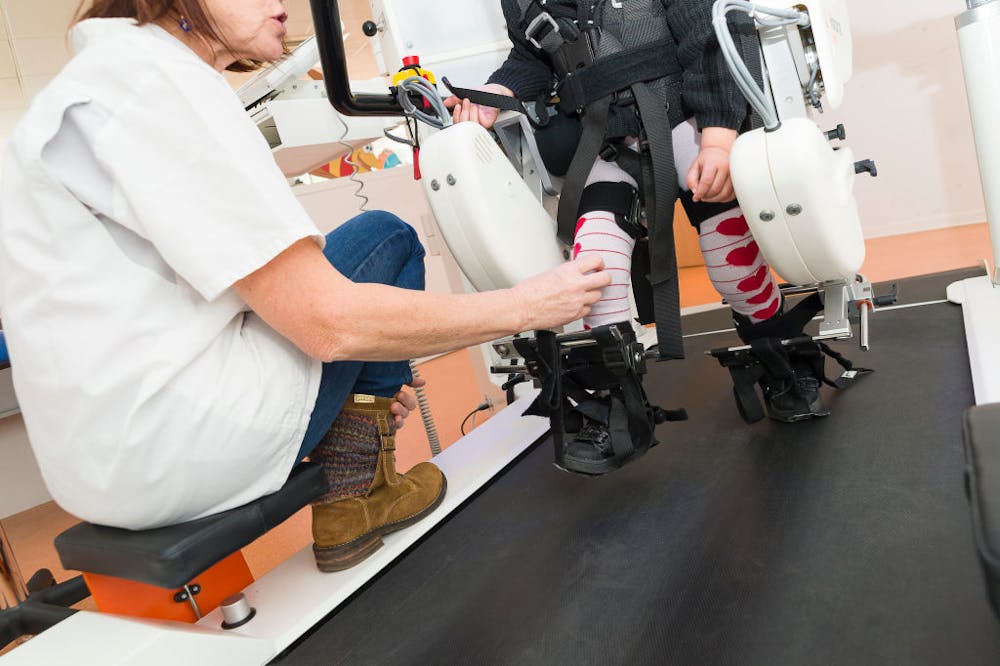
Physical therapist monitoring young patient walking on treadmill with robotic assistance
Robotics can help patients recover physical function in rehabilitation. BSIP/Universal Images Group via Getty Images

How people communicate with robots

Robots were originally designed to undertake repetitive and mundane tasks and operate exclusively in robot-only zones like factories. Robots have since advanced to work collaboratively with people with new ways to communicate with each other.

Cooperative control is one way to transmit information and messages between a robot and a person. It involves combining human abilities and decision making with robot speed, accuracy and strength to accomplish a task.

For example, robots in the agriculture industry can help farmers monitor and harvest crops. A human can control a semi-autonomous vineyard sprayer through a user interface, as opposed to manually spraying their crops or broadly spraying the entire field and risking pesticide overuse.

Robots can also support patients in physical therapy. Patients who had a stroke or spinal cord injury can use robots to practice hand grasping and assisted walking during rehabilitation.

Another form of communication, emotional intelligence perception, involves developing robots that adapt their behaviors based on social interactions with humans. In this approach, the robot detects a person’s emotions when collaborating on a task, assesses their satisfaction, then modifies and improves its execution based on this feedback.

For example, if the robot detects that a physical therapy patient is dissatisfied with a specific rehabilitation activity, it could direct the patient to an alternate activity. Facial expression and body gesture recognition ability are important design considerations for this approach. Recent advances in machine learning can help robots decipher emotional body language and better interact with and perceive humans.

Robots in rehab

Questions like how to make robotic limbs feel more natural and capable of more complex functions like typing and playing musical instruments have yet to be answered.

I am an electrical engineer who studies how the brain controls and communicates with other parts of the body, and my lab investigates in particular how the brain and hand coordinate signals between each other. Our goal is to design technologies like prosthetic and wearable robotic exoskeleton devices that could help improve function for individuals with stroke, spinal cord and traumatic brain injuries.

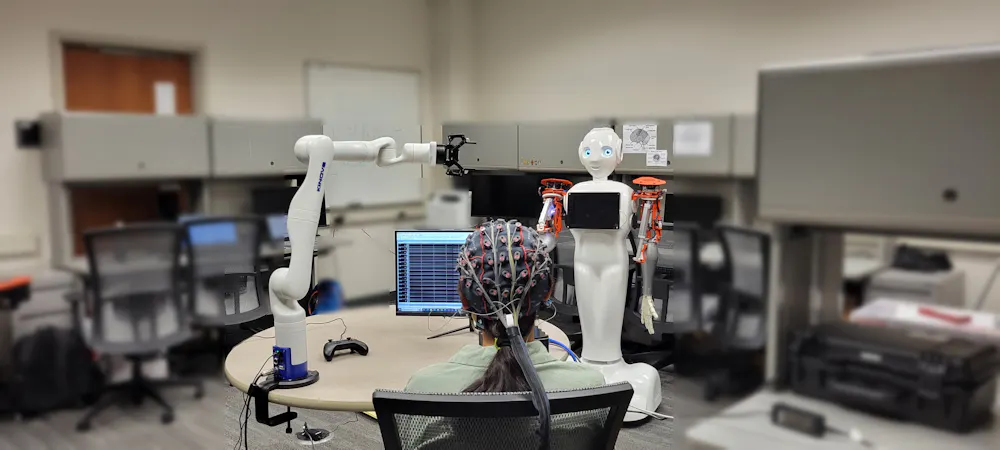
One approach is through brain-computer interfaces, which use brain signals to communicate between robots and humans. By accessing an individual’s brain signals and providing targeted feedback, this technology can potentially improve recovery time in stroke rehabilitation. Brain-computer interfaces may also help restore some communication abilities and physical manipulation of the environment for patients with motor neuron disorders.

Person sitting in chair wearing electrode cap with a computer screen and robotic arms on a table in front of them
Brain-computer interfaces could allow people to control robotic arms by thought alone. Ramana Kumar Vinjamuri, CC BY-ND

The future of human-robot interaction

Effective integration of robots into human life requires balancing responsibility between people and robots, and designating clear roles for both in different environments.

As robots are increasingly working hand in hand with people, the ethical questions and challenges they pose cannot be ignored. Concerns surrounding privacy, bias and discrimination, security risks and robot morality need to be seriously investigated in order to create a more comfortable, safer and trustworthy world with robots for everyone. Scientists and engineers studying the “dark side” of human-robot interaction are developing guidelines to identify and prevent negative outcomes.

Human-robot interaction has the potential to affect every aspect of daily life. It is the collective responsibility of both the designers and the users to create a human-robot ecosystem that is safe and satisfactory for all.

A photo was replaced to more accurately reflect the work of the author.

Ramana Vinjamuri, Assistant Professor of Computer Science and Electrical Engineering, University of Maryland, Baltimore County

This article is republished from The Conversation under a Creative Commons license. Read the original article.

Wooded grasslands flourished in Africa 21 million years ago – new research forces a rethink of ape evolution

An ape that lived 21 million years ago was used to a habitat that was both grassy and wooded. Corbin Rainbolt
Laura M. MacLatchy, University of Michigan; Dan Peppe, Baylor University, and Kieran McNulty, University of Minnesota

Human evolution is tightly connected to the environment and landscape of Africa, where our ancestors first emerged.

According to the traditional scientific narrative, Africa was once a verdant idyll of vast forests stretching from coast to coast. In these lush habitats, around 21 million years ago, the earliest ancestors of apes and humans first evolved traits – including upright posture – that distinguished them from their monkey cousins.

But then, the story went, global climates cooled and dried, and forests began to shrink. By about 10 million years ago, grasses and shrubs that were better able to tolerate the increasingly dry conditions started to take over eastern Africa, replacing forests. The earliest hominins, our distant ancestors, ventured out of the forest remnants that had been home onto the grass-covered savanna. The idea was that this new ecosystem pushed a radical change for our lineage: We became bipedal.

For a long time, researchers have linked the expansion of grasslands in Africa to the evolution of numerous human traits, including walking on two legs, using tools and hunting.

Despite the prominence of this theory, mounting evidence from paleontological and paleoclimatological research undermines it. In two recent papers, our multidisciplinary team of Kenyan, Ugandan, European and American scientists concluded that it is time finally to discard this version of the evolutionary story.

A decade ago, we began what, at the time, was a unique experiment in paleoanthropology: Several independent research teams joined together to build a regional perspective on the evolution and diversification of early apes. The project, dubbed REACHE, short for Research on Eastern African Catarrhine and Hominoid Evolution, was based on the premise that conclusions drawn from evidence across many locations would be more powerful than interpretations from individual fossil sites. We wondered whether previous researchers had missed the forest for the trees.

An ape in Uganda 21 million years ago

Based on the lifestyle of apes alive today, scientists have hypothesized that the very first ones evolved in dense forests, where they successfully fed on fruit, thanks to a few key anatomical innovations.

Chimpanzees move with an upright posture.

Apes have stable, upright backs. Once the back is vertical, an ape no longer has to walk on the top of small branches like a monkey. Instead, it can grab different branches with its arms and legs, distributing its body mass across multiple supports. Apes can even hang below branches, making them less likely to lose their balance. In this way, they are able to access fruits growing on the edges of tree crowns that otherwise might be available only to smaller species.

But was this scenario true for the earliest apes? A 21 million-year-old site in Moroto, Uganda, became an ideal place to investigate this question. There our REACHE team discovered teeth and other remains belonging to Morotopithecus, the oldest ape for which scientists have found fossils from the cranium, teeth and other parts of the skeleton.

Two bones in particular helped us understand how this species moved. A lower backbone found decades ago and curated by the Uganda National Museum had already been noted for its bony attachments for back muscles, indicating that Morotopithecus had a stiff lower back, good for climbing upright in the trees.

A discovery of our own confirmed this climbing behavior in a major way. At Moroto we found a fossil ape thigh bone that is short but strong, with a very thick shaft. This kind of bone is characteristic of living apes and helps them climb up and down trees with a vertical torso.

vertebra, partial jaw and femur fossils
Three fossilized bones from Morotopithecus: a vertebra, part of a jaw and a femur. L. MacLatchy and J. Kingston

Although both skeletal fossils are consistent with the fruit-eating, forest-dwelling ape hypothesis, we found something astonishing when we discovered an ape lower jaw fragment in the same excavation layer. Its molars were elongated, with well-developed shearing crests running between the cusps. These ridges are ideal for slicing leaves but are unlike the low, round, crushing tooth cusps of committed fruit eaters. If ape skeletal adaptations evolved in forests to aid in fruit exploitation, why would the earliest ape showing these locomotor features instead have teeth like a leaf eater’s?

Such inconsistencies between our evidence and the traditional narrative of ape origins led us to question other assumptions: Did Morotopithecus live in a forested habitat at all?

The environment at Moroto

To figure out Morotopithecus’ habitat, we studied the chemistry of fossil soils – called paleosols – and the microscopic remains of plants they contain in order to reconstruct the ancient climate and vegetation at Moroto.

Trees and most shrubs and nontropical grasses are classified as C₃ plants, based on the type of photosynthesis they perform. Tropical grasses, which rely on a different photosynthetic system, are known as C₄ plants. Importantly, C₃ plants and C₄ plants differ in the proportions of the various carbon isotopes they take in. That means carbon isotope ratios preserved in the paleosols can tell us the composition of the ancient vegetation.

We measured three distinct carbon isotope signatures, each providing a different perspective on the plant community: carbon resulting from decomposition of vegetation and soil microbes; carbon resulting from plant waxes; and calcium carbonate nodules formed in soils through evaporation.

Although each proxy gave us slightly different values, they converged on a single remarkable story. Moroto was not a closed forest habitat but rather a relatively open woodland environment. What’s more, we found evidence of abundant C₄ plant biomass – tropical grasses.

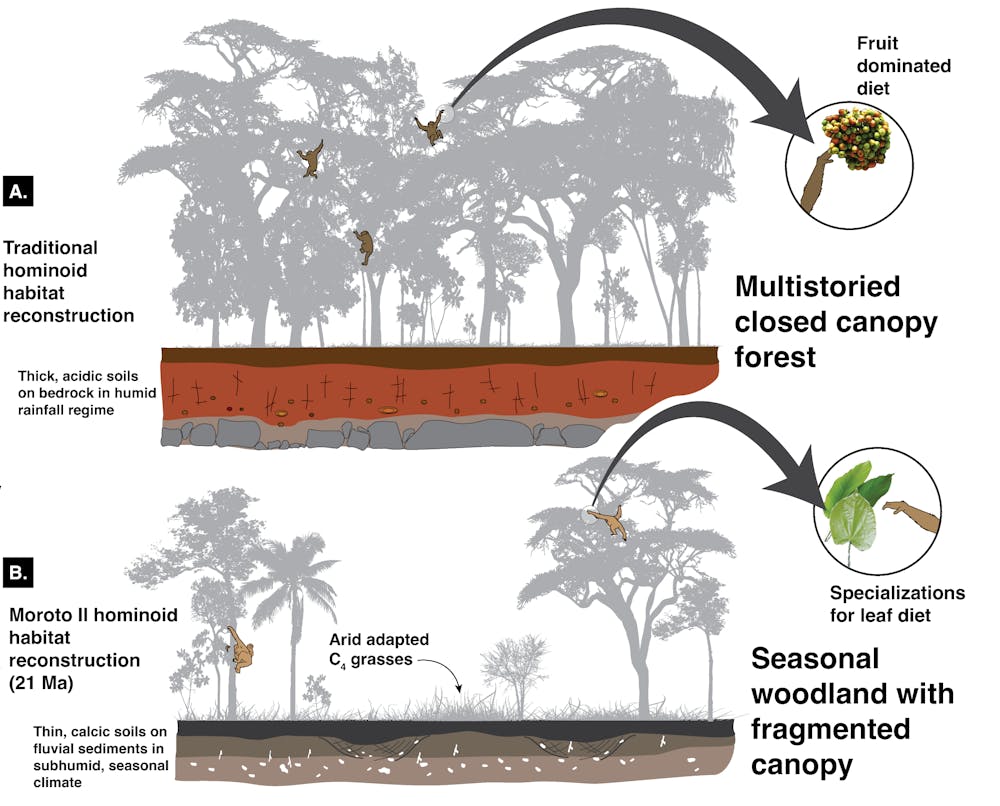
Traditional versus updated view of early ape habitat and evolution
(A) Forested ecosystem traditionally believed to be the habitat of early apes, which ate fruit at the ends of tree branches, compared with (B) new perspective of grassy woodland ecosystem reconstruction, where early apes lived in open habitats and fed on leaves. Figure modified with permission from MacLatchy et al., Science 380, eabq2835 (2023)

This discovery was a revelation. C₄ grasses lose less water during photosynthesis than C₃ trees and shrubs do. Today, C₄ grasses dominate seasonally dry savanna ecosystems that cover more than half of Africa. But scientists hadn’t thought the levels of C₄ biomass we measured at Moroto had evolved in Africa until 10 million years ago. Our data suggests it happened twice as far back in time, 21 million years ago.

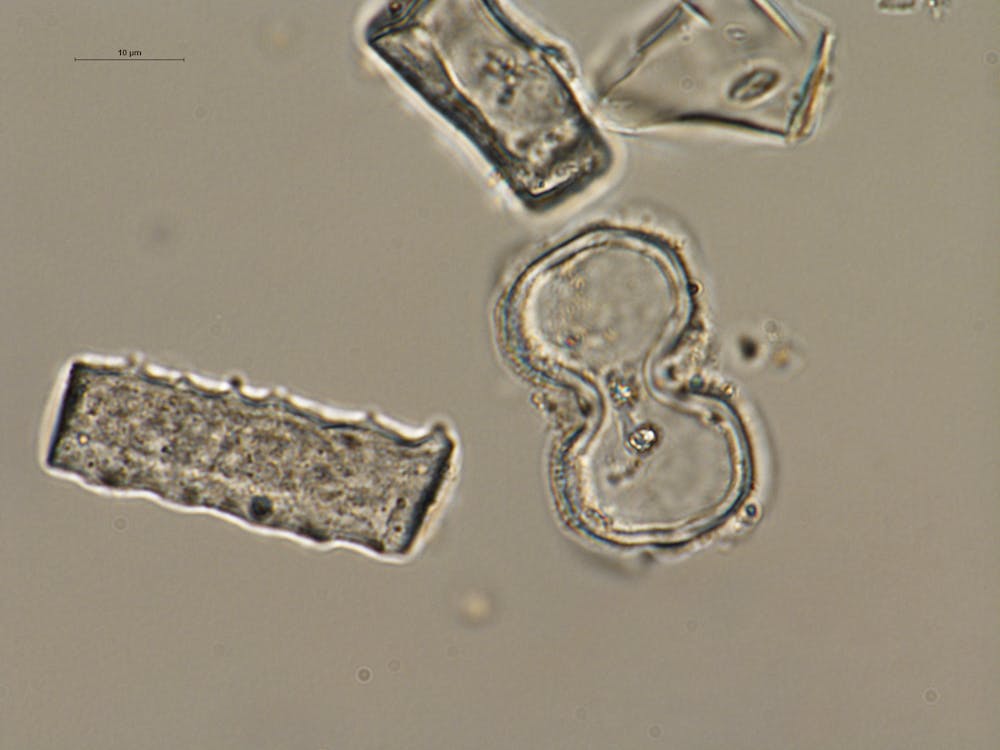
Our colleagues Caroline Strömberg, Alice Novello and Rahab Kinyanjui used another line of evidence to corroborate the abundance of C₄ grasses at Moroto. They analyzed phytoliths, tiny silica bodies created by plant cells, preserved in the paleosols. Their results supported an open woodland and wooded grassland environment for this time and place.

Early Miocene grass phytoliths
Example of typical grass phytoliths, extracted from paleosol at one of the sites, some of which indicate the presence of C₄ grass. Alice Novello

Taken together, this evidence dramatically contradicts the traditional view of ape origins – that apes evolved upright torsos to reach fruit in forest canopies. Instead, Morotopithecus, the earliest known ape with upright locomotion, consumed leaves and inhabited an open woodland with grassy areas.

A new, regional view of early ape habitats

Through the REACHE project, we applied the same approach to reconstruct habitats at eight other fossil sites in Kenya and Uganda, ranging in age from around 16 million to 21 million years old. After all, Morotopithecus is only one of several apes that lived during this time period.

To our surprise, we discovered that the ecological signal measured at Moroto was not unique. Instead, it was part of a broader pattern in eastern Africa during this time.

Our isotopic proxies at each fossil site contributed two significant revelations. First, vegetation types ranged from closed canopy forests to open wooded grasslands. And second, every site had a mixture of C₃ and C₄ vegetation, with some locations having a high proportion of C₄ grass biomass. Phytoliths from the same paleosols again corroborated that abundant C₄ grasses were present at multiple sites.

cartoon depictions of nine paleoenvironments placed on timeline
Paleoenvironments for the nine fossil sites analyzed range from closed canopy forest to more open wooded grassland environments. Inset map shows the geographic location of sites in eastern Africa. Dan Peppe

The realization that such a variety of environments, especially open habitats with C₄ grasses, was present at the dawn of the apes forces a reassessment not just of the evolution of apes but of humans and other African mammals. Although some studies had suggested such habitat variation was present across Africa, our project was able to confirm it, repeatedly, within the very habitats that early apes and their animal contemporaries occupied.

Because the timing of the assembly of Africa’s grassland habitats underlies many evolutionary hypotheses, our discovery that they existed much earlier than expected calls for a recalibration of those ideas.

Regarding human origins, our study adds to a growing body of evidence that our divergence from apes – in anatomy, ecology, behavior – cannot be simply explained by the appearance of grassland habitats. Nevertheless, we cautiously remind ourselves that hominin evolution unfolded over many millions of years. It is almost certain that the vast and majestic grasslands of Africa played an important role in some of the many steps along the path to becoming human.

Laura M. MacLatchy, Professor of Anthropology, University of Michigan; Dan Peppe, Associate Professor of Geosciences, Baylor University, and Kieran McNulty, Professor of Anthropology, University of Minnesota

This article is republished from The Conversation under a Creative Commons license. Read the original article.

How the bottled water industry is masking the global water crisis

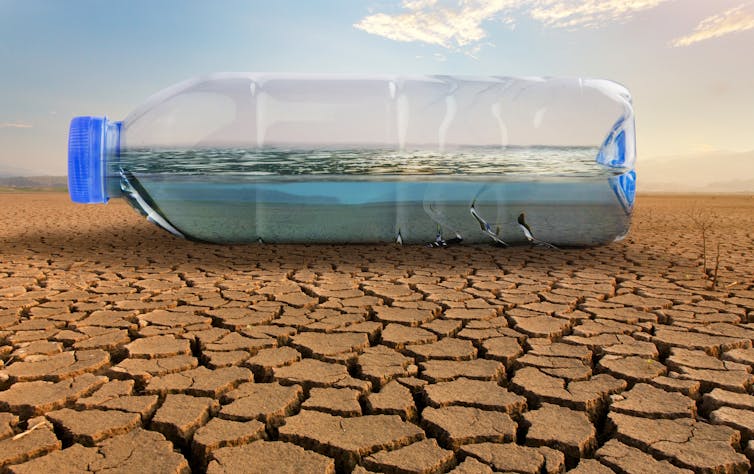
Bottled water corporations exploit surface water and aquifers, buy water at a very low cost and sell it for 150 to 1,000 times more than the same unit of municipal tap water. (Shutterstock)
Zeineb Bouhlel, United Nations University and Vladimir Smakhtin, United Nations University

Bottled water is one of the world’s most popular beverages, and its industry is making the most of it. Since the millennium, the world has advanced significantly towards the goal of safe water for all. In 2020, 74 per cent of humanity had access to safe water. This is 10 per cent more than two decades ago. But that still leaves two billion people without access to safe drinking water.

Meanwhile, bottled water corporations exploit surface water and aquifers — typically at very low cost — and sell it for 150 to 1,000 times more than the same unit of municipal tap water. The price is often justified by offering the product as an absolute safe alternative to tap water. But bottled water is not immune to all contamination, considering that it rarely faces the rigorous public health and environmental regulations that public utility tap water does.

In our recently published study, which studied 109 countries, it was concluded that the highly profitable and fast-growing bottled water industry is masking the failure of public systems to supply reliable drinking water for all.

The industry can undermine progress of safe-water projects, mostly in low- and middle-income countries, by distracting development efforts and redirecting attention to a less reliable, less affordable option.

Bottled water industry can disrupt SDGs

The fast-growing bottled water industry also impacts the UN’s Sustainable Development Goals (SDG) in many ways.

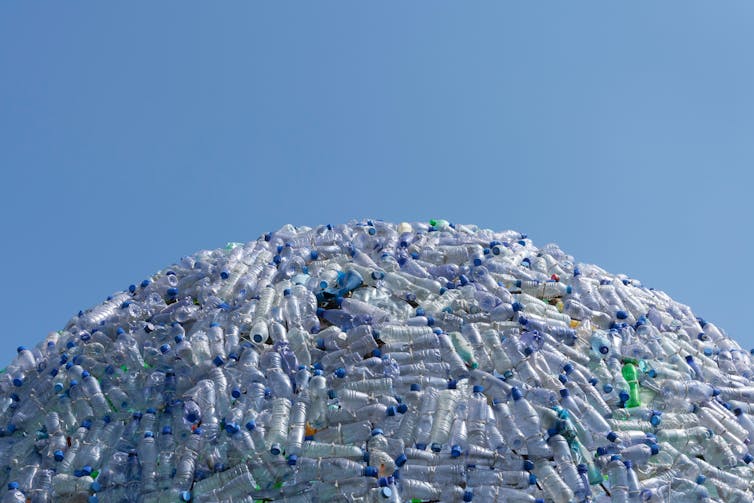
A pile of plastic bottle waste.
The rising sales of global bottled water is contributing to plastic pollution on land and in the oceans. (Shutterstock)

The latest UN University report revealed that the annual sales of the global bottled water market is expected to double to US$500 billion worldwide this decade. This can increase stress in water-depleted areas while contributing to plastic pollution on land and in the oceans.

Growing faster than any other in the food category worldwide, the bottled water market is biggest in the Global South, with the Asia-Pacific, Africa and Latin American and Caribbean regions accounting for 60 per cent of all sales.

But no region is on track to achieve universal access to safe water services, which is one of the SDG 2030 targets. In fact, the industry’s greatest impact seems to be its potential to stunt the progress of nations’ goals to provide its residents with equitable access to affordable drinking water.

Impact on vulnerable nations

In the Global North, bottled water is often perceived to be healthier and tastier than tap water. It is, therefore, more a luxury good than a necessity. Meanwhile, in the Global South, it is the lack or absence of reliable public water supply and water management infrastructure that drives bottled water markets.

Therefore, in many low- and middle-income countries, particularly in the Asia Pacific, rising consumption of bottled water can be seen as a proxy indicator of decades of governments’ failure to deliver on commitments to safe public water systems.

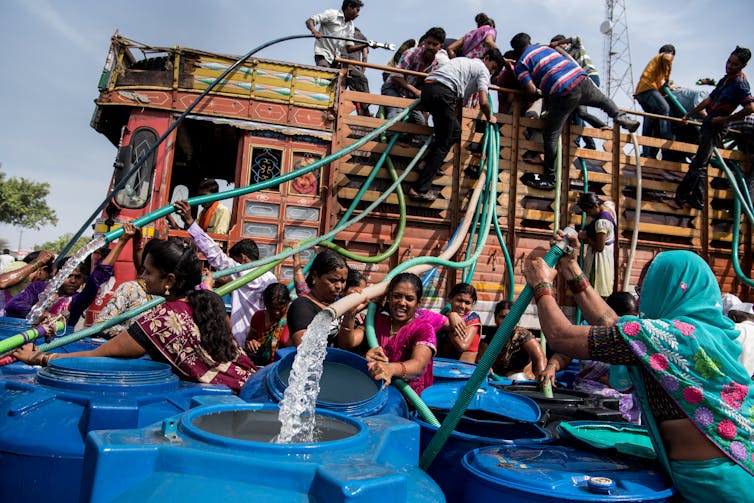
A group of people fill water in their drums from a truck carrying municipal water.
The rising consumption of bottled water in some countries can be seen as a proxy indicator of decades of governments’ failure to deliver on commitments to safe public water systems. (Shutterstock)

This further widens the global disparity between the billions of people who lack access to reliable water services and the others that enjoy water as a luxury.

In 2016, the annual financing required to achieve a safe drinking water supply throughout the world was estimated to cost US$114 billion, which amounts to less than half of today’s roughly US$270 billion global annual bottled water sales.

Regulating the bottled-water industry

Last year, the World Health Organization estimated that the current rate of progress needs to quadruple to meet the SDGs 2030 target. But this is a colossal challenge considering the competing financial priorities and the prevailing business-as-usual attitude in the water sector.

As the bottled water market grows, it is more important than ever to strengthen legislation that regulates the industry and its water quality standards. Such legislation can impact bottled water quality control, groundwater exploitation, land use, plastic waste management, carbon emissions, finance and transparency obligations, to mention a few.

Our report argues that, with global progress toward this target so far off-track, expansion of the bottled water market essentially works against making headway, or at least slows it down, adversely affecting investments and long-term public water infrastructure.

Some high-level initiatives, like an alliance of Global Investors for Sustainable Development, aim to scale up finance for the SDGs, including water-related ones.

Such initiatives offer the bottled water sector an opportunity to become an active player in this process and help accelerate progress toward reliable water supply, particularly in the Global South.

Zeineb Bouhlel, Research Associate, Institute for Water, Environment and Health (UNU-INWEH), United Nations University and Vladimir Smakhtin, Former Director of the Institute for Water, Environment and Health (UNU-INWEH), United Nations University

This article is republished from The Conversation under a Creative Commons license. Read the original article.

5 Ways to Savor Fresh-Grilled Summer Seafood

Keep the grill cooking all summer long with a family favorite, seafood, and satisfy taste buds with fresh flavors hot off the grates. While some people assume seafood is challenging to cook, it can actually be an easy meal for home chefs of all skill levels.

To ensure your cookout is an unrivaled success, start with seafood that brings superior taste to the table. From crustaceans to a wide selection of unique-tasting oysters and sea scallops, mussels and clams, Maine Seafood offers something for all seafood lovers.

With a coastline that stretches 3,478 miles along the cold, clean North Atlantic, the state is home to a diversity of both wild-caught and farmed species.

Get inspired by these Maine Seafood grilling tips, sure to elevate your at-home seafood experience with the state’s superior taste and quality:

Littleneck Clams
Heat grill to medium-high heat then place littleneck clams directly on grill grates or in a single layer on a large baking pan. After 5-7 minutes on the grill, clams will begin to open. Without spilling juice, carefully place clams on a serving platter. Serve with melted butter or in pasta. Discard clams that don’t open.

Oysters
Place oysters cupped sides down directly on grill heated to medium-high. Cover the grill and cook until oysters open and meat is opaque and cooked through, about 5 minutes for smaller oysters and 8-10 minutes for larger ones. Place on a serving platter, remove top shells and run a sharp knife along insides of bottom shells to detach oysters. Top with garlic butter and serve with lemon.

Salmon
Heat grill to medium-high heat. Pat salmon dry; brush with olive oil and top with seasonings. Place salmon skin side down on grill grates and cook 6-8 minutes, or until meat turns opaque. You can also try a grill-safe cedar plank to infuse added flavor.

Haddock
Heat grill to medium-high heat. Pat haddock – flaky white fish that’s sweet and delicate – dry and brush with olive oil. Wrap fillets in aluminum foil with herbs and seasonings; completely seal with seam sides facing upward. Grill 8-10 minutes, or until meat turns opaque.

Lobster Tail
For a delicious twist this summer, enjoy these tender, tasty Grilled Lobster Tacos with vinegar slaw and cilantro lime crema.

For easy, delicious recipe inspiration and to order seafood straight to your door, visit SeafoodfromMaine.com.

Grilled Maine Lobster Tacos

Total time: 25 minutes
Servings: 8

Vinegar Slaw:

  • 2/3 cup apple cider vinegar
  • 1 teaspoon celery seeds
  • 2/3 cup white sugar
  • 1 cup water
  • 1/2 small head green cabbage, shredded or cut thinly (approximately 8 cups)

Cilantro Lime Crema:

  • 1/2 cup sour cream
  • fresh cilantro leaves, chopped
  • 1/2 cup mayonnaise
  • 4 teaspoons fresh lime juice
  • 1 lime, zest only, minced
  • 1/2 teaspoon minced garlic
  • kosher salt, plus additional to taste, divided
  • freshly ground black pepper, to taste

Lobster Tacos:

  • Extra-virgin olive oil
  • 4 large (4-6 ounces each) Maine Lobster tails, defrosted
  • 4 tablespoons unsalted butter, melted
  • salt, to taste
  • pepper, to taste
  • 8 small flour tortillas
  • pico de gallo
  • 1 lime, cut into wedges for serving
  1. To make vinegar slaw: In small saucepan over medium heat, heat apple cider vinegar, celery seeds, sugar and water; stir until sugar dissolves. In large bowl, pour mixture over cabbage; cover and refrigerate.
  2. To make cilantro lime crema: In blender, blend sour cream, cilantro, mayonnaise, lime juice, lime zest and garlic. Season with salt and pepper, to taste; refrigerate.
  3. To make lobster tacos: Preheat grill to medium-high heat.
  4. Brush grill grates with oil to prevent sticking. Using kitchen shears, cut lobster shells in half lengthwise. Place skewer through meat to prevent curling during cooking.
  5. Brush lobster meat with melted butter and season with salt and pepper.
  6. Grill lobster tails meat side down 5 minutes then flip.
  7. Brush meat again with butter and cook 5 minutes, or until opaque throughout. Cook to 140 F internal temperature.
  8. Remove meat from shells and cut into bite-sized chunks or leave whole, if desired.
  9. Place tortillas on grill 30-60 seconds per side, or until warmed and slightly brown.
  10. Add drained slaw to tortillas. Top with lobster meat, pico de gallo and cilantro sauce. Serve with lime wedges.
SOURCE:
Maine Seafood

The Colorado River drought crisis: 5 essential reads

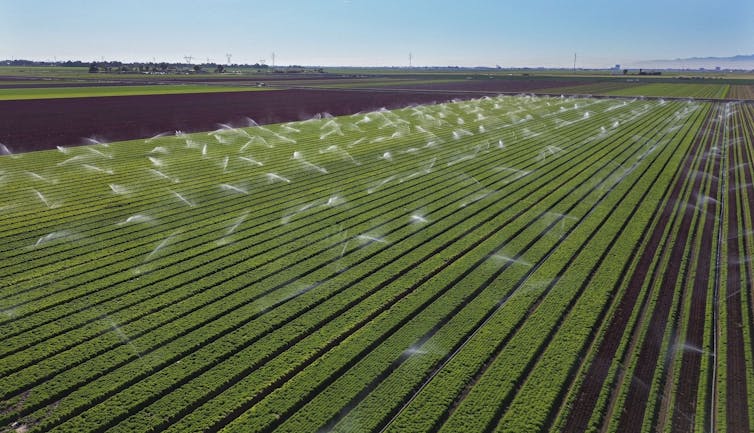
Sprinklers water a lettuce field in Holtville, California with Colorado River water. Sandy Huffaker/AFP via Getty Images
Jennifer Weeks, The Conversation

A 23-year western drought has drastically shrunk the Colorado River, which provides water for drinking and irrigation for Wyoming, Colorado, Utah, New Mexico, Arizona, Nevada, California and two states in Mexico. Under a 1922 compact, these jurisdictions receive fixed allocations of water from the river – but now there’s not enough water to provide them.

As states try to negotiate ways to share the decreasing flow, the U.S. Department of the Interior is considering cuts of up to 25% in allotments for California, Nevada and Arizona. The federal government can regulate these states’ water shares because they come mainly from Lake Mead, the largest U.S. reservoir, which was created when the Hoover Dam was built on the Colorado River near Las Vegas.

These five articles from The Conversation’s archive explain what’s happening and what’s at stake in the Colorado River basin’s drought crisis.

The Colorado River provides water to 40 million people and some of the fastest-growing cities in the U.S., but its flow is dwindling.

1. A faulty river compact

The idea of negotiating a legally binding agreement to share river water among states was innovative in the 1920s. But the Colorado River Compact made some critical assumptions that have proved to be fatal flaws.

The lawyers who wrote the compact knew that the Colorado’s flow could vary and that they didn’t have enough data for long-term planning. But they still allocated fixed quantities of water to each participating state. “We know now that they used optimistic flow numbers measured during a particularly wet period,” wrote Patricia J. Rettig, head archivist of Colorado State University’s Water Resources Archive.

Nor did the compact encourage conservation as the West’s population grew. “When settlers developed the West, their prevailing attitude was that water reaching the sea was wasted, so people aimed to use it all,” Rettig observed.

2. Temporary cuts aren’t big enough

Western states have known for years that they were taking more water from the Colorado than nature was putting in. But reducing water use is politically charged, since it means imposing limits on such powerful constituencies as farmers and developers.

In 2019, officials from the U.S. government and the seven Colorado Basin states signed a seven-year drought contingency plan that temporarily reduced states’ water allocations. But the plan did not propose long-term strategies for addressing climate change or overuse of water in the region.

“Since 2000, Colorado River flows have been 16% below the 20th-century average,” wrote water policy experts Brad Udall, Douglas Kenney and John Fleck. “Temperatures across the Colorado River Basin are now over 2 degrees Fahrenheit (1.1 degrees Celsius) warmer than the 20th-century average, and are certain to continue rising. Scientists have begun using the term ‘aridification’ to describe the hotter, drier climate in the basin, rather than ‘drought,’ which implies a temporary condition.”

3. The looming threat of dead pool

Lake Mead and Lake Powell, the other major reservoir on the lower Colorado River, were created to provide water for irrigation and to generate hydropower, which is produced by the force of water flowing through large turbines in the lakes’ dams. If water in either lake drops below the intakes for the turbines, the lake will fall below “minimum power pool” and stop producing electricity.

If water in the lakes dropped even further, they could reach “dead pool,” the point at which water is too low to flow through the dam. This is an extreme scenario, but it can’t be ruled out, University of Arizona water expert Robert Glennon warned. In addition to drought and climate change, he noted, both lakes lie in canyons that “are V-shaped, like martini glasses – wide at the rim and narrow at the bottom. As levels in the lakes decline, each foot of elevation holds less water.”

Infographic of Hoover Dam and water levels where power general and then water flow would stop.
This graphic shows the water level in Lake Powell as of November 2022 and the levels that represent minimum power pool and dead pool. Arizona Department of Water Resources

4. Why hydropower matters

Climate change and drought are stressing hydropower generation throughout the U.S. West by reducing snowpack and precipitation and drying up rivers. This could create serious stress for regional electric grid operators, according to Penn State civil engineers Caitlin Grady and Lauren Dennis.

“Because it can quickly be turned on and off, hydroelectric power can help control minute-to-minute supply and demand changes,” they wrote. “It can also help power grids quickly bounce back when blackouts occur. Hydropower makes up about 40% of U.S. electric grid facilities that can be started without an additional power supply during a blackout, in part because the fuel needed to generate power is simply the water held in the reservoir behind the turbine.”

While most hydropower dams are likely here to stay, in Grady’s and Dennis’ view, “climate change will change how these plants are used and managed.”

5. The resurrection of Glen Canyon

Lake Powell was created by flooding Glen Canyon, a spectacular swath of canyons on the Utah-Arizona border. As the lake’s water level drops, many side canyons have reemerged. Effectively, climate change is draining the lake.

A boat trip into zones of Glen Canyon that have been uncovered as water levels drop.

This is a once-in-a-lifetime opportunity to recover a unique landscape, wrote University of Utah political scientist Dan McCool. “But managing this emergent landscape also presents serious political and environmental challenges.”

In McCool’s view, a key priority should be to give Native American tribes a meaningful role in managing those lands – including cultural sites and artifacts that were flooded when the river was dammed. The river has also deposited massive quantities of sediments in the canyon behind the dam, some of which are contaminated. And as visitors flock to newly accessible side canyons, the area will need staff to manage visitors and protect fragile resources.

“Other landscapes are likely to emerge across the West as climate change reshapes the region and numerous reservoirs decline. With proper planning, Glen Canyon can provide a lesson in how to manage them,” McCool observed.

Jennifer Weeks, Senior Environment + Energy Editor, The Conversation

This article is republished from The Conversation under a Creative Commons license. Read the original article.

Is college stressing you out? It could be the way your courses are designed

Nearly 7 in 10 undergrad respondents had thought about taking a break due to stress, according to a new study. skynesher via Getty Images
Nichole Barta, Gonzaga University

Stress is stopping students from enrolling in and staying in college.

According to a recent survey of over 12,000 adults in the U.S., 63% of those 18 to 24 who had never attended college said emotional stress is one of the biggest reasons why they are not currently enrolled.

And among those who do enroll, 41% thought about withdrawing for at least one term, the survey found, and more than half of the time, emotional stress was the main reason. The figure was even higher – 69% – among those pursuing a bachelor’s degree.

While there may be some aspects of college that are inherently stressful, there are also steps that college instructors can take to make the experience less stressful than it would otherwise be. I know this because as director of the Center for Teaching & Advising at Gonzaga University, I teach faculty how to design their courses in ways that use practical, evidence-based strategies to reduce student stress. I believe these strategies have broad application for colleges and universities in general. Here are four practices that I often recommend:

1. Design a friendly syllabus

The language used in a course syllabus affects how approachable and supportive students perceive their instructor to be. By offering outside help and using a friendly tone in syllabuses, faculty can positively influence students’ decisions to seek assistance.

Conversely, using punitive language, such as threatening penalties for not completing certain tasks, may create an impression that an instructor is unapproachable. This could in turn discourage students from seeking help when needed.

I encourage instructors to review their syllabuses and modify the tone to be as friendly and supportive as possible.

2. Assign realistic workloads

An overwhelming workload is a significant cause of stress, as students may feel unable to effectively manage the demands of their coursework. To prevent overwhelming students, instructors could assign a workload aligned with the course credit hours. One rule of thumb is to only assign two hours of homework for every hour of class. While this guideline is flexible, instructors could consider the potential burden on students if they exceed it. If every instructor assigns more homework than the guideline recommends, it could become a significant challenge for students to keep up with their coursework.

Rice University offers a workload calculator that faculty can use to estimate the workload in their courses based on the different kinds of work they assign. I recommend that instructors use this resource to evaluate the time their readings and assignments take. If the quantity or complexity of assignments becomes too much for students, instructors can make adjustments to ensure a more manageable load.

3. Communicate clear expectations for how work will be graded

Student anxiety increases when it is unclear how they will be assessed.

A rubric is a scoring tool that spells out criteria and levels of performance for an assignment. Its purpose is to make clear how student work will be judged. Students have reported that rubrics help them identify key aspects of an assignment. This in turn reduces uncertainty about what qualifies as quality work. Rubrics also allow students to monitor their progress and make changes before they turn in an assignment. Additionally, rubrics are perceived as a way to make grades more transparent and fair.

Rubrics should be provided well ahead of the assessment deadline so that students can use them to judge their own work. This allows students to ask for clarification about the criteria. Rubrics also provide a way for instructors to efficiently provide feedback. I recommend that instructors require students to use rubrics as part of an assignment to reflect on their understanding of the expectations.

4. Teach effective study skills for tests

Test anxiety is a common stress response for college students. Around 40% of students report experiencing some degree of test anxiety, with 15% indicating levels that are debilitating during assessments. Research has revealed that test anxiety may stem from students’ realization that they haven’t learned the course material, rather than their ability to recall information during exams.

A distressed-looking male college student sits at a desk in a blur of other students.
Test anxiety can worsen as time goes on. Chris Ryan via Getty Images

I recommend instructors integrate effective study skills into their courses and provide guidance to help students apply these methods. Strategies that have been shown to improve academic performance and reduce anxiety include:

  • Pre-lecture quizzes: online quizzes taken before a lecture to help students identify concepts they don’t understand. Instructors can also detect patterns in misunderstandings.

  • How-to-learn assignments: assignments that teach students effective study strategies.

  • Frequent in-class quizzes with real-time feedback: in-class quizzes that are not graded, taken multiple times throughout a course, and provide students with immediate feedback on how well they understand the material. This strategy can help students identify any misconceptions and correct them quickly.

The stress of college may never be eliminated, but it can be alleviated. It just requires a modest amount of effort to design courses in evidence-based ways that make the experience of going to college less stressful than it would otherwise be.

Nichole Barta, Associate Professor of Kinesiology & Sport Management, Gonzaga University

This article is republished from The Conversation under a Creative Commons license. Read the original article.

Small wonders: The antibodies from camels and sharks that could change medicine


A handful of animals make a pared-down version of these pathogen-fighting proteins of our immune system. Scientists hope to harness them as treatments for ills from cancer to Covid, for tracking cells in the body, and more.

Every four months, pathologist Aaron LeBeau scoops into a net one of the five nurse sharks he keeps in his University of Wisconsin lab. Then he carefully administers a shot to the animal, much like a pediatrician giving a kid a vaccine. The shot will immunize the shark against a human cancer, perhaps, or an infectious disease, such as Covid-19. A couple of weeks later, after the animal’s immune system has had time to react, LeBeau collects a small vial of shark blood.

Halfway across the country, immunologist Hidde Ploegh goes through the same steps, but with alpacas that live on a farm in western Massachusetts. The scientists are after the same thing: tiny antibodies, made only by certain animals, that may have big implications for human health.

Most antibodies — those molecules that course through our blood and tissues patrolling for pathogens — are fairly hefty as proteins go. But the antibodies made by camels and sharks and their close relatives are simpler and smaller. Since their discovery in the late 1980s, researchers have learned that these antibodies pack a big punch: They can latch onto hidden parts of molecules and can penetrate tissues more deeply, enhancing their potential as therapies. 

“They can get into little nooks and crannies of different proteins that human antibodies cannot access,” LeBeau says.

In the last decades, investigations of these diminutive antibodies have surged. Not only can they sneak into small places, they are also easy to work with — sturdier than their ordinary counterparts — and relatively cheap to make in large quantities. All these features make the antibodies promising treatments for a host of diseases, whether clotting disorders or Covid-19. Researchers are also exploring their use for diagnosing conditions such as cancer, and they’re becoming a key tool in other kinds of research, like mapping cells’ insides.

The full promise of these antibodies may still take years to realize, but researchers are very excited about their possibilities. “I think they have potential to save the world,” LeBeau says.

Luck of the blood draw

A group of biology students were the first to discover these unusual antibodies — quite by chance — back in 1989. The students of Free University in Brussels needed some blood for an exam in which they were tasked with separating an antibody into its two main parts: two heavy protein chains, which form a Y shape, and two light protein chains, which flank the prongs at the top of the Y.

Human blood seemed too risky to work with, given concerns at the time about potential HIV exposure, and the students didn’t want to kill a mouse. But the students’ professor, the late Raymond Hamers, happened to be studying sleeping sickness in large animals. He gave the students some blood from a camel, says immunologist Serge Muyldermans, who was then a post-doctoral researcher at the university.

Strangely, the students found only heavy chain proteins in the blood even though antibodies were supposed to also have light chains. As Muyldermans tells it, everyone thought that the camel antibodies had degraded — or that the students had done something wrong — so Hamers went to the Antwerp Zoo to collect fresh camel blood. But the students had not screwed up: Camels make antibodies with only heavy protein chains.

The potential applications of camelids’ small antibodies dawned on Hamers during those early years, says Muyldermans, who details their myriad uses in the 2021  Annual Review of Animal Biosciences. Like antibodies from people or mice, the camelid antibodies could be further pared down into even smaller, yet still effective, fragments — just the tips of the Y. These fragments, called variable domains, are the business end of any antibody — they act as the antibody’s “sensor” and can stick to parts of pathogens or toxins, whatever substance is recognized as foreign and a possible threat.

In standard antibodies (which camels also make), the variable domains come in pairs, one from the heavy chain and one from the light chain. But the variable domains of the camelid’s heavy-chain-only antibodies are singletons. The researchers realized these solitary fragments might be able to grab onto parts of foreign molecules that conventional antibodies were too bulky to reach.

In 1993, the team published the discovery in Nature. The next year, Hamers  patented the production of these camelid antibody fragments (they are also known as VHH antibodies or “nanobodies,” a trademarked term). A few years later, a different group of researchers reported that  sharks also make antibodies with only heavy chains and these have an even smaller tip (these shark end fragments are called variable new antigen receptors, or VNARs).

When the primary patent expired in 2013, research investigating the antibodies really surged, says Ploegh, an immunologist at Boston Children’s Hospital. “That’s sort of when the dam broke and a lot of folks got in on the game.”

Scientists have since learned a lot about the advantages of these mini antibodies. Some is practical: Unlike full-size antibodies, the fragments are stable at room temperature so there’s no need to keep them in a freezer or ship them cold. The mini antibodies of sharks can even be boiled with no effect on their function, LeBeau says. And while full-size antibodies require mammalian cells to be grown in a flask, which can be complicated and expensive to maintain, the fragments can be manufactured in large quantities using bacteria, saving time and money.

These mini antibodies also tend to self-assemble properly, keeping their correct shapes, making them a promising alternative to full-size antibodies, which have more pieces and thus can misfold. Such misfolding may expose parts that are more likely to be recognized by the immune system as foreign molecules, which can provoke a negative immune response in the body, with potentially serious consequences for patient health.

But the standout trait of the mini antibodies is their versatility. All antibodies, whether from human or shark, have variable domains at their tips, but those of sharks and camels have unique traits. They have an especially long, slender finger called a CDR3 loop that can poke into places that human antibodies can’t access. They appear to easily adopt different shapes — LeBeau describes that feature as “molecular yoga.” This means mini antibodies can get into tight spots, whether into tissues of the body or on minuscule parts of individual molecules.

Anti-cancer antibodies

Research into these unusual mini antibodies is now starting to bear fruit. In 2019, the first mini antibody medical treatment to be approved by the US Food and Drug Administration, called Cablivi, came on the market. It treats a rare blood disorder that leads to clots in small blood vessels. The treatment uses nanobodies to bind to a protein in platelets, which stops them from sticking together.

Mini antibodies could become a valuable tool for cancer treatment. Full-size antibodies are already used in immunotherapies to treat certain cancers; in some cases, the antibody tags cancer cells so that the body’s own immune system cells can then recognize and kill the rogue cells; in others, it might bring immune cells closer to the cancer cells so the body can better fight the cancer. The mini antibodies can do the same tasks, but can also be used in other ways, such as targeting proteins to reduce tumor growth or blocking blood vessels from feeding a tumor. And the smaller antibodies also may be less likely to trigger a negative immune response than full-size immunotherapy antibodies, which may lead to dramatic treatment improvements, Ploegh says.

LeBeau, for his part, is focused on developing mini antibodies targeted for prostate and lung cancer. The sharks in his lab, each named for James Bond bad guys — Goldfinger, Hugo Drax, Mr. Stamper, Oddjob and Nick Nack — keep him supplied with antibodies that he uses in lab experiments. His lab recently identified a shark antibody fragment that is specific for a highly aggressive, and currently untreatable, form of lung cancer. He’s hopeful that this new mini antibody could help combat the cancer, and has studies in progress to test it.

The mini antibodies are also helping physicians detect cancers more readily, pinpointing diseased cells with more precision. By attaching radioactive tracer molecules to specific antibodies that seek out cancer cells, physicians can locate cancerous cells on a PET scan, potentially with greater resolution than with standard antibodies because they can penetrate deeper into tissues. One such nanobody-based tracer detected several tumors in mice with  higher specificity than conventional imaging, a team reported in  PNAS in 2019.

Vanquishing viruses

Scientists are also harnessing mini antibodies to fight infectious diseases, including Covid-19. Wai-Hong Tham, an infectious disease researcher at the University of Melbourne and the Walter and Eliza Hall Institute of Medical Research, has been working to generate nanobodies that grab onto part of the spike protein of SARS-CoV-2, to prevent the virus from entering cells in the body.

In a preliminary study, published in PNAS in 2021, Tham and her colleagues identified several nanobodies from alpacas that interfered with the spike proteins’ ability to latch onto the molecular doorknob it uses to get into cells; cocktails of the nanobodies also reduced the amount of virus in experiments with mice. Ideally, Tham says, they could find a nanobody that universally blocks Covid-19 regardless of the coronavirus variant. Other nanobody cocktails also appear promising: Four nanobodies, mixed and matched in various combinations, disabled the spike protein in experiments in cells, a separate team reported in 2021 in  Science.

Mini antibodies might be delivered via mRNA technology so the antibodies assemble inside people’s cells, Tham says. Vaccine-like injections might work against other  infectious diseases, counter toxins such as  botulism, or even deliver therapeutics for cancer or other conditions.

And with a simple pill, mini antibodies could be delivered directly to the gut, which could help to block a number of pathogens, for example rotavirus, that enter the body through the digestive tract. Small microbes — such as yeast, bacteria and algae — can’t efficiently make full-size antibodies because these are too complex. However, researchers have proposed genetically engineering  spirulina (a blue-green alga that’s often sold as a nutritional supplement) or harmless bacteria called  Lactobacilli  or  Lactococcus that could deliver therapeutic nanobodies via a pill, which would be much more cost effective than producing a drug, Tham says.

Sleuthing cell mysteries

The diminutive antibodies are also a boon for scientists who study proteins and investigate interactions between molecules. The size and long finger of these antibodies can help solve protein structures, map proteins  inside cells and show how molecules within cells  interact with each other.

Researchers recently solved the structure of a human protein called ASIC1a, for example — it forms a type of channel that lets sodium into nerve cells and plays an important role in pain perception and several neurodegenerative diseases. Stabilizing the protein with a nanobody allowed the researchers to determine its structure with greater resolution, the team reported in 2021 in  eLife.

Single-domain antibodies “have the potential of mapping interactions that would be very difficult to study otherwise,” says Ploegh, coauthor of an overview of their traits in the 2018  Annual Review of Immunology. Scientists are even investigating their potential use in the brain — a tricky task because the blood-brain barrier likes to keep foreign molecules out. An international team recently reported using nanobodies as  sensors to study whether or not a protein in a mouse brain was activated, and where it was located.

Ploegh says that mini antibodies are exceptionally useful and have significant advantages over full-size antibodies, but they remain somewhat niche because of limited access to the animals that make them — not every researcher has nearby camels, llamas or, in LeBeau’s case, sharks. (“Probably very few people are crazy enough to actually build a shark tank and work with sharks. But we are,” LeBeau says.)

But this is starting to change as interest ramps up. Researchers are also developing new approaches, such as creating synthetic nanobodies and developing mice with “camelized” immune systems for research.

Scientists still don’t know why camelids and cartilaginous fishes, like sharks, are the only animals known to make heavy chain antibodies. Sharks are the most ancient living organisms to rely on antibodies as part of their immune systems, and their antibodies are more stable than those of camelids. Scientists speculate that sharks rely on these antibodies because of the high concentrations of urea in their blood, which would degrade the antibodies of most mammals.

Sharks evolved some 350 million years before camels, yet camelid heavy chain antibodies are also relatively ancient: They are found in both Old World camelids, like camels, and New World camelids, like llamas and alpacas, suggesting that the antibodies may have developed early in the lineage’s evolution. Perhaps “there are certain pathogens that are unique to the camelids that are best fought with these heavy chain antibodies,” Ploegh says.

The heavy chain antibodies of sharks might well be the most ancient immune molecules still in existence — but LeBeau is exuberant about what they could accomplish in the future. “Whenever you work with them, you see something new every day. And that’s really exciting,” he says.

And as for his two-foot-long sharks, when they outgrow their tank, they’ll retire to the local aquarium.


This article originally appeared in Knowable Magazine, an independent journalistic endeavor from Annual Reviews.

Americans spend more time and money filing their taxes than residents of other countries — but there are some benefits to a complex tax code

The average U.S. taxpayer spends 13 hours filing their return. Mehmed Zelkovic/Moment Collection/Getty Images
Bridget Stomberg, Indiana University and Lisa De Simone, The University of Texas at Austin

Tax Day falls on April 18 in 2023. But if you’re one of the 20%-25% of Americans who wait until the last minute to file, don’t panic – you still have time.

The IRS estimates that the average taxpayer spends 13 hours to complete their return. If you own a business, the estimate increases to 25 hours. That said, filing can be tricky.

As accounting professors and hosts of the podcast “Taxes for the Masses,” we know the U.S. tax system is more complex than many other countries. That complexity, however, has benefits as well as drawbacks.

Simpler tax systems abroad

Although the U.S. income tax system asks individuals to devote their time to complete a tax return each year – or pay someone to do it for you – dozens of countries have found another way.

Some nations, such as the U.K., offer return-free systems where taxpayers have the exact correct amount of income tax withheld from their earnings during the year.

Other countries, such as Denmark and Spain, offer tax reconciliation systems whereby the tax authority fills out the return for the taxpayer using information from third parties, such as employers and banks, with knowledge of your financial goings-on. All the taxpayer must do is review the form and submit any corrections. These systems shift the costs of determining one’s tax bill – currently estimated to be over US$11 billion a year in the U.S. – from taxpayers to the government.

The goal of return-free and tax reconciliation systems is to withhold the exact right amount of tax during the year so there’s no need to true up these amounts to the actual tax liability. So why can’t the U.S. do something similar? Well, exact withholding is easiest to do when the tax code is simple. And the U.S. tax code is not simple.

In fact, when the Treasury Department reported to Congress in 2003 on the feasibility of a return-free system in the U.S., the report was titled Tax Simplification is a Prerequisite.

What makes the US system so complex?

A simpler system taxes each individual separately. The U.S., however, taxes single individuals and married couples differently. This approach makes it difficult to withhold the right amount of tax because the applicable tax rate depends on more than just your income. It includes, for example, that of your spouse, which your bank or employer may not know.

A simpler system would also have flat or fewer tax rates. Instead, the U.S. has numerous tax brackets, with the goal of ensuring that higher earners pay higher rates of income tax. Although progressive rate structures like this are aimed at fairness, in that those who can afford to pay more do pay more, this type of tax system adds complexity.

Other countries retain progressive systems with fewer tax brackets. For example, the U.K. currently has four tax brackets, compared with seven in the U.S.

The U.S. also has different rates for ordinary income such as wages versus income such as dividends and capital gains, which are typically taxed at lower rates – in part to spur investment and also because investment income has arguably already been taxed. But the U.S. system adds complexity because capital gains on investments held for less than a year and some dividends are not taxed at preferential rates. These different rates – from different levels and types of income – reduce the chances of getting withholding right.

The U.S. system also adds complexity with the sheer number of deductions and credits available to taxpayers. Deductions reduce the amount of taxable income you have, thereby reducing your tax liability. Say a single individual has $80,000 of wage income and $15,000 of deductions. Their taxable income is $65,000. At 2022 rates, their tax liability is $9,617. Those $15,000 of deductions saved them $3,300 in taxes.

Fortunately, there are a lot deductions. Unfortunately, taxpayers often have to jump through hoops to qualify. You can deduct gambling losses but only if you have gambling winnings, state income taxes but only up to $10,000 each year, and student loan interest but only if you make less than $85,000 or $175,000, depending on your marital status.

Further, these deductions come in different flavors: “above-the-line” deductions and “below-the-line” deductions, which themselves come in two flavors – itemized and standard. Taxpayers itemize deductions only if those amounts exceed the standard deduction. That means you might spend several hours tallying receipts for itemized charitable donations only to find you can’t deduct any of them because the total is less than your standard deduction.

Credits are another valuable element of the tax system because they reduce your tax liability dollar for dollar. Let’s go back to our single taxpayer with $65,000 in taxable income and a $9,617 tax liability before credits. A $1,000 credit – say for higher education or renewable energy – reduces their tax liability to $8,617. But credits also add complexity because they can be reduced as your income increases, and they can have extensive eligibility requirements.

Benefits of a complex system

One benefit of all this complexity is that it gives the tax system flexibility to provide economic stimulus and other responses to current events, like a global pandemic. For example, Congress allowed taxpayers to receive guaranteed tax benefits for some charitable contributions made during the pandemic as above-the-line deductions, instead of the usual requirement that taxpayers first determine whether they could itemize the charitable contribution as a below-the-line deduction.

Even if the U.S. could drastically simplify its tax system, a return-free or tax reconciliation system comes with its own problems. Transitioning would require a significant investment in IRS resources, and although in 2022 Congress passed an $80 billion boost to IRS funding over the next 10 years, much of this amount is needed to shore up the current system.

And estimates suggest that, at best, a return-free or tax reconciliation system in the U.S. would work for only 62 million taxpayers, meaning the majority of U.S. taxpayers would still have to complete a tax return because the withholding or pre-populated return wouldn’t be right.

Meanwhile, a simpler tax system potentially makes it more difficult for Congress to use tax policy to stimulate the economy or encourage certain desirable behaviors, such as investing in renewable energy.

Finally, exact withholding, when it works correctly, takes away the sizable refunds some Americans enjoy.

In the end, no tax system is perfect. The U.S. must decide whether the complexity of its tax system is worth the time and the average $250 cost taxpayers spend on filing their own returns instead of spending that on more pleasant activities.

Bridget Stomberg, Associate Professor of Accounting, Indiana University and Lisa De Simone, Associate Professor of Accounting, The University of Texas at Austin

This article is republished from The Conversation under a Creative Commons license. Read the original article.