Saturday, April 15, 2023

What is Discord? An internet researcher explains the social media platform at the center of Pentagon leak of top-secret intelligence

Some of the nation’s most closely guarded secrets were posted to a small online gaming community. AP Photo/Jeff Chiu
Brianna Dym, University of Maine

The Justice Department on April 14, 2023, charged Jack Teixeira, a 21-year-old Massachusetts Air National Guard member, with unauthorized retention and transmission of national defense information and unauthorized removal and retention of classified documents or material. Media reports suggest that Teixeira didn’t intend to leak the documents widely but rather shared them on a closed Discord community focused on playing war games.

Some of the documents were then shared to another Discord community with a larger following and became widely disseminated from there.

So what is Discord and should you worry about what people are encountering there?

Ever since the earliest days of the internet in the 1980s, getting online has meant getting involved in a community. Initially, there were dial-up chat servers, email lists and text-based discussion groups focused on specific interests.

Since the early 2000s, mass-appeal social media platforms have collected these small spaces into bigger ones, letting people find their own little corners of the internet, but only with interconnections to others. This allows social media sites to suggest new spaces users might join, whether it’s a local neighborhood discussion or a group with the same hobby, and sell specifically targeted advertising. But the small-group niche community is making a comeback with adults, and with kids and teens.

When Discord was initially released in 2015, many video games did not provide players with live voice chat to talk to one another while playing the game – or required them to pay premium prices to do so. Discord was an app that enabled real-time voice and text chatting, so friends could team up to conquer an obstacle, or just chat while exploring a game world. People do still use Discord for that, but these days most of the activity on the service is part of wider communities than just a couple of friends meeting up to play.

Examining Discord is part of my research into how scholars, developers and policymakers might design and maintain healthy online spaces.

A little bit old school

Discord first came onto my radar in 2017 when an acquaintance asked me to join a writer’s support group. Discord users can set up their own communities, called servers, with shareable links to join and choices about whether the server is public or private.

The writer’s group server felt like an old-school chat room, but with multiple channels segmenting out different conversations that folks were having. It reminded me of descriptions of early online chat and forum-based communities that hosted lengthy conversations between people all over the world.

The people in the writers’ server quickly realized that a few of our community members were teenagers under the age of 18. While the server owner had kept the space invite-only, he avoided saying “no” to anyone who requested access. It was supposed to be a supportive community for people working on writing projects, after all. Why would he want to exclude anyone?

He didn’t want to kick the teens out, but was able to make some adjustments using Discord’s server moderation system. Community members had to disclose their age, and anyone under 18 was given a special “role” that tagged them as a minor. That role prevented them from accessing channels that we marked as “not safe for work,” or “NSFW.” Some of the writers were working on explicit romance novels and didn’t want to solicit feedback from teenagers. And sometimes, adults just wanted to have their own space.

While we took care in constructing an online space safe for teens, there are still dangers present with an app like Discord. The platform is criticized for lacking parental controls. The terms of service state that no one under 13 should sign up for Discord, but many young people use the platform regardless.

Additionally, there are people who have used Discord to organize and encourage hateful rhetoric, including neo-Nazi ideologies. Others have used the platform to traffic child pornography.

However, Discord does maintain that these sorts of activities are illegal and unwelcome on its platform, and the company regularly bans servers and users it says perpetuate harm.

Options for safety

Every Discord server I’ve joined since then has had some safeguard around young people and inappropriate content. Whether it’s age-restricted channels or simply refusing to allow minors to join certain servers, the Discord communities I’m in share a heightened concern for keeping young people on the internet safe.

This does not mean that every Discord server will be safe at all times for its members, however. Parents should still take the time to talk with their kids about what they’re doing in their online spaces. Even something as innocuous as the popular children’s gaming environment Roblox can turn bad in the right setting.

And while the servers I’ve been involved in have been managed with care, not all Discord servers are regulated this way. In addition to servers lacking uniform regulation, account owners are able to lie about their age and identity when signing up for an account. And there are new ways for users to misbehave or annoy others on Discord, like spamming loud and inappropriate audio.

But, as with other modern social media platforms, there are safeguards to help administrators keep online communities safe for young people if they want to. Server members can label an entire server “NSFW,” going beyond single channel labels and locking minor accounts out of entire communities. But if they don’t, company officials can do it themselves. When accessing Discord on an iOS device, NSFW servers are not visible to anyone, even accounts belonging to adults. Additionally, Discord runs a Moderator Academy to support training up volunteer moderators who can appropriately handle a wide range of situations.

A screenshot of a Discord community
Discord is another way for people to gather and communicate online. Discord

Stronger controls

Unlike many other current popular social media platforms, Discord servers often function as closed communities, with invitations required to join. There are also large open servers flooded with millions of users, but Discord’s design integrates content moderation tools to maintain order.

For example, a server creator has tight control over who has access to what, and what permissions each server member can have to send, delete or manage messages. In addition, Discord allows community members to add automations to a server, continuously monitoring activity to enforce moderation standards.

With these protections, people use servers to form tight-knit, closed spaces safe from chaotic public squares like Twitter and less visible to the wider online world. This can be positive, keeping spaces safer from bullies, trolls and disinformation spreaders. In my own research, young people have mentioned their Discord servers as the safe, private space they have online in contrast to messy public platforms.

However, moving online activity to more private spaces also means that those well-regulated, healthy communities are less discoverable for vulnerable groups that might need them. For example, new fathers looking for social support are sometimes more inclined to access it through open subreddits rather than Facebook groups.

Discord’s servers are not the first closed communities on the internet. They are, essentially, the same as old-school chat rooms, private blogs and curated mailing lists. They will have the same problems and opportunities as previous online communities.

Discussion about self-protection

In my view, the solution to this particular problem is not necessarily banning particular practices or regulating internet companies. Research into youth safety online finds that government regulation aimed at protecting minors on social media rarely has the desired outcome, and more often results in disempowering and isolating youth instead.

Just as parents and caring adults tell the kids in their lives about recognizing dangerous situations in the physical world, talking about healthy online interactions can help young people protect themselves in the online world. Many youth-focused organizations, and many internet companies, have internet safety information aimed at kids of all ages.

Whenever young people hop onto the next technology fad, there will inevitably be panic over how the adults, companies and society may or may not be keeping young people safe. What is most important in these situations is to remember that talking to young people about how they use those technologies, and what to do in difficult situations, can be an effective way to help them avoid serious harm online.

This is an updated version of an article originally published on March 15, 2022.

Brianna Dym, Lecture of Computer Science, University of Maine

This article is republished from The Conversation under a Creative Commons license. Read the original article.


How do trees die?

Eventually weather, pests and disease will take their toll, but the story doesn’t end there. Emanuel David / 500px via Getty Images
Camille Stevens-Rumann, Colorado State University

Curious Kids is a series for children of all ages. If you have a question you’d like an expert to answer, send it to curiouskidsus@theconversation.com.


How and why do trees die? – Anish K., age 11, Boston, Massachusetts


Trees can die suddenly or quite slowly.

Fire, flood or wind can cause a quick death by severely damaging a tree’s ability to transport water and nutrients up and down its trunk.

Sometimes a serious insect attack or disease can kill a tree. This kind of death usually takes from a few months to a couple of years. Again, a tree loses its ability to move water and nutrients, but does so in stages, more slowly.

A tree can also die of what you might call old age.

I am a scientist who studies trees and the web of living things that surround them. The death of a tree is not exactly what it seems, because it directly leads to new life.

Different trees, different life spans

Photo of an enormous old living tree.
An ancient bristlecone pine (Pinus longaeva) in Patriarch Grove in California’s White Mountains. Nicholas Turland/flickr, CC BY-ND

Trees can live an incredibly long time, depending on what kind they are. Some bristlecone pines, for instance, are among the oldest known trees and are more than 4,000 years old. Others, like lodgepoles or poplars, will have much shorter life spans, from 20 to 200 years. The biggest trees in your neighborhood or town are probably somewhere in that range.

You’ve probably noticed that different living things have different life spans – a hamster is generally not going to live as long as a cat, which isn’t going to live as long as a person. Trees are no different. Their life spans are determined by their DNA, which you can think of as the operating system embedded in their genes. Trees that are programmed to grow very quickly will be less strong – and shorter lived – than ones that grow very slowly.

But even a tough old tree will eventually die. The years and years of damage done by insects and microscopic critters, combined with abuse from the weather, will slowly end its life. The death process may start with a single branch but will eventually spread to the entire tree. It may take a while for an observer to realize a tree has finally died.

You might think of death as a passive process. But, in the case of trees, it’s surprisingly active.

The underground network

Roots do more than anchor a tree to the ground. They are the place where microscopic fungi attach and act like a second root system for a tree.

Photo of thin spiderweb-looking filaments attached to roots.
Some fungi look like fragile spiderwebs, but these tiny tubes act like superhighways underground. André-Ph. D. Picard, CC BY-SA

Fungi form long, superfine threads called hyphae. Fungal hyphae can reach much farther than a tree’s roots can. They gather nutrients from the soil that a tree needs. In exchange, the tree repays fungi with sugars it makes out of sunlight in a process known as photosynthesis.

You might have heard that fungi can also pass nutrients from one tree to another. This is a topic that scientists are still working out. Some trees are likely connected to other trees by a complex underground network of fungi, sometimes called the “wood wide web.”

How the wood wide web functions in a forest is still not well understood, but scientists do know that the fungi forming these networks are important for keeping trees healthy.

Afterlife of a tree

Before it topples over, a dead tree can stand for many years, providing a safe home for bees, squirrels, owls and many more animals. Once it falls and becomes a log, it can host other living things, like badgers, moles and reptiles.

A mossy trunk from a dead tree lies in the forest.
One day the remains of this tree will be completely gone. Swen Pförtner/picture alliance via Getty Images

Logs also host a different kind of fungi and bacteria, called decomposers. These tiny organisms help break down big dead trees to the point where you would never know they had existed. Depending on the conditions, this process can take from a few years to a century or more. As wood breaks down, its nutrients return to the soil and become available for other living things, including nearby trees and fungal networks.

A tree leaves a legacy. While alive, it provides shade, home for many animals and a lifeline to fungi and other trees. When it dies, it continues to play an important role. It gives a boost to new trees ready to take its place, shelter to a different set of animals and, eventually, nourishment for the next generation of living things.

It’s almost as if a tree never truly dies but just passes its life on to others.


Editor’s note: This story has been updated to emphasize that much remains unknown about the relationship between trees and fungi.


Hello, curious kids! Do you have a question you’d like an expert to answer? Ask an adult to send your question to CuriousKidsUS@theconversation.com. Please tell us your name, age and the city where you live.

And since curiosity has no age limit – adults, let us know what you’re wondering, too. We won’t be able to answer every question, but we will do our best.

Camille Stevens-Rumann, Assistant Professor of Forest & Rangeland Stewardship, Colorado State University

This article is republished from The Conversation under a Creative Commons license. Read the original article.

State battles over abortion are leading to state constitutional amendments – an option in all states and available directly to citizens in 18 states

The Michigan State Capitol, like statehouses around the country, has been the site of numerous abortion policy battles. Brandon Bartoszek
John Dinan, Wake Forest University

The battles over abortion – who can get one, when they can get one – largely shifted from a focus on the U.S. Supreme Court back to state lawmakers and judges in June 2022. That’s when the Supreme Court ruled that there was no federal constitutional guarantee of the right to get an abortion. States, they said, should be making the rules.

That decision, Dobbs v. Jackson Women’s Health Organization, has meant a lot of activity in the past year in both state legislatures and courts. Two contradictory rulings early in April 2023 about whether women should have access to mifepristone, one of the two kinds of prescription abortion pills typically taken together for abortion, make it clear that federal courts still play a role in abortion policymaking. But states remain an important battleground.

Many people following the abortion battle focus on the part that state courts and state supreme court elections play. The intense focus on the outcome of the April 4, 2023, Wisconsin Supreme Court election, which shifted ideological control of that court, is an example.

I am a political scientist whose research focuses on state constitutions. I follow state constitutional amendments, which are adopted on a regular basis and revise the language of state constitutions. Sometimes they add new provisions. At other times they modify existing provisions. These amendments shape abortion policy as much as state court rulings – and stand to play a big role in abortion rights in the future.

Yes and No signs stand side-by-side on a Kansas highway as cars approach.
Signs supporting and opposing a Kansas constitutional amendment on abortion are displayed on Kansas 10 Highway. Kyle Rivas/Getty Images News via Getty Images North America

Using amendments to gain or deny rights

My research shows that in recent decades state constitutions have been amended to shift the level of protection for voting rights, crime victims’ rights and electronic data and communication privacy rights, among others .

Meanwhile, constitutional amendments have also protected – and in some cases, denied – abortion rights.

Before the Dobbs ruling, abortion-related amendments invariably sought to limit protection for abortion rights by clarifying that there is no state constitutional right to abortion. In fact, between 2014 and 2020, voters in Alabama, Louisiana, Tennessee and West Virginia approved amendments stating there is no state constitutional right to abortion.

These amendments were designed in some cases to overturn state supreme court rulings that previously recognized abortion rights. In other cases, they were adopted to prevent state supreme courts from ruling in the future in favor of abortion rights.

But voters don’t always approve these amendments. In August 2022, voters in Kansas rejected a proposed state constitutional amendment to deny a right to abortion. And in November 2022, voters in Kentucky did the same.

Drafting amendments to protect abortion rights

After the Dobbs decision, most proposed abortion-related amendments have aimed to expand protection of abortion rights.

In November 2022, voters in Vermont, California and Michigan approved amendments that explicitly protect reproductive rights. For instance, the California amendment declares, “The state shall not deny or interfere with an individual’s reproductive freedom in their most intimate decisions, which includes their fundamental right to choose to have an abortion.”

Eleven state constitutions already include protection for a right to “privacy.” Many others guarantee “liberty,” “due process” or “equality.”

State courts occasionally rely on these provisions to issue decisions safeguarding abortion access. But the amendments adopted in Vermont, California and Michigan marked the first time language was used in state constitutions to provide explicit protection for reproductive freedom. Similar abortion-rights amendments are set to appear on the ballot in other states.

In early April 2023, legislators in Maryland voted to place an abortion-rights amendment on the November 2024 ballot.

Meanwhile, in some states that allow citizens to put amendments directly on the ballot, bypassing the need for legislative approval, abortion-rights groups are organizing in support of putting abortion-rights amendments on the ballot. These groups in Ohio, for example, are collecting signatures to place an abortion-rights amendment before voters in 2023. And groups in Missouri are trying to put an abortion-rights amendment on the 2024 ballot.

The arm of a Black woman, clad in a white sweater and black watch, is seen placing a tag that reads,
A woman places a door tag in support of Proposal 3, a 2022 citizen-initiated proposal for a state constitutional amendment. Nic Antaya/The Washington Post via Getty Images

Bypassing the state legislature

In all 50 states, legislators have the authority to draft constitutional amendments. In some states, amendments need the support of only a majority of legislators to be placed on the ballot for voter approval. Other states set a higher bar and require amendments to earn the support of a legislative supermajority or get legislative approval in two separate sessions.

But what many people don’t know is that 18 states allow for citizen-initiated constitutional amendments. This includes Mississippi, where the process was recently suspended but is expected to be revived. These are particularly powerful tools voters can use to get the outcomes they want, especially if measures to accomplish those goals have been defeated in state legislatures or rejected by courts.

In most of these states, when groups collect enough signatures in support of a proposed amendment, that amendment automatically qualifies for the ballot. Last year in Michigan, for instance, legislators showed no signs of advancing a reproductive-rights amendment. But abortion-rights groups collected more than 500,000 signatures, much more than necessary, and were able to put a reproductive-rights amendment on the November 2022 ballot.

Once on the ballot, citizen-led amendments generally need approval from a simple majority of voters before they can be approved, similar to what is needed to approve legislature-drafted amendments.

But Florida, Colorado and Illinois set a higher threshold, and Nevada requires voters to approve citizen-led amendments in two consecutive elections.

Citizens can take the lead

In states that allow citizen-initiated amendments, citizens and groups can bypass legislators who might not support their issues. What’s more, these amendments take precedence over previous state supreme court rulings to the contrary. So, even when state supreme court justices won’t recognize a right, voters can use the amendment process to get it.

Citizen-led amendments don’t begin and end with reproductive rights. In recent years, citizens have initiated and approved amendments to establish redistricting commissions, boost the minimum wage, expand Medicaid and legalize marijuana.

And abortion-rights groups that had success with the citizen-initiated amendment process in Michigan in November 2022 are eyeing additional opportunities in Ohio, Missouri and other states.

At the same time, opponents of abortion rights are considering making changes to amendment rules to make it more difficult for amendments to get approved.

Both developments are proof that supporters as well as opponents of abortion rights see citizen-drafted amendments as an increasingly important abortion battleground of the future.

John Dinan, Professor of Politics and International Affairs, Wake Forest University

This article is republished from The Conversation under a Creative Commons license. Read the original article.

A Weeknight Meal to Munch On

On weeknights, many families rush around trying to prepare for the next day. While these moments can be stressful, the silver lining of the evening is when everyone pauses to enjoy a perfectly cooked family dinner together.

From tough homework assignments and soccer practice to getting everyone tucked into bed, the days can seem long, but those special moments make cooking a memorable meal worthwhile.

When life gets busy, you need a family recipe that is quick to make, easy to bake and mouthwatering to eat. Try this recipe for Stuffed Bell Pepper Casserole next time you are in a pinch.

It’s made with hearty ground turkey breast, delicious bell peppers, crushed tomatoes and brown rice then topped with gooey sharp cheddar cheese. This short ingredient list makes it easy to assemble. Brown the turkey and onions then combine all the ingredients, in a layered fashion, in a baking dish. It’s simple to prepare before baking to perfection.

It’s just right for little ones who are hungry and ready for a wholesome and appetizing home-cooked meal. Adults enjoy the natural flavors and fresh ingredients that keep all ages happy and content.

Find more family dinner recipes at Culinary.net.

If you made this recipe at home, use #MyCulinaryConnection on your favorite social network to share your work.

Watch video to see how to make this recipe!

Stuffed Bell Pepper Casserole

Servings: 4

  • 20        ounces ground turkey breast
  • 1          yellow onion, chopped
  • 1/4       teaspoon salt
  • 1/4       teaspoon pepper
  • 3          large bell peppers, chopped (1 each red, yellow and green)
  • 1          can (28 ounces) crushed tomatoes
  • 1/2       cup long-grain brown rice
  • 1          teaspoon oregano
  • 1/2       teaspoon garlic powder
  • 8          ounces shredded sharp cheddar cheese
  1. Heat oven to 350 F.
  2. In large skillet over medium heat, add turkey, onions, salt and pepper. Break up turkey and cook until browned.
  3. Add turkey mixture to 9-by-13-inch baking dish. Add bell peppers, crushed tomatoes, brown rice, oregano and garlic powder. Mix until combined. Cover with aluminum foil. Bake 80-90 minutes until rice is tender.
  4. Remove foil, add shredded cheese and bake 5 minutes until cheese is melted.
SOURCE:
Culinary

Low-cost, high-quality public transportation will serve the public better than free rides

Chicago’s Washington-Wabash station opened in 2017 – the first new stop on the city’s elevated rail system in 20 years. Youngrae Kim/The Washington Post via Getty Images
Nicholas Dagen Bloom, Hunter College

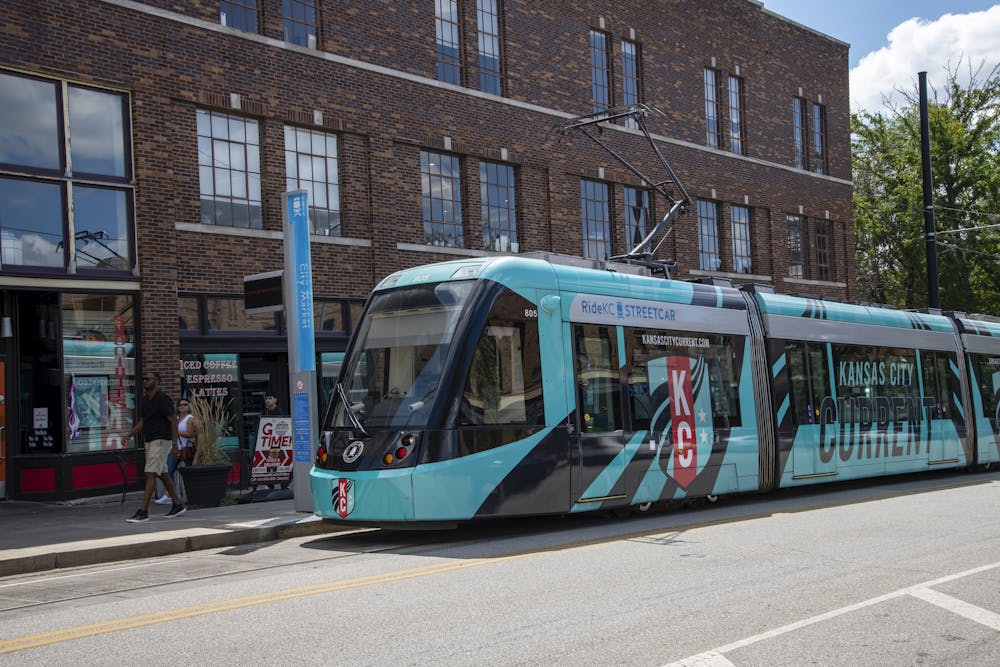
Public transit systems face daunting challenges across the U.S., from pandemic ridership losses to traffic congestion, fare evasion and pressure to keep rides affordable. In some cities, including Boston, Kansas City and Washington, many elected officials and advocates see fare-free public transit as the solution.

Federal COVID-19 relief funds, which have subsidized transit operations across the nation at an unprecedented level since 2020, offered a natural experiment in free-fare transit. Advocates applauded these changes and are now pushing to make fare-free bus lines permanent.

But although these experiments aided low-income families and modestly boosted ridership, they also created new political and economic challenges for beleaguered transit agencies. With ridership still dramatically below pre-pandemic levels and temporary federal support expiring, transportation agencies face an economic and managerial “doom spiral.”

Free public transit that doesn’t bankrupt agencies would require a revolution in transit funding. In most regions, U.S. voters – 85% of whom commute by automobile – have resisted deep subsidies and expect fare collection to cover a portion of operating budgets. Studies also show that transit riders are likely to prefer better, low-cost service to free rides on the substandard options that exist in much of the U.S.

A bright blue light rail train collect passengers
The KC Streetcar is a free two-mile route running along Main Street in downtown Kansas City, Mo. The city also offers free bus rides, but infrequent service is a concern. Michael Siluk/UCG/Universal Images Group via Getty Images

Why isn’t transit free?

As I recount in my new book, “The Great American Transit Disaster,” mass transit in the U.S. was an unsubsidized, privately operated service for decades prior to the 1960s and 1970s. In the 19th and early 20th centuries, prosperous city dwellers used public transit to escape from overcrowded urban neighborhoods to more spacious “streetcar suburbs.” Commuting symbolized success for families with the income to pay the daily fare.

These systems were self-financing: Transit company investors made their money in suburban real estate when rail lines opened up. They charged low fares to entice riders looking to buy land and homes. The most famous example was the Pacific Electric “red car” transit system in Los Angeles that Henry Huntingdon built to transform his vast landholdings into profitable subdivisions.

However, once streetcar suburbs were built out, these companies had no further incentive to provide excellent transit. Unhappy voters felt suckered into crummy commutes. In response, city officials retaliated against the powerful transit interests by taxing them heavily and charging them for street repairs.

Meanwhile, the introduction of mass-produced personal cars created new competition for public transit. As autos gained popularity in the 1920s and 1930s, frustrated commuters swapped out riding for driving, and private transit companies like Pacific Electric began failing.

In the early 20th century, Los Angeles had a world-class public transit system – here’s how it went off the rails.

Grudging public takeovers

In most cities, politicians refused to prop up the often-hated private transit companies that now were begging for tax concessions, fare increases or public buyouts. In 1959, for instance, politicians still forced Baltimore’s fading private transit company, the BTC, to divert US$2.6 million in revenues annually to taxes. The companies retaliated by slashing maintenance, routes and service.

Local and state governments finally stepped in to save the ruins of the hardest-strapped companies in the 1960s and 1970s. Public buyouts took place only after decades of devastating losses, including most streetcar networks, in cities such as Baltimore (1970), Atlanta (1971) and Houston (1974).

These poorly subsidized public systems continued to lose riders. Transit’s share of daily commuters fell from 8.5% in 1970 to 4.9% in 2018. And while low-income people disprortionately ride transit, a 2008 study showed that roughly 80% of the working poor commuted by vehicle instead, despite the high cost of car ownership.

There were exceptions. Notably, San Francisco and Boston began subsidizing transit in 1904 and 1918, respectively, by sharing tax revenues with newly created public operators. Even in the face of significant ridership losses from 1945 to 1970, these cities’ transit systems kept fares low, maintained legacy rail and bus lines and modestly renovated their systems.

Tax policies and subsidies have promoted highway development across the U.S. for the past century, creating car-centric cities and steering funding away from public transit.

Converging pressures

Today, public transit is under enormous pressure nationwide. Inflation and driver shortages are driving up operating costs. Managers are spending more money on public safety in response to rising transit crime rates and unhoused people using buses and trains for shelter.

Many systems are also contending with decrepit infrastructure. The American Society of Civil Engineers gives U.S. public transit systems a grade of D-minus and estimates their national backlog of unmet capital needs at $176 billion. Deferred repairs and upgrades reduce service quality, leading to events like a 30-day emergency shutdown of an entire subway line in Boston in 2022.

Despite flashing warning signs, political support for public transit remains weak, especially among conservatives. So it’s not clear that relying on government to make up for free fares is sustainable or a priority.

For example, in Washington, conflict is brewing within the city government over how to fund a free bus initiative. Kansas City, the largest U.S. system to adopt fare-free transit, faces a new challenge: finding funding to expand its small network, which just 3% of its residents use

A better model

Other cities are using more targeted strategies to make public transit accessible to everyone. For example, “Fair fare” programs in San Francisco, New York and Boston offer discounts based on income, while still collecting full fares from those who can afford to pay. Income-based discounts like these reduce the political liability of giving free rides to everyone, including affluent transit users.

Some providers have initiated or are considering fare integration policies. In this approach, transfers between different types of transit and systems are free; riders pay one time. For example, in Chicago, rapid transit or bus riders can transfer at no charge to a suburban bus to finish their trips, and vice versa.

Fare integration is less costly than fare-free systems, and lower-income riders stand to benefit. Enabling riders to pay for all types of trips with a single smart card further streamlines their journeys.

As ridership grows under Fair Fares and fare integration, I expect that additional revenue will help build better service, attracting more riders. Increasing ridership while supporting agency budgets will help make the political case for deeper public investments in service and equipment. A virtuous circle could develop.

History shows what works best to rebuild public transit networks, and free transit isn’t high on the list. Cities like Boston, San Francisco and New York have more transit because voters and politicians have supplemented fare collection with a combination of property taxes, bridge tolls, sales taxes and more. Taking fares out of the formula spreads the red ink even faster.

Nicholas Dagen Bloom, Professor of Urban Policy and Planning, Hunter College

This article is republished from The Conversation under a Creative Commons license. Read the original article.

Safe and Sound

5 ways to reduce safety risks for young children

(eLivingtoday.com) As parents, one of your top priorities is the safety and well-being of your children. With all the potential pitfalls of day-to-day life, however, navigating the risks can be difficult.

These everyday safety tips can help you navigate everything from car seat safety to baby-proofing and safe sleep, keeping your child out of harm's way as much as possible from birth through his or her toddler years.

Car Seat Safety

  • Always use a valid (typically less than 6 years old), federally approved car seat in motor vehicles.
  • Ensure the seat is properly installed. Refer to the instruction manual with any questions.
  • If you use an infant carrier, strap your child in on the floor, never a counter or tabletop.
  • For at least the first two years of your child's life, the car seat should be rear-facing.
  • The safest location for a car seat is in the middle of the back seat.

Choking Prevention

  • Avoid giving your child nuts, popcorn, hard candies, hot dogs and raw fruits and vegetables, such as grapes or carrots, that may present a choking hazard.
  • Never prop up a bottle and leave your baby unattended.
  • Inspect toys often to ensure they're not broken and do not have small pieces that could easily become detached.
  • Be cautious of strings and buttons on clothing.

Safe Sleep

  • The safest place for your baby to sleep is on his or her back, which reduces the risk for Sudden Infant Death Syndrome (SIDS).
  • Avoid placing anything in the crib or bassinet that may suffocate your child, such as pillows, blankets or bumpers.
  • Keep your child's room at a moderate temperature and dress him or her appropriately to avoid overheating.
  • Never leave your baby alone on a bed, couch, changing table, swing or infant seat.

Water Safety

  • Set your hot water heater no higher than 120 F.
  • Test the temperature of bath water before setting your baby in the tub.
  • Never leave your baby unattended in the bathtub.
  • Keep toilet lids down and consider installing toilet lid locks.

Baby-Proofing

  • Install smoke and carbon monoxide detectors on every level of your home and in every sleeping area.
  • Secure cords on blinds and drapes out of reach.
  • Keep sharp objects, such as knives, scissors and tools, and other hazardous items, like coins, beads and pins, in a secure place out of baby's reach.
  • Store cleaning products and medications in locked cabinets. Never store potentially toxic substances in containers that could be mistaken for food or drink.
  • Cover all electrical outlets.
  • Cushion hard edges and sharp corners of furniture and decor.
  • Secure cords to electrical items along baseboards using electrical tape.
  • Attach heavy or tall furniture to the wall and avoid placing items that could fall, like electronics or lamps, on top of dressers or shelves.
  • Install safety gates with straight, vertical slats securely in front of all stairwells.

Find more tips and ideas to keep your children safe at home and on the go at eLivingtoday.com.

SOURCE:
eLivingtoday.com

Why is Tax Day on April 18 this year? And how did early spring become tax season, anyhow?

A red-letter day? Hardly! iStock / Getty Images Plus
Thomas Godwin, Purdue University

Mid-April has arrived. And along with the spring sunshine, that means the often dreaded civic duty of finishing off one’s taxes.

It’s an arduous time for many, characterized by navigating increasingly confusing rules to arrive at the best refund possible. For some, it means writing a check to the federal government. Not fun.

On a brighter note, the tax deadline has been pushed back to April 18 this year, giving those leaving it to the last minute a few extra days. Usually, the day falls on April 15.

But why is Tax Day in April anyway? Well, it hasn’t always been.

The federal individual income tax was permanently enacted by the 16th Amendment in 1913. Before that, the only federal individual income tax that existed was in place for about a decade beginning in 1861 to ease the financial burden of the Civil War on the government.

Extending the deadline

The tradition of filing tax returns in early spring has historically been a practical one. Since individual tax returns encompass a calendar year, Congress sought to allow time for individuals to fully account for all of their income, deductions and credits.

The original due date for individual income tax returns was March 1, just over a year following the adoption of the 16th Amendment on Feb. 3, 1913.

Back then, not many taxpayers needed to file a tax return, since the filing requirement applied only to single filers with income over US$3,000 and married filers with income over $4,000 – about $90,000 and $120,000 in today’s dollars, respectively.

In 1914, this threshold represented approximately the top 4% of earners, so filing a tax return was a burden reserved for the wealthy.

Quickly realizing that many taxpayers needed more time to complete their returns, Congress pushed the tax deadline back to March 15, effective in 1919.

And on that date Tax Day stood for over 30 years.

But with more taxpayers needing to file returns as the filing threshold declined and the tax laws grew in complexity, Americans needed even more time to correctly complete their returns.

So in 1954, Congress overhauled the tax system and adopted a major revision to the Internal Revenue Code.

This change also came with another extension of the tax deadline for individuals, pushing the due date back again to the familiar April 15.

The intent of giving taxpayers an extra month to prepare their returns was to allow more people the ability to file on time – and often get refunds more quickly. Not only did this change assist taxpayers, but it also allowed the Internal Revenue Service more time to spread out its workload.

The April 15 deadline proved to be a more reasonable deadline, and it has stuck with U.S. taxpayers for almost 70 years.

Since 1955, the IRS has established earlier due dates for many information returns that provide numbers feeding into Form 1040, such as Forms 1099 and W-2, both of which are due Jan. 31, to ensure that most taxpayers are able to file by Tax Day.

In 2016, the IRS pushed the due date of other returns forward a month to March 15, again in an effort to allow more individuals to timely file.

So why later this year?

The mid-April date seems to work for the majority of taxpayers – in most years, anyhow. According to the IRS, about 90% of taxpayers were able to file their returns by the deadline in 2021, with the other 10% requesting a six-month extension to file.

But for the tax year 2022, about 19 million taxpayers extended their returns, a significant increase from prior years due to the increased complexity of the tax code brought on by temporary provisions relating to the COVID-19 pandemic.

So why is Tax Day this year April 18 instead of April 15?

Any time a deadline falls on a Saturday or Sunday, the IRS pushes the due date to the following Monday, which would be April 17, 2023. However, any federal holiday also pushes the date back by a day. Since Emancipation Day, which usually falls on April 16, is observed in Washington, D.C., on April 17 this year, Tax Day was pushed back an additional day to Tuesday, April 18, 2023.

While having a tax deadline of April 18 happens only about every six years, the IRS occasionally pushes back the filing deadline for emergency situations like natural disasters, although these are often local. For example, the IRS extended the original due date of individual tax returns in disaster areas in Alabama, California and Georgia until Oct. 16, 2023. Similarly, the IRS pushed the national deadline back to July 15, 2020, in the early stages of the COVID-19 pandemic.

So use your extra days of tax preparation time wisely in 2023 and be sure to file your individual income tax return, or request an extension to file by April 18.

Although this time of year can often be stressful and confusing because of complicated tax laws, it will be over soon enough.

Thomas Godwin, Assistant Professor of Accounting, Purdue University

This article is republished from The Conversation under a Creative Commons license. Read the original article.

This year marks 2,000 years since the birth of the Roman author of the first natural encyclopedia

Among the achievements of the ancient Roman Empire still acclaimed today, historians list things like aqueducts, roads, legal theory, exceptional architecture and the spread of Latin as the language of intellect (along with the Latin alphabet, memorialized nowadays in many popular typefaces). Rome was not known, though, for substantially advancing basic science.

But in the realm of articulating and preserving current knowledge about nature, one Roman surpassed all others. He was the polymath Gaius Plinius Secundus, aka Pliny the Elder, the original compiler of scientific knowledge by reviewing previously published works.

If he were immortal, Pliny would be celebrating his 2,000th birthday this year. Nobody knows his exact date of birth, but we can infer the year 23 CE because his nephew reported how old he was when he died. His death was on August 25, 79 CE, a date established by an unfortunate event associated with a volcano.

Pliny was like a Renaissance man a millennium and a half before the Renaissance. Apart from his Roman Empire obligations as a military commander and provincial governmental official, he was a student of law, language, history, geography and every single branch of natural science. An indefatigable worker of intense curiosity about everything, he disdained sleep because it kept him from his tasks, and hated walking, because he could not walk and write at the same time.

His Natural History, a 37-volume masterpiece of high literary quality yet immense factual density, attempted to record and systematize the totality of human knowledge about nature. He reviewed hundreds of ancient texts by the most illustrious authors in all scientific fields, extracting from them thousands of specific facts to preserve for posterity. As the late classicist David Eichholz wrote, Pliny’s motivation was “his anxiety to save the science of past ages from the forgetful indifference of the present.”

Pliny was born in Como, Italy, into a family of sufficient stature that he was educated in Rome and then pursued a military career, including service as commander of a cavalry squadron in Germany. During that time, he wrote a history of Roman military activity in that region, after first composing a now lost treatise on how best to throw a javelin.

By about 58 CE, Pliny had returned to Rome, where he devoted his writing to grammar and rhetoric and maybe practiced law. He avoided governmental involvement for years, probably because he was no friend of the crazy emperor, Nero. But he was friendly with Vespasian, who became emperor in 69. Pliny soon assumed governmental positions in Roman provinces in Spain, France and possibly Africa.

All along, Pliny read voraciously (or had books read aloud to him). He collected fact after fact about the natural world, with the aim of compiling a comprehensive account of all the knowledge about nature that those before him had accumulated. Nobody else had ever produced anything so encyclopedic about natural science. (In fact, the very concept of “encyclopedia” was unknown at the time.) He published it in 77 CE, two years before the eruption of Mount Vesuvius. Pliny was then commanding a fleet of Roman ships that sailed to the vicinity of the volcano, perhaps because of Pliny’s curiosity or possibly on a rescue mission. Tradition said Pliny died from inhaling toxic volcanic fumes, although some historians suspect he just had a heart attack.

Pliny began Book 1 of his Natural History  with a dedication to the emperor Titus (Vespasian’s son) and an itemization of what was to follow. First came a book on the universe, heavenly bodies and the elements, followed by several books on the geography of the Earth and its inhabitants. Book 7 discussed man and his inventions. Then came the animals (land and sea), and then one book each on birds and insects. Many volumes followed on various aspects of plants, trees, flowers and fruits, and their cultivation. Botanical themes continued in several books on the use of plant products in medicine. Next came more medicine, with commentary on medicinal substances derived from animals. Pliny finished with five books on metals and minerals, including their role in painting, providing the earliest detailed account of the history of art.

Pliny’s emphasis on facts obscured an underlying philosophy about the universe and humankind’s place in it. His approach was not to defend any philosophy, but to discuss nature factually. That meant, as the classics historian Aude Doody wrote, “ knowing that six European trees produce pitch, that there are three kinds of lettuce, that the best kind of emeralds come from Scythia.” Yet Pliny’s presentation was nevertheless infected with a deeply held belief that the universe existed to serve humankind. As Doody noted, Pliny believed that nature is “a conscious, creative power, who deliberately organizes the world with the needs of humanity in mind.” That view reflected the philosophy of the Stoics, popular in those days, that the cosmos was infused with a powerful cohesive force, or pneuma, which unites everything that exists and determines matter’s properties.

“The whole of nature is animated by a providential presence that directs it, and this divine power can be identified both with nature and with the world itself,” Doody commented. Which is what made comprehending all of nature so important for Pliny.

Pliny’s books served as an authoritative source of information about nature for centuries. “The Natural History continued to be used as a practical source of medical and scientific knowledge right into the 16th century,” Doody commented. Today it remains a useful resource for scholars studying ancient knowledge and, in fact, is still sometimes cited in scientific papers today. In the 2020 Annual Review of Cell and Developmental Biology, for instance, Sarah M. Mohr and colleagues cite Pliny as one of the earliest authors to describe hibernation. And bioluminescence, a hot research topic in the 21st century, was first reported (in scyphozoans) by Pliny, as Steven H.D. Haddock and coauthors reported in the 2010 Annual Review of Marine Science.

Yet for all its benefits, Pliny’s Natural History had one serious drawback. It was full of errors. Pliny pretty much believed everything he read from ancient authorities, and essentially retweeted it all without any fact checking. His book on land animals includes the mythical monoceros or unicorn, a “ very fierce animal,” he wrote, with “a single black horn which projects from the middle of its forehead.” (It’s not a rhinoceros — he describes that beast elsewhere.)  And he mentions the legendary Ethiopian animal called the catoblepas, deadly to the human race, “ for all who behold its eyes, fall dead upon the spot.” (He might better have titled his animal book Fantastic Beasts and Where to Find Them. And yes, he describes the basilisk, which can also kill by sight, and destroys plants by its touch or even its breath.)

On the other hand, Pliny did occasionally express skepticism and he rejected some outrageous claims. For one, he dismissed the idea of immortality. Had he been wrong, there would be a serious fire hazard at his birthday party this year.

This article originally appeared in Knowable Magazine, an independent journalistic endeavor from Annual Reviews.

Hope for haploinsufficiency diseases

Genetic conditions like Dravet syndrome, which causes severe childhood epilepsy, are hard to tackle with traditional gene therapy. New approaches in the works include using antisense therapy to boost mRNA splicing.

The seizures started when Samantha Gundel was just four months old. By her first birthday, she was taking a cocktail of three different anticonvulsant medicines. A vicious cycle of recurrent pneumonia, spurred on by seizure-induced inhalation of regurgitated food, landed the young toddler in and out of the hospital near her Westchester County home in New York State.

Genetic testing soon confirmed her doctors’ suspicions: Samantha, now age 4, has Dravet syndrome, an incurable form of epilepsy. Her brain was misfiring because of a mutation that is unlike those responsible for most genetic diseases; it’s a type that has long eluded the possibility of correction. Available drugs could help alleviate symptoms, but there was nothing that could address the root cause of her disease.

That’s because the mutation at the heart of Dravet creates a phenomenon known as haploinsufficiency, in which a person falls ill if they have only a single working copy of a gene. That lone gene simply can’t produce enough protein to serve its molecular purpose. In the case of Dravet, that means that electrical signaling between nerve cells gets thrown out of whack, leading to the kinds of neuronal shock waves that trigger seizures.

Most genes are not like this. Though the human genome contains two copies of almost every gene, one inherited from each parent, the body can generally do fine with just one.

Not so for genes such as SCN1A, the main culprit behind Dravet. For SCN1A and hundreds of other known genes like it, there’s a delicate balance of molecular activity that is needed to ensure proper function. Too little activity is a problem — and oftentimes, so is too much.

This Goldilocks paradigm partially explains why conventional gene therapy strategies are ill-suited to the task of haploinsufficiency correction. With therapies of this kind — several of which are now available to treat “recessive” genetic diseases such as the blood disorder beta thalassemia and a form of inherited vision loss — the amount of protein made by an introduced gene just needs to cross a minimum threshold to undo the disease process.

In those contexts, it’s not a problem if the added gene is overactive — there’s a floor, but no ceiling, to therapeutic protein levels. That is simply not the case with many dosage-sensitive diseases like Dravet, especially for brain disorders in which too much protein can overexcite neuronal activity, says Gopi Shanker, who served as chief scientific officer of Tevard Biosciences in Cambridge, Massachusetts, until earlier this year. “That’s what makes it more challenging,” he says.

Adding to the challenge: The special types of modified viruses that are used to ferry therapeutic genes into human cells can handle only so much extra DNA — and the genes at the heart of Dravet and many related haploinsufficiency disorders are much too big to fit inside of these delivery vehicles.

Overlooked no more

Faced with these technical and molecular hurdles, the biotechnology industry long ignored haploinsufficiencies. For more than 30 years, companies jostled to get a piece of the drug development action in other areas of rare genetic disease — for cystic fibrosis, say, or for hemophilia — but conditions like Dravet got short shrift. “It’s one of the most neglected classes of disorder,” says Navneet Matharu, cofounder and chief scientific officer of Regel Therapeutics, based in Berkeley, California, and Boston.

Not anymore. Thanks to new therapeutic ideas and a better understanding of disease processes, Regel, Tevard and a group of other biotech startups are taking aim at Dravet, with experimental treatments and technologies that they say should serve as testing grounds for going after haploinsufficiency diseases more broadly.

Currently, there’s little to offer patients with these maladies other than drugs to aid with symptom control, says Kenneth Myers, a pediatric neurologist at Montreal Children’s Hospital who cowrote an article about emerging therapies for Dravet and similar genetic epilepsies in the 2022 issue of the Annual Review of Pharmacology and Toxicology. But thanks to new advances, he says, “there’s a huge reason for optimism.”

Samantha, for one, now seems to have her disease under control because of a drug called STK-001; it is the first ever to be evaluated clinically that addresses the root cause of Dravet.

Between February and April 2022, doctors thrice inserted a long needle into the young girl’s lower spine and injected the investigational therapy, which is designed to bump up levels of the sodium-shuttling protein whose deficiency is responsible for Dravet. It seemed to work. For a time, Samantha lived nearly seizure-free — presumably because the increased protein levels helped correct electrical imbalances in her brain.

Conventional gene therapy strategies are ill-suited to the task of haploinsufficiency correction.

She went from epileptic attacks every 7 to 10 days, on average, to nothing for months on end. Her verbal skills improved, as did her physical capabilities. Her gait improved and her tremors disappeared.

Eventually, as the therapy wore off, Samantha began to backslide, with seizures returning every couple of weeks or so. But she started receiving additional doses of STK-001 under a new trial protocol in October 2022, and since then has experienced only two epileptic episodes over the span of six months. “It’s really pretty amazing,” says her mother, Jenni Barnao.

“Is it a cure? No.… But this is absolutely our best shot,” Barnao says. “There’s definitely something with this drug that’s very good. Her brain is just working better.”

Give a boost

The STK-001 treatment relies on the fact that the normal activity of genes is somewhat inefficient and wasteful. When genes get decoded into mRNA, the resulting sequences require further cutting and splicing before they’re mature and ready to serve as guides for making protein. But often, this process is sloppy and doesn’t result in usable product.

Which is where STK-001 comes in.

A kind of “antisense” therapy, STK-001 consists of short, synthetic pieces of RNA that are tailor-made to stick to part of the SCN1A gene transcript and, as a result, make productive cutting and splicing more efficient. The synthetic pieces glom on to mRNA from the one working version of the gene that people with Dravet have and help to ensure that unwanted bits of the mRNA sequence are spliced out, just as a movie editor might cut scenes that detract from a film’s story. As a result, more functional ion channel protein gets made than would otherwise happen.

Protein levels don’t get completely back to normal. According to mouse studies, there’s a 50 percent to 60 percent boost, not a full doubling of the relevant protein in the brain. But that bump seems to be enough to make a real impact on patients’ lives.

Stoke Therapeutics, the company in Bedford, Massachusetts, that is behind STK-001, reported at the American Epilepsy Society’s 2022 Annual Meeting that 20 of the first 27 Dravet patients to receive multiple doses of the therapy in early trials experienced reductions in seizure frequency. The greatest benefits were observed among young children like Samantha whose brains have accumulated less damage from years of debilitating seizures and abnormal cell function. Larger confirmatory trials that could lead to marketing approval are scheduled to begin next year.

Stoke is hardly alone in its quest to fix Dravet and haploinsufficiency disorders more generally. Several other biotech startups are nearing clinical trials with their own technological approaches to enhancing what working gene activity remains. Encoded Therapeutics, for example, will soon begin enrolling participants for a trial of its experimental Dravet therapy, ETX-001; it uses an engineered virus to deliver a protein that ramps up SCN1A gene activity so that many more mRNA copies are made of the single, functional gene.

And if any of these companies succeed in reversing the course of Dravet, their technologies could then be adapted to take on any comparable disease, says Orrin Devinsky, a neurologist at NYU Langone Health who works with several of the firms and is involved in Samantha’s care. “An effective therapy would provide a potential platform to address other haploinsufficiencies,” he says.

New targets, new tactics

Stoke will soon put that idea to the test.

Buoyed by the early promise of its Dravet therapeutic, the company developed a second drug candidate, STK-002, that similarly targets splicing to turn nonproductive gene transcripts into constructive ones. But in this case, it’s designed to tackle an inherited vision disorder known as autosomal dominant optic atrophy, caused by haploinsufficiency of a gene called OPA1. In this disease, a single working copy of OPA1 is not enough to sustain proper nerve signaling from the eyes to the brain.

Clinical evaluation of STK-002 is expected to start next year. Meanwhile, in partnership with Acadia Pharmaceuticals of San Diego, Stoke is also exploring treatments for Rett syndrome and SYNGAP1-related intellectual disability, both severe brain disorders caused by insufficient protein levels.

“There’s definitely something with this drug that’s very good. Her brain is just working better.”

Jenni Barnao

Stoke’s splice-modulating approach flows naturally from the success of another antisense drug, Spinraza. Developed by Ionis Pharmaceuticals in collaboration with Biogen, Spinraza also works on splicing of mRNA transcripts to promote production of a missing protein. In 2016, it became the first therapy approved for treating a rare neuromuscular disorder called spinal muscular atrophy (SMA).

SMA is somewhat different, though. It isn’t a haploinsufficiency — it occurs when both gene copies are defective, not just one — but it’s an unusual disease from a genetics standpoint. Because of a quirk in the human genome, it turns out that people have a kind of backup gene that doesn’t normally function because its mRNA undergoes faulty splicing. With Spinraza acting as a guide to help the mRNA splice correctly, that backup gene can be made operational and do the job that the damaged gene copies can’t do.

Few diseases are like this. But Stoke’s scientific cofounders, molecular geneticist Adrian Krainer of Cold Spring Harbor Laboratory in New York (who helped to develop Spinraza) and his former postdoctoral researcher Isabel Aznarez, realized that there was a whole world of other ailments — haploinsufficiencies — for which this type of splice modulation could be beneficial.

Spinraza was the prototype. Stoke’s portfolio is full of the next-generation editions. “We brought it to the next level,” says Aznarez, who now serves as head of discovery research at Stoke.

Striking a balance

There was a time when Dravet researchers were more focused on traditional gene replacement therapies. They aimed to insert a working version of the SCN1A gene into the genome of a virus and then introduce the engineered virus into brain cells. The problems proved manifold, though.

For starters, the virus vehicles generally used in gene therapy strategies — adeno-associated viruses (AAVs) — are too small to hold all 6,030 of the DNA letters that constitute the SCN1A gene sequence.

Researchers tried a few potential workarounds. At University College London, for example, gene therapist Rajvinder Karda and her colleagues split the SCN1A gene in half and delivered both parts into mice in different virus carriers. And at the University of Toronto, neuroscientist David Hampson and his group tried introducing a smaller gene that would fit in a single AAV vector and compensate for the SCN1A deficiency in an indirect way.

But none of those efforts advanced past mouse experiments. And while it is technically feasible to deliver the entire SCN1A gene into cells if you use other kinds of viral vectors, as researchers at the University of Navarra in Spain showed in mice, those viruses are generally considered unsafe for use in people.

To get protein levels just right, scientists say, it is best to follow the cell’s own lead.

What is more, even if gene replacement could be made to work, there are many reasons to think it would not be ideal for diseases like Dravet in which the underlying defect is mediated by an imbalance of protein levels. The amount of protein produced by those kinds of gene therapies can be unpredictable, and so are the types of cells that end up manufacturing the proteins.

To get protein levels just right, scientists say, it is best to follow the cell’s own lead, tapping into the ways that it naturally produces the protein of interest only in certain tissues of the body, and then providing a therapeutic nudge to aid the process along.

CAMP4 Therapeutics, for example, is using antisense therapies, like Stoke. But instead of targeting the splicing of gene transcripts, CAMP4’s drugs are directed at regulatory molecules that act like rheostats to control how much of those transcripts are made in the first place. By blocking or stabilizing different regulatory molecules, the company claims it can ramp up the activity of target genes in a precise and tunable way.

“It’s basically teaching the body to do it a little bit better,” says Josh Mandel-Brehm, president and CEO of CAMP4, which is based in Cambridge, Massachusetts.

In theory, the gene-editing technology known as CRISPR could obviate the need for all of these therapeutic approaches. Gene editing allows you to perfectly correct a mistake in a gene — so one could edit a faulty DNA sequence to correct it and render kids with Dravet or some other haploinsufficiency disease as good as new.

But the technology is nowhere near ready for prime time. (Some of the first CRISPR therapies to be tested in children have failed to demonstrate much benefit.) Plus, any gene-correction therapy would have to be tailored to the unique nature of a given patient’s mutations — and there are more than 1,200 Dravet-causing mutations in the SCN1A gene alone.

That’s why Jeff Coller, an RNA biologist at Johns Hopkins University and a scientific cofounder of Tevard, prefers therapeutic strategies that can address all manner of disease-causing alterations in a gene of interest, as most companies are doing now. “Having a mutation-agnostic technology is a way of going after the entire cohort of patients,” he says.

“We’re open to any approach that would help our daughters.”

Daniel Fischer

Tevard, whose mission is to “reverse” Dravet syndrome (the company’s name is Dravet spelled backward), is approaching this challenge in various ways. Some involve engineered versions of other RNAs that are key for protein production; known as “transfer” RNAs, they help to ferry amino acid building blocks to the growing protein strands. Others are intended to help bring beneficial regulatory molecules to sites of SCN1A gene activity.

But all of Tevard’s therapeutic candidates remain at least a year away from clinical testing, whereas STK-001 is in human trials today. So the company’s chief executive, Daniel Fischer — who, along with board chair and cofounder Warren Lammert, has a daughter affected by Dravet — is considering enrolling his child, now 13, in the Stoke trial rather than waiting for his own company’s efforts to bear fruit.

“We’re open to any approach that would help our daughters,” Fischer said over lunch last November at the company’s headquarters.

“And help people with Dravet generally,” added Lammert. “We’d love to see many of these things succeed.”

Editor’s note: This article was amended on April 14, 2023, to correct Gopi Shanker’s relationship with Tevard Biosciences. Shanker is Tevard’s former chief scientific officer; he is now chief scientific officer with Beam Therapeutics.

This article originally appeared in Knowable Magazine, an independent journalistic endeavor from Annual Reviews.