Tuesday, November 14, 2023

What makes an ideal main street? This is what shoppers told us

Irina Grotkjaer/Unsplash
Louise Grimmer, University of Tasmania; Martin Grimmer, University of Tasmania, and Paul J. Maginn, The University of Western Australia

A lot of dedication and effort goes into making main streets attractive. Local governments, planners, place makers, economic development managers, trade associations and retailers work hard to design, improve and revitalise main streets. The goal is to make them attractive places to increase shopper numbers, provide pleasant places for communities, and boost local economies.

Despite the efforts that go into planning, maintaining and marketing local shopping areas, the people who use these places are often not consulted about what they actually want and need on their main street. Our research is the only-known Australian study to ask shoppers about the key elements, and shops and services, they regard as contributing to the ideal main street.

So what types of stores and services do they want?

Pharmacies are the top choice. Intriguingly, four types of stores/services that are disappearing from main streets around Australia – the post office, bank, department store and newsagent – are in the top ten (out of 45 choices in our survey).

What are the key shops and services?

We wanted to find out what consumers see as their ideal local shopping street. What kinds of shops and services matter most for them? Which other elements of local shopping places do they want?

Curiously, users are often not asked these questions. Yet their answers are essential if we are to design new towns, suburbs and regional centres, and improve existing ones, so more people want to work, shop and visit them.

We surveyed a representative sample of 655 shoppers from around Australia about their local shopping preferences.

We provided a list of 45 different stores and services. Participants were asked to rank them in order of importance from one to 45.

Overwhelmingly, participants considered the pharmacy the most important store or service for an ideal main street. Across gender, age and location, pharmacies were consistently number one.

Similarly, four types of stores and services – the post office, bank, department store and newsagent – appeared in the top ten most important, regardless of demographics.

The top ten stores and services in an ideal main street. Louise Grimmer

What other key elements are important?

We then asked participants about the importance of different elements of main streets. We provided 21 elements and participants were asked to rate each on a Likert scale from 1, “not at all important”, to 7, “extremely important”.

Shoppers rated “cleanliness” as the most important element for their ideal shopping area. It was followed by “safety and security” and “parking”.

Aside from the “retail mix”, in most areas local councils have control over nine of the ten top elements. “Safety and security” also involves police and individual security services that centres and some stores employ.

The top ten elements of an ideal main street. Louise Grimmer

Motivation for shopping affects choices

We also tested for shoppers’ levels of hedonic and utilitarian orientation. Hedonic shoppers really enjoy the act of shopping. They experience euphoria and pleasure and they buy so they can go shopping, rather than shopping so they can buy.

Utilitarian shoppers, on the other hand, are rational and cognitive and they view shopping as a task or chore. Buying products they need is simply a “means to an end”. They get no great satisfaction from the activity.

Hedonic shoppers are more often women. Men tend to be more utilitarian. We tend to become more utilitarian as we get older.

We were interested to find out if people’s responses to our questions were different depending on whether they were hedonic (shop for pleasure) or utlilitarian (shop for practical needs) shoppers.

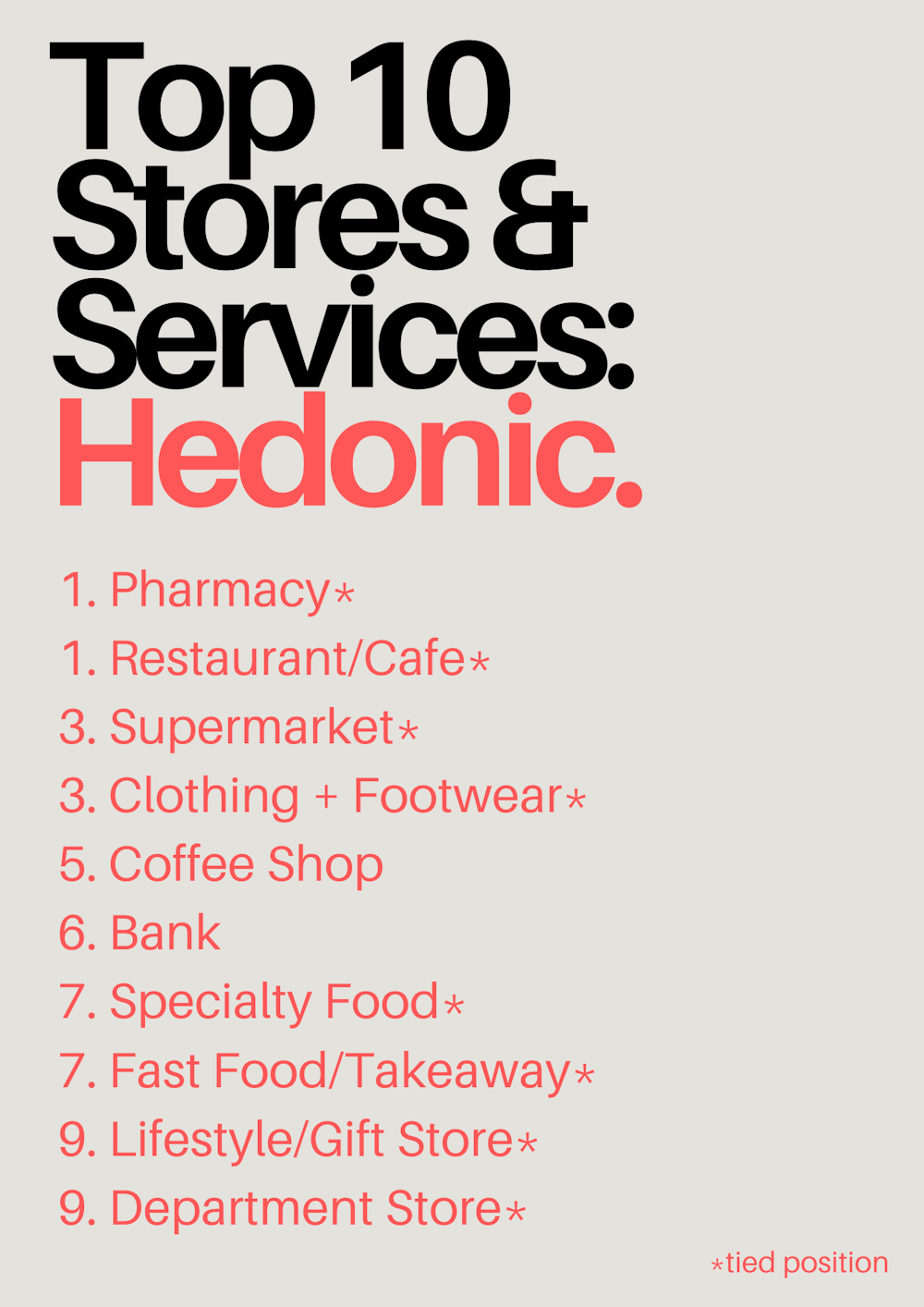
For the most important store or service, hedonic and utilitarian shoppers both rated a pharmacy as number one. And they ranked similar stores and services in their top ten.

Top ten stores and services for hedonic shoppers. Louise Grimmer

But there were some differences. Hedonic shoppers included a lifestyle/gift store and department store in their top ten. Utilitarian shoppers did not. Instead they rated the post office and the newsagent as important.

This finding makes sense. Lifestyle stores, gift shops and department stores offer the hedonic shopper the chance to browse and enjoy quality surroundings and service. The post office and newsagent allow the utilitarian shopper to complete tasks quickly and easily – no browsing required.

Top ten stores and services for utilitarian shoppers. Louise Grimmer

Despite similarities in their top-ranked shops and services, hedonic and utilitarian shoppers’ rankings of the most important elements of local shopping areas were starkly different.

For hedonic shoppers, the complete visitor experience, including the surroundings and atmosphere, is an important aspect of their ideal shopping area. Their top ten elements reflected this. They selected a combination of tangible elements, including public art, aesthetics, greenery and lighting, to complement the more ephemeral such as events and activities, night-time economy, sustainability and history and culture.

The top ten elements for hedonic shoppers. Louise Grimmer

Utilitarian shoppers rated elements that help make a task-oriented shopping trip easier. Wayfinding (all the ways to help people navigate a space), signage and information, walkability, retail mix, and services and amenities were important for them.

The only two elements both groups agreed should be in the top ten were lighting, and seating and tables.

The top ten elements for utilitarian shoppers. Louise Grimmer

Making main streets the best they can be

There is an increasing understanding that retailing will not continue to be the main or sole reason people visit town centres. While still important, retail will more often complement services, attractions and “experiences” as the major factors that entice visitors.

This requires local councils, chambers of commerce and marketing organisations to perform a juggling act. They need to market shopping precincts as being attractive for shoppers while showcasing a range of services and attractions in these areas that appeal to other types of visitors.

Making shopping areas the best they can be is challenging work. Different people want different things from main streets.

Our findings provides insights for local councils, which have a primary policy responsibility for main streets, as well as developers, investors and individual store owners. This knowledge can help them better plan and improve the retail and service mix for everyone.

Louise Grimmer, Retail Scholar, University of Tasmania; Martin Grimmer, Pro Vice-Chancellor and Professor of Marketing, University of Tasmania, and Paul J. Maginn, Interim Director, UWA Public Policy Institute; Associate Professor & Programme co-ordinator (Masters of Public Policy), The University of Western Australia

This article is republished from The Conversation under a Creative Commons license. 

Hosting Advice for a Perfect Holiday Ham

Bringing together loved ones with classic seasonal meals is a staple of the holiday season, and few centerpieces call to mind childhood memories like a tender ham cooked to perfection. A longtime hallmark of family meals during the holidays, ham can feed a crowd, complement a wide variety of side dishes and is easily elevated with glazes, spices and rubs of all kinds for those who want to take their hosting up a notch.

While ham can be the centerpiece of your holiday dinner, it’s also a versatile dish that can be served for any special occasion. Ham is also ideal for incorporating into holiday brunches, served as an hors d’oeuvre at cocktail parties and shared at office potlucks.

To help cook the perfect ham for your celebration, consider this advice for a festive feast from the experts at Coleman Natural Foods, which has produced high-quality, all-natural, humanely raised, no antibiotics ever, fresh and prepared meats sourced from American farmers since 1875.
Start with a tender and delicious spiral ham, which is pre-cut in one continuous swirl, allowing you to simply cut each piece from the one behind it for even, consistent slices.

Set the oven to 250-350 F, keeping in mind lower temperatures lead to longer cooking times but more tender meat. Bake 10-16 minutes per pound, adding glaze about 15 minutes prior to finishing, until the ham reaches an internal temperature of 145 F at its thickest part.

Make your guests’ mouths water with a sweet glaze that mingles with the ham’s natural saltiness, creating a balance of flavors. To achieve a unique taste, try flavors such as pineapple, honey or ginger. For a classic, delicious ham perfect for holiday gatherings and special occasions, try this Brown Sugar Honey Glazed Ham.

After enjoying as the centerpiece of your holiday dinner, it can be savored in the days following your celebrations to help make lunches and weeknight meals a breeze after a busy season.

Leftover ham can be enjoyed in sandwiches like a ham and cheese melt, mixed in a delicious salad, chopped up into an omelet for a hearty breakfast or added to macaroni and cheese for a protein-packed dinner.

Find more holiday ham recipes at ColemanNatural.com.

Brown Sugar Honey Glazed Ham

Prep time: 12 minutes
Cook time: 90 minutes
Servings: 32

  • 1 fully cooked Coleman Natural Applewood Smoked Bone-In Spiral Ham (7-9 pounds)
  • 1 cup packed brown sugar
  • 1/2 cup honey
  • 1/2 cup unsalted butter
  • 1/4 cup Dijon mustard
  • 2 tablespoons apple cider vinegar
  • 1/4 teaspoon ground cinnamon
  • 1/4 teaspoon ground cloves
  1. Preheat oven to 325 F.
  2. Remove ham from packaging and place in roasting pan with flat side down.
  3. Bake ham about 1 hour until heated through to internal temperature of 130 F with meat thermometer inserted into thickest part of ham.
  4. In medium saucepan, combine brown sugar, honey, butter, Dijon mustard, apple cider vinegar, cinnamon and cloves. Cook mixture over medium heat, stirring frequently, until butter is melted and ingredients are well combined.
  5. Brush about half of glaze over ham, making sure to fill crevices or scored cuts.
  6. Return ham to oven and bake 30-45 minutes, or until glaze is bubbly and caramelized with internal temperature of 145 F.
  7. Baste ham with pan juices and glaze every 10-15 minutes while baking.
  8. Remove from oven and let rest 10 minutes before slicing and serving.


SOURCE:
Coleman Natural

Rupert Murdoch’s empire was built on a shrewd understanding of how media and power work

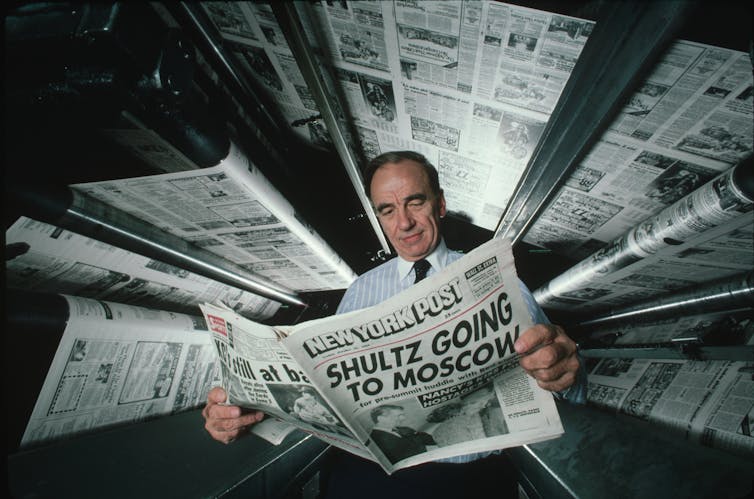
The man at the center of the news. Roger Ressmeyer/CORBIS/VCG via Getty Images
Bruce Drushel, Miami University

When businesspeople retire at an advanced age, it seldom makes headlines.

But when 92-year-old Rupert Murdoch announced in September that he was stepping away from his multicontinent media empire and turning it over to his son Lachlan, it was breaking news that generated countless stories speculating about the futures of two of his most storied holdings, Fox and News Corp.

As a scholar who studies media organizations and their political and economic influence, I see this level of attention as an indicator both of the significance of the companies Murdoch built and the way he used them to alter the media and political landscape.

Murdoch the believer … or opportunist?

Murdoch infused his print and television properties, first in his native Australia and later in the U.K. and the U.S., with a generally right-of-center slant.

But his reputation as a promoter of conservative ideals was at odds with his past. While a student at Oxford University, Murdoch kept a bust of Lenin in his room and annoyed his father, Sir Keith Murdoch, with his socialist views.

When his father died suddenly in 1952, Murdoch inherited a small newspaper in Adelaide and soon was using its profits to buy up suburban papers all over Australia, as well as licenses for television stations.

His conquest of the U.K. began in 1969 with the purchase of a majority interest in News of the World, a major circulation Sunday tabloid. Eventually, he would add to it the daily tabloid The Sun and the redoubtable but financially struggling Times and Sunday Times.

Through the 1970s, his politics moved to the right, culminating in his support – and The Sun’s much sought-after editorial endorsement – of Margaret Thatcher’s Conservative Party.

Despite the conservative outlook of his publications, there always has been nagging speculation about the sincerity of Murdoch’s ideological beliefs – whether they were tightly held or simply manifestations of political opportunism and his ability to anticipate the popular mood. Murdoch’s The Sun backed the center-left Tony Blair when Conservative Party prime minister John Major fell out of favor in 1997.

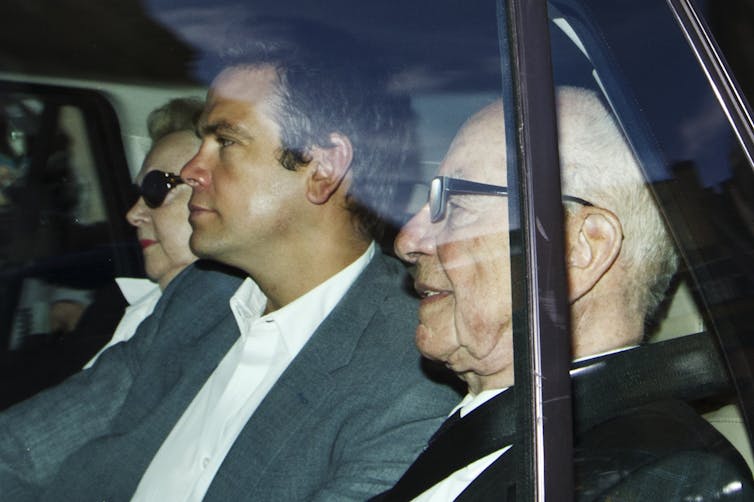
Two men in suits are seen through the back window of a car.
News Corp. chairman Rupert Murdoch, right, and his son Lachlan, center, in 2011. AP Photo/Sang Tan

His successes in the U.K. provided him with the strategic template for his eventual entry into the more lucrative U.S. market: Buy undervalued sources of content creation and then use their profits, along with a combination of emerging technology and political influence, to expand their distribution.

In the U.K., that meant the secretive construction of a high-tech automated printing facility that bypassed the labor unions. In the U.S., it might have contributed to a US$4.5 million book deal for House Speaker Newt Gingrich with Murdoch’s publishing house HarperCollins. It came as the media tycoon was facing questions about where the money for his U.S. television properties was coming from – questions, it was suggested by critics, that the speaker’s influence could help smooth over.

Building an American empire

Murdoch’s American empire started in 1976 when he purchased the tabloid the New York Post. There, borrowing from his experience in the U.K., he flipped the newspaper’s ideology from liberal to conservative and used splash headlines and prurient content to more than double its circulation.

Also echoing a strategy he had employed in the U.K., he added the more respected Wall Street Journal to his holdings a number of years later, extending the reach of his influence from blue-collar to white-collar readers.

Anticipating the uncertain future of the newspaper business, Murdoch expanded his empire to include television.

He purchased the Twentieth Century Fox film and television studio in 1985 to provide both production facilities and a library of content. The following year, he bought the television station holdings of Metromedia to form the distribution nucleus of what would become the Fox television network.

Doing so required a series of moves to meet Federal Communications Commission regulations. First, Murdoch would have to become a U.S. citizen. Second, Fox would have to limit its hours of broadcast in order to avoid meeting the official definition of a network and in so doing break FCC rules that at the time stated that a single company could not be both a network and a syndicator of programs.

Third, he would have to sell the New York Post, since another rule prohibited common ownership of a daily newspaper and television station in the same city. The FCC would later allow him to repurchase the Post out of bankruptcy in 1993, rather than see the newspaper fold.

The birth of Fox News

Unable to secure licenses for terrestrial television stations in the U.K., Murdoch launched the Sky satellite service in 1989 as both a content provider and a distribution system. Among Sky’s channels was Sky News, the U.K.’s first 24-hour news channel. Once Sky News had become profitable, Murdoch announced he would bring his brand of 24-hour news to the U.S. By October 1996, Fox News Channel, led by former Republican Party strategist Roger Ailes, was on the air.

While Fox News is now very much associated with a viewership that skews older, conservative and white, the Fox broadcast network’s path to success with audiences and advertisers was initially based in its appeal to underserved audiences among young adults and African Americans.

Shows like “The Simpsons” and “Married … With Children” were seen as edgy in their representation of dysfunctional families. Meanwhile, “In Living Color,” “Roc,” “The Bernie Mac Show,” “Martin” and “Living Single” followed “The Cosby Show” playbook of focusing on Black authorship and autobiography to attract not just African Americans but audiences of all races and ethnicities.

When Fox secured rights to the National Football League’s NFC games in 1993, the network began targeting more mainstream audiences as well. As he had done in the newspaper business, Murdoch established his foothold in a niche market he perceived as being underserved and ripe for exploitation before setting his sights elsewhere.

A less-than-graceful exit

Despite his reputation as a buccaneer who took huge risks in expanding his holdings, skirting regulations and delaying repayments of loans from financial institutions, Murdoch avoided major legal and business setbacks for most of his career.

That only began to change in the mid-2000s.

First there was Myspace. News Corp. bought what was then among the world’s most popular websites in 2005. But it soon went into decline, weighed down by failures to update its technology and features. Then, in 2011, a backlash from a scandal involving the hacking of cellphone accounts of a murdered teenage girl, British service personnel killed in action and a host of celebrities forced the closure of Murdoch’s first U.K. newspaper, the News of the World.

More recently, News Corp. settled a lawsuit brought by the parents of the late Seth Rich, a Democratic National Committee staffer, after Fox News repeated right-wing conspiracy claims about the murdered man. It also reached a $787.5 million settlement with Dominion Voting Systems, which several Fox News hosts had accused of rigging the 2020 presidential election against Donald Trump. A similar defamation suit by Smartmatic is pending.

For a man whose career was built on a shrewdness for reading the media landscape, such failures might well leave a bitter taste in retirement. But nonetheless, Murdoch will step down from his empire leaving mighty footprints.

It remains to be seen how his son Lachlan will fill them – or if he also inherited his father’s instincts and will lay down tracks for the empire in a new and unexpected direction.

Bruce Drushel, Professor of Media, Journalism and Film, Miami University

This article is republished from The Conversation under a Creative Commons license. 

We studied jail conditions and jail deaths − here’s what we found

Since Jan. 1, 2023, 10 inmates have died at Fulton County Jail. Joe Raedle/Getty Images
Jessica L. Adler, Florida International University

The family of Samuel Lawrence, one of 10 people to die in Georgia’s Fulton County Jail in 2023, is fighting for answers and accountability.

“I got to think about him every day of my life and I don’t know when the pain stops,” Lawrence’s father, Frank Richardson, told a local TV station in October 2023. “I pray to God that he touches that jail and puts people in place to help the other ones that are left behind.”

Shortly before his death, Lawrence, 34, had filed a complaint about jail conditions, alleging that he was brutally beaten and isolated, with insufficient food and water.

But Fulton County Sheriff Patrick Labat largely blamed the jail’s “outbreak of violence” on “the long-standing, dangerous overcrowding and the crumbling walls of the facility.”

In order to “save lives,” Labat said, his county would be requesting a “replacement jail.”

The Georgia sheriff is among many law enforcement officials to claim that people like Samuel Lawrence would be safer if communities reduced overcrowding by building new jails or enhancing existing ones.

But recent research my colleague Weiwei Chen and I published on escalating jail mortality rates nationwide calls into question that rationale.

In an article published in the June 2023 issue of Health Affairs, we examined relationships between jail conditions and jail deaths, analyzing factors such as percent of jail capacity occupied, admission and discharge rates and population demographics.

Among the variables that appeared to be most significantly related to jail mortality were turnover rate – the number of people admitted to and discharged from a facility relative to its average population – as well as the percentage of Black people in the jail population.

Jail mortality

Jails are sometimes referred to as the “front door” of the criminal justice system. Unlike prisons, which are run by federal and state governments and hold convicted people serving relatively long sentences, jails are locally managed, and the majority of their populations are being detained pretrial while unconvicted.

Data on how many people die while incarcerated is notoriously inaccessible and often unreliable. Still, available reports on jail deaths from the Bureau of Justice Statistics offer some perspective.

In 2019, overall jail death rates were below the adjusted national average of 339 per 100,000, but leading up to that year, they had steeply increased. Between 2000 and 2019, jail mortality rose by 11%, from 151 per 100,000 to 167 per 100,000.

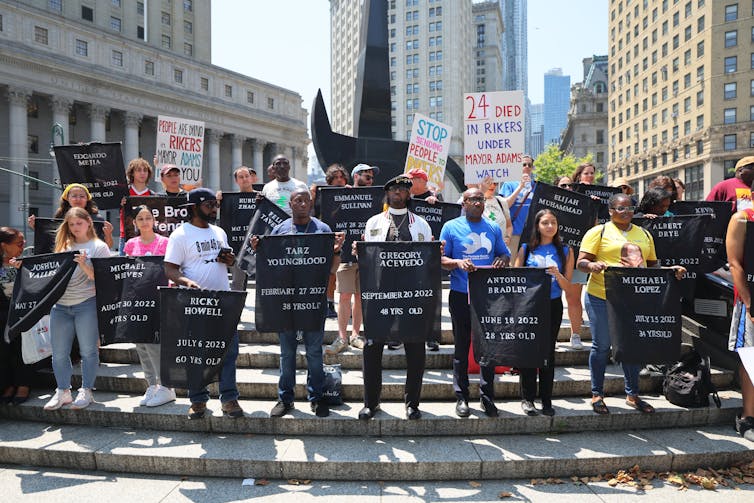
A group of people stand on a staircase while holding posters  that have the names of people written in large letters.
People hold banners with the names of people who have died in Rikers Island jail during a rally on July 11, 2023, in New York City. Michael M. Santiago/Getty Images

To conduct what epidemiologist Homer Venters referred to as an “apples-to-apples comparison” of circumstances and deaths in multiple jails during a period of escalating mortality, we relied on a combination of datasets.

For information about facility deaths, we turned to statistics compiled by Reuters news agency reporters, who submitted Freedom of Information Act requests to obtain mortality data from the largest jails across the U.S.

Our data on jail conditions – such as annual admissions and releases, facility capacities and demographics – came from the Bureau of Justice Statistics’ census and annual survey of jails.

Ultimately, we assessed mortality rates and conditions in approximately 450 U.S. jails between 2008 and 2019.

Some of our most robust findings about jail deaths had to do with two factors: turnover rate – the sum of weekly admissions and releases divided by average daily population – and demographics.

In the jails we examined, average turnover was 67% (slightly above the national average of 53%). Relatively high turnover rates, we found, were associated with higher death rates overall, as well as due to suicide, drugs and alcohol, and homicide.

In addition to revealing a relationship between turnover rate and mortality, our research showed that the presence of greater proportions of non-Hispanic Black people in populations of relatively large jails was associated with more deaths due to illness.

Race-based differences in illness-related deaths could be due to a variety of factors, including populationwide health disparities in the U.S.

Reliance on jails

Our findings about both turnover and racial disparities should be considered alongside the broader context of jail incarceration in the United States.

Roughly 4.9 million people are arrested and jailed each year, some of them multiple times. Overall, there were approximately 10.3 million admissions to more than 3,000 U.S. jails in 2019.

As of 2019, Black people were jailed at a rate more than three times that of white people.

People in jails have been found to be “significantly poorer” than people outside of jails, and more than 30 percent of those who are detained remain incarcerated because they cannot afford to pay bail.

Jailed people are also disproportionately likely to face health challenges. They are more likely to report having had chronic health issues, infectious diseases, mental illnesses and substance use problems.

The United States’ remarkably high population of incarcerated people – and the composition of that population – are related to decades’ worth of cuts in social welfare programs, structural racism, local and national political trends, and policing practices.

Research has shown that the cash bail system – a key driver of high jail turnover – “punishes the poor” by ensuring that they are more likely to be detained than their wealthier counterparts for the same crime. A reliance on cash bail also reportedly increases recidivism and undermines public safety.

Beyond incarceration

Our study suggests that ongoing initiatives geared at reducing incarceration – and by extension, jail turnover – could help achieve Sheriff Labat’s goal of saving lives.

A middle aged man dressed in a white shirt adorned withlaw enforcement patches is speaking to a crowd.
Fulton County Sheriff Patrick Labat speaks during a news conference. Paras Griffin/Getty Images

Some communities, for example, have successfully limited the use of cash bail. Others have enhanced community-based services that address mental illness, drug use and homelessness without involving police, so jails are less likely to be sites of first resort for people with complex needs.

A year before Samuel Lawrence died, a report from the ACLU suggested that by adopting at least some of the above measures, Fulton County could “reduce its jail population significantly.”

It could also, our research suggests, save lives.

Jessica L. Adler, Associate Professor of History, Florida International University

This article is republished from The Conversation under a Creative Commons license. 

Saturday, November 11, 2023

How animals get their skin patterns is a matter of physics – new research clarifying how could improve medical diagnostics and synthetic materials

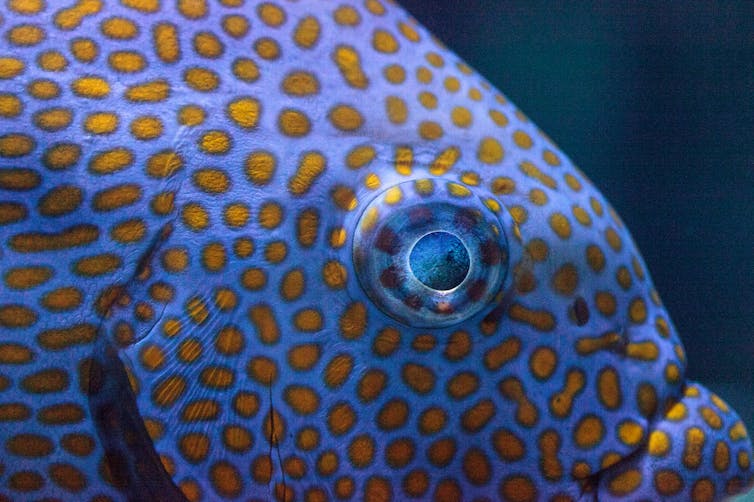
Color patterns seen in fish and other animals evolved to serve various purposes. Lagunatic Photo/iStock via Getty Images Plus
Ankur Gupta, University of Colorado Boulder

Patterns on animal skin, such as zebra stripes and poison frog color patches, serve various biological functions, including temperature regulation, camouflage and warning signals. The colors making up these patterns must be distinct and well separated to be effective. For instance, as a warning signal, distinct colors make them clearly visible to other animals. And as camouflage, well-separated colors allow animals to better blend into their surroundings.

In our newly published research in Science Advances, my student Ben Alessio and I propose a potential mechanism explaining how these distinctive patterns form – that could potentially be applied to medical diagnostics and synthetic materials.

A thought experiment can help visualize the challenge of achieving distinctive color patterns. Imagine gently adding a drop of blue and red dye to a cup of water. The drops will slowly disperse throughout the water due to the process of diffusion, where molecules move from an area of higher concentration to lower concentration. Eventually, the water will have an even concentration of blue and red dyes and become purple. Thus, diffusion tends to create color uniformity.

A question naturally arises: How can distinct color patterns form in the presence of diffusion?

Movement and boundaries

Mathematician Alan Turing first addressed this question in his seminal 1952 paper, “The Chemical Basis of Morphogenesis.” Turing showed that under appropriate conditions, the chemical reactions involved in producing color can interact with each other in a way that counteracts diffusion. This makes it possible for colors to self-organize and create interconnected regions with different colors, forming what are now called Turing patterns.

However, in mathematical models, the boundaries between color regions are fuzzy due to diffusion. This is unlike in nature, where boundaries are often sharp and colors are well separated.

Close-up of head of moray eel with dark brown patches separated by uneven white boundaries.
Moray eels have distinctive patterns on their skin. Asergieiev/iStock via Getty Images

Our team thought a clue to figuring out how animals create distinctive color patterns could be found in lab experiments on micron-sized particles, such as the cells involved in producing the colors of an animal’s skin. My work and work from other labs found that micron-sized particles form banded structures when placed between a region with a high concentration of other dissolved solutes and a region with a low concentration of other dissolved solutes.

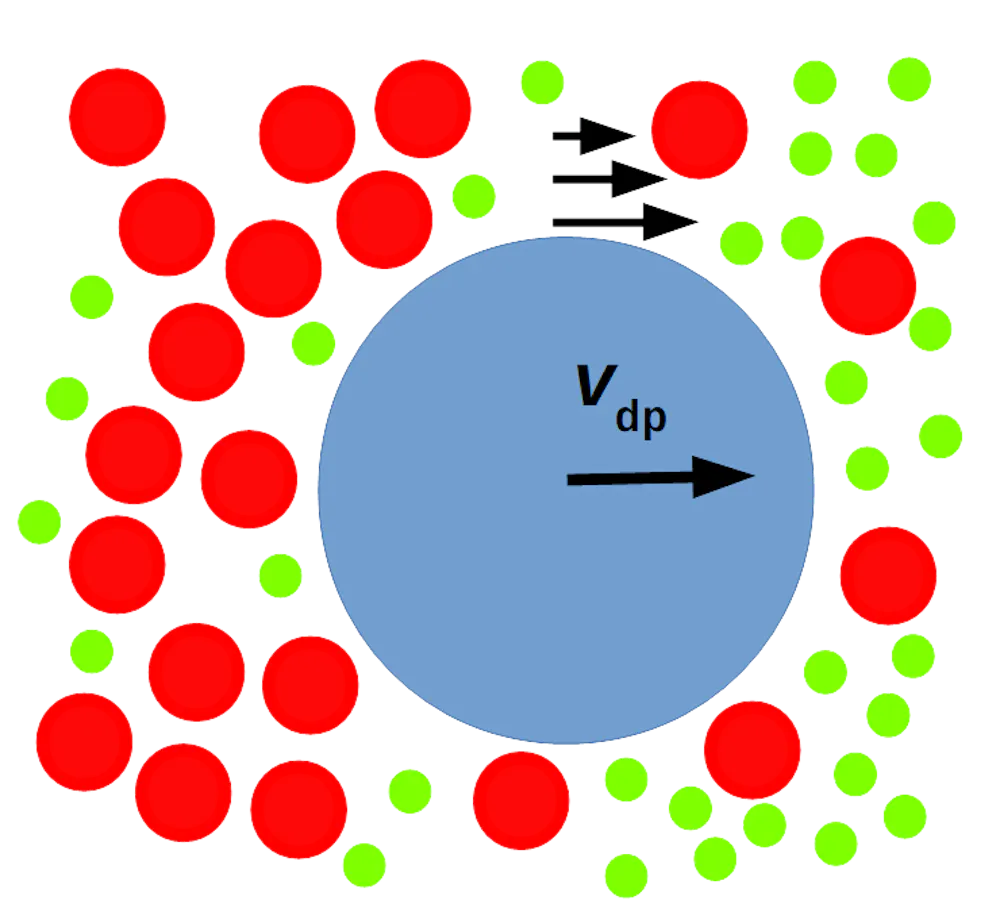
Diagram of a large blue circle moving to the right as it's swept along with the medium-sized red circles surrounding it also moving to the right, where there is a higher concentration of small green circles
The blue circle in this diagram is moving to the right due to diffusiophoresis, as it is swept along with the motion of the red circles moving into an area where there are more green circles. Richard Sear/Wikimedia Commons, CC BY-SA

In the context of our thought experiment, changes in the concentration of blue and red dyes in water can propel other particles in the liquid to move in certain directions. As the red dye moves into an area where it is at a lower concentration, nearby particles will be carried along with it. This phenomenon is called diffusiophoresis.

You benefit from diffusiophoresis whenever you do your laundry: Dirt particles move away from your clothing as soap molecules diffuse out from your shirt and into the water.

Drawing sharp boundaries

We wondered whether Turing patterns composed of regions of concentration differences could also move micron-sized particles. If so, would the resulting patterns from these particles be sharp and not fuzzy?

To answer this question, we conducted computer simulations of Turing patterns – including hexagons, stripes and double spots – and found that diffusiophoresis makes the resulting patterns significantly more distinctive in all cases. These diffusiophoresis simulations were able to replicate the intricate patterns on the skin of the ornate boxfish and jewel moray eel, which isn’t possible through Turing’s theory alone.

This video shows small particles moving due to a related phenomenon called diffusioosmosis.

Further supporting our hypothesis, our model was able to reproduce the findings of a lab study on how the bacterium E. coli moves molecular cargo within themselves. Diffusiophoresis resulted in sharper movement patterns, confirming its role as a physical mechanism behind biological pattern formation.

Because the cells that produce the pigments that make up the colors of an animal’s skin are also micron-sized, our findings suggest that diffusiophoresis may play a key role in creating distinctive color patterns more broadly in nature.

Learning nature’s trick

Understanding how nature programs specific functions can help researchers design synthetic systems that perform similar tasks.

Lab experiments have shown that scientists can use diffusiophoresis to create membraneless water filters and low-cost drug development tools.

Our work suggests that combining the conditions that form Turing patterns with diffusiophoresis could also form the basis of artificial skin patches. Just like adaptive skin patterns in animals, when Turing patterns change – say from hexagons to stripes – this indicates underlying differences in chemical concentrations inside or outside the body.

Skin patches that can sense these changes could diagnose medical conditions and monitor a patient’s health by detecting changes in biochemical markers. These skin patches could also sense changes in the concentration of harmful chemicals in the environment.

The work ahead

Our simulations exclusively focused on spherical particles, while the cells that create pigments in skin come in varying shapes. The effect of shape on the formation of intricate patterns remains unclear.

Furthermore, pigment cells move in a complicated biological environment. More research is needed to understand how that environment inhibits motion and potentially freezes patterns in place.

Besides animal skin patterns, Turing patterns are also crucial to other processes such as embryonic development and tumor formation. Our work suggests that diffusiophoresis may play an underappreciated but important role in these natural processes.

Studying how biological patterns form will help researchers move one step closer to mimicking their functions in the lab – an age-old endeavor that could benefit society.

Ankur Gupta, Assistant Professor of Chemical and Biological Engineering, University of Colorado Boulder

This article is republished from The Conversation under a Creative Commons license.

As the climate changes, plants must shift their ranges. But can they?

Lots of them depend on fruit-eating birds and mammals to spread their seeds. But it’s debatable whether the animals — many in trouble themselves — can disperse seeds far and fast enough to keep pace with a warming world.

Haldre Rogers’ entry into ecology came via the sort of manmade calamity that scientists euphemistically call an “accidental experiment.”

She’d taken a job in 2002 on the Pacific island of Guam and the neighboring Mariana Islands to study the invasive brown tree snakes that were introduced to Guam, likely from a cargo ship, shortly after World War II. In the ensuing decades, these large snakes thrived, and many native animals were obliterated.

Rogers’ initial task was to track reported sightings on nearby islands. The job, she says, “gave me lots of time to just stare at trees, trying to see snakes. And I realized that, ‘Oh, there’s actually all of these differences between forests on Guam and forests on other islands.’”

And so, for her PhD, Rogers decided to address whether the snakes themselves had changed Guam’s trees and shrubs.

The potential link was this: Many trees and other plants rely on animals to disperse their seeds — and that’s often achieved through fruit. Like mini ecological Trojan horses, fruit evolved to be eaten, its pulp a nutritious lure to make an animal consume it and swallow a plant’s seeds, too.

The animal moves on. After a while, it defecates, depositing the swallowed seeds somewhere within its range. Oftentimes, those seeds emerge in what amount to little fertilizing clumps of manure.

Myriad factors will determine whether a seed ever becomes a mature plant. But by co-opting the wings, legs, guts and back ends of animals, rooted plants have evolved a way of scattering the embryonic forms of their offspring far and wide.

In Guam, forest trees had relied on seven main species of disperser — six birds and one bat — and the tree snakes decimated them. When Rogers arrived, only one bird disperser remained, and only in a limited range, and the bat population was down to about 50 individuals. “So, basically, no seed dispersal,” says Rogers, now an ecologist at Virginia Tech.

Across the island, fruits now just drop to the forest floor.

There are winners and losers among Guam’s plants, Rogers found. Some species that are less dependent on animals are thriving. But many native fruiting trees and shrubs are struggling. There is less mixing, and forests have a lower diversity of plant species as a result.

Particularly striking is what happens when a mature tree falls in the forest. Normally, Rogers says, a free-for-all ensues as masses of growing seedlings fight over the newly available light. On Guam, these gaps fill very slowly because seeds aren’t brought in. “When you lose a seed disperser,” Rogers says, “there’s nothing else that’s going to take over that role in the system.”

If this were simply an inadvertent experiment on one faraway island — confirming what ecologists have long hypothesized about plants’ reliance on frugivorous, or fruit-eating, animals — it would be a local misfortune. But with populations of wild animals plummeting worldwide, ecologists fear that, instead, it serves as a widespread warning.

In Madagascar, researchers recently showed that several endangered trees, including species of palm and baobab, produce seeds too large for any living animals to swallow and distribute. The giant lemurs and elephant birds that must once have distributed them are long extinct, rendering them “ghost fruit.”

In the Western United States and Mexico, as numbers of pinyon jays plummet, ecologists worry about the long-term persistence of piñon pines, whose seeds are cached and spread by these birds.

Examples like this exist all over the world.

But an even bigger issue is that plants probably need their seed-dispersing animals now more than ever. As temperatures quickly rise due to climate change, many plants will have to move to cooler locations to survive. However, research by seed-dispersal ecologists is suggesting that the world’s shrinking animal populations do not have the capacity to mediate these migrations.

“The world is changing so rapidly. Things have to respond in some way,” says Rogers. “Understanding movement is going to be hugely important.”

The right moves

Researchers estimate that over half the world’s seed-bearing plants rely on animal-mediated seed dispersal and that in tropical forests, the number is 75 percent or more. That reliance, Rogers says, takes various forms.

For example, as shown in Guam, fruit-eating animals serve an ongoing and vital maintenance function within a local population. Seeds dispersed randomly by animals can land in healthy new growing spots and ensure mixed ecosystems, whereas fruits that fall beneath their parents are competing with their siblings and are, quite literally, in their parents’ shadow.

Such fallen seeds have also lost the often-important step of passing through an animal’s gut. Digestion may wash away molecules that inhibit germination and it strips the seed of surrounding flesh that, if left in place, can promote the growth of fungi and other pathogens.

But as Rogers and colleagues described in the 2021 Annual Review of Ecology, Evolution, and Systematics, another service will be important for surviving climate change: transporting seeds beyond their parents’ current range. As temperatures rise, plants will have to track — or follow — the movement of the climatic conditions to which they are adapted. Broadly speaking, that means moving north for Northern Hemisphere species and south for Southern Hemisphere species — or to higher altitudes.

Juan P. González-Varo, an ecologist at the University of Cadiz in Spain, explains that since average temperatures vary according to latitude — getting cooler farther from the equator — ecologists can calculate how quickly a species will need to move toward cooler climes to stay at the same average temperature, based on data about rates of global heating. The current estimate is 4.2 kilometers per decade — a significant range shift. And the rate of needed movement is greater for woody fruiting plants because they often take years or even decades to reach reproductive maturity, González-Varo says.

Ecologists are asking whether today’s animals populations will permit plants to achieve this.

González-Varo’s own work, for example, is focused on birds. He says that in the mid-2010s, when ecologists described how crucial plant migration would be in the future, authors of certain influential papers said that migratory birds are well-positioned to move seeds the necessary distances.

But although migratory birds do make lengthy journeys, seeds can pass through avian gastrointestinal tracts as quickly as 20 minutes after being swallowed. Will birds retain seeds long enough to carry them far enough?

Researchers examining the gut contents of migratory birds on the Atlantic’s Canary Islands did find seeds from the mainland some 170 kilometers away, indicating that long-range dispersal can happen. But González-Varo felt there was a problem and, in 2021, he and colleagues published work on European forests that confirmed his pessimism: Migrating birds are typically traveling in the wrong direction when they eat fruit.

The researchers gathered data on 949 examples of 46 bird species eating the fruit of 81 different plants. They observed that migrating birds tended to eat European fruits when they were heading south for winter, from colder to warmer climes. It’s the opposite direction from that needed to keep up with climate change. Only around one-third of the plant species studied, including plants such as holly, wild olives and ivy, produce fruit in the spring when the birds are heading north — a time that would help the species move to cooler latitudes.

So if migratory birds had been seen as the solution to plants tracking climate change, González-Varo says this study showed they are “a very partial solution.”

Rising temperatures, shorter distances

A huge simulation published in 2022 examined more closely the global capacity of all animals to move seeds around. The results were also concerning.

Ecologist Evan Fricke of MIT, Rogers and coauthors first built a database of every field study they could access in which researchers had quantified aspects of seed dispersal by animals. Which animals eat fruit from which plants? Do the animals swallow, strip, cache or destroy the seeds? How far do the animals take seeds? And in which instances do seeds produce new plants? The model was ultimately fed by data from around 18,000 animal-plant interactions.

Next, the team added data describing each animal and plant species; the team also included data on the natural geographic ranges of species, including estimates of where extinct species would live today had they not gone extinct.

Finally, they used machine learning to simulate the degree to which animals are distributing seeds across the globe today, and how declines in dispersers and their habitats are affecting seed movement.

The first thing to pop out of the model was a strong correlation between the size of an animal — especially mammals — and how far it disperses seeds. Typically, large mammals have large ranges and seeds take longer to pass through them. (Birds, Fricke says, mostly occupy quite small ranges when they’re not migrating.) That is a problem, because large mammals are far more likely than small ones to have been driven to extinction by people or to be heading in that direction.

Fricke’s team then looked at dispersals greater than 1 kilometer from parent plant’s range — the sort needed to shift plants’ ranges. Their model showed that extinctions and declines in habitat have vastly reduced the long-distance dispersal of seeds. “There have been really strong declines in long-distance seed dispersal as a result of the massive loss of big animals from the ecosystems,” says Fricke.

Whether it’s cave paintings in France or the fossil record, historical data show that large mammals were once widespread, constantly moving seeds long distances. “That helped deal with the climate changes that have happened in the last 10,000 years or so,” Fricke says. “But they’re no longer helping plants with climate change now, because they are either completely extinct or are restricted to really small areas within their former ranges.”

The team ran another simulation in which all currently endangered birds and mammals become extinct. Under this scenario, seed dispersal of more than 1 kilometer would further suffer, with some of the greatest losses occurring in Madagascar and Southeast Asia.

In short, Fricke says, as temperatures increase, seed movement is decreasing — right at the time when it’s needed most.

Dwindling dispersal

To complicate matters further, sometimes an animal species can stop dispersing seeds even when it’s still around and still eating fruit, says Kim McConkey, an ecologist affiliated with the UK’s University of Nottingham Malaysia campus who has observed the habits of many frugivorous creatures. Loss of predators is one cause. Without the fear of being snatched by, say, a fox or a hawk, rodents are less likely to carry seeds away from the plants where they found them. Noise and light pollution is another: It can deter seed dispersers from venturing into certain areas.

Reduced competition for food can also dramatically change dispersal patterns. On Guam, surviving frugivores, freed from competition, eat fruit from fewer plant species. In Tonga, the insular flying fox — a bat species whose numbers are declining there — now rarely pick fruit from a tree then carry it elsewhere to eat, McConkey says. They just feed happily in the fruiting tree, dropping the seeds below. “When you’ve got a few bats, they don’t fight — and you’ve got no seed dispersal,” she says. “If there aren’t enough bats, almost nothing moves.”

Habitat fragmentation is a further problem, says Dov Sax, a conservation biologist at Brown University. “Much of Europe is in agricultural fields. And the same is true for much of the middle of the US,” he says. “That creates a huge barrier to dispersal.”

In so many ways, the world is now radically different from how it was during previous periods of climate change, Sax adds. “In North America and the UK, none of us grew up with elephants roaming the landscape, or giant sloths or lots of bison,” he says. “It’s easy to forget that that was the situation for millions of years, and that through all the previous episodes of climate change, those mammals were available to move seeds.”

Sax does note one significant uncertainty in forecasting how much plants must migrate to survive global heating. It’s possible, he says, that they have more built-in flexibility than assumed to deal with conditions different to those within their historical ranges. Still, there is widespread evidence that plant and animal ranges really are shifting. Parts of the Arctic tree line are moving towards the north pole by 40 meters a year or more; the US Environmental Protection Agency says ranges of North American species have moved north by an average of 16.9 kilometers a decade since the 1970s; and across the world plants are shifting to higher, cooler altitudes, including alpine species that have ascended hundreds of meters up the Himalayas and the Hengduan mountains.

What seed ecologists must do next is directly show if and how animals are facilitating — or preventing with their absence — such movements. They also need to learn how new communities function when novel plants join ones that already live at higher latitudes or altitudes, creating new combinations of species. Fricke’s modeling, supported by real-world data on existing introduced plant species, suggests that when fruiting plants move to new habitats, most of them will have their seed-dispersal needs met by local fruit-eating animals. But nobody knows for sure.

The answers have important implications for conservation (see sidebar). But for these issues to gain traction, the crucial role of animals in dispersing seeds needs far more appreciation among the public and from conservation policymakers, says Rogers.

Certainly, pollination by bees and other insects is now a flagship conservation issue. Maybe that’s unsurprising, since some 75 percent of human crops depend on animal-mediated pollination, whereas seed dispersal is primarily an issue for wild plants. But perhaps it’s also easier to turn bees flitting from flower to flower into icons of environmentalism than it is to celebrate thrushes or bears eating berries then defecating the seeds.

Nevertheless, seed dispersal is an essential ecological function, stresses Rogers. For wild plants, she adds — and therefore, the health of global ecosystems — the message is quite simple: “You can have all the pollination you want. But if it doesn’t get dispersed, it’s not going to succeed.”

This article originally appeared in Knowable Magazine, an independent journalistic endeavor from Annual Reviews. 

How Young Adults Can Build a Healthier Future

Shaping the future of public health into an equitable one means ensuring all people and communities have access to the health care and resources they need to live well. The nation requires a strong, diverse public health workforce to accomplish that goal.

That’s why AmeriCorps and the Centers for Disease Control and Prevention launched Public Health AmeriCorps – to support the recruitment, training and development of early career public health workers who can serve their local communities.

Bridging national service and public health, the initiative supports a diverse group of early career professionals working to address today’s public health challenges in a range of roles, including:
  • Health education and training
  • Community outreach and engagement
  • System navigation, referrals and linkage to care
  • Research, data collection, analysis and assessment

What Members are Saying
Everyone was impacted by the COVID-19 pandemic – including Dionne Johnson, who lost a loved one to the virus.

“I had a family member die from COVID-19, and it really touched me,” Johnson said. “That gave me the passion and lit the fire under me to actually pursue a career in public health.”

Now, Johnson is realizing her dreams of transforming public health in her community. In her work, she wants to teach people in Black and brown communities how they can learn to be healthy and advocate for themselves.

Another member, Jaiden Singh, is the son of immigrants. Singh launched a promising career in public health so he can give back to the community where he grew up.

“Being a part of the organization not only has really supplemented my education that I’m working toward in public health and policy, it has also given me the opportunity to do work that I am really passionate about in a community that I have known all my life and really do love,” Singh said. “I would highly recommend being a part of this really valuable and inspiring community.”

Action That Creates Impact
The diverse work of Public Health AmeriCorps benefits not only program members but also the communities they serve. As examples of the program at work, members have:

  • Provided overdose rescue education, raised awareness about opioid use disorder and harm reduction strategies and distributed overdose rescue kits containing naloxone (an overdose-reversing nasal spray).
  • Held back-to-school COVID-19 testing events, distributed early childhood health education and built community gardens in underserved communities.
  • Participated in a community mental health crisis intervention system to assess, stabilize and link people in crisis to follow-up care and services.
  • Supported elementary schools as part of a dental hygiene program that sends out staff and volunteers to provide free teeth cleanings to students.

Learn More and Apply
If you want to start your career and make a difference in public health, consider member benefits such as:

  • Education awards to apply to higher education or student loan forgiveness
  • Student loan deferment and forbearance
  • Living allowance
  • Hands-on experience
  • Training from experts
Visit AmeriCorps.gov/PublicHealth for a list of opportunities to serve and contact your desired opportunity by phone or email to learn more and apply. You can also subscribe to the newsletter to learn more about the initiative.


SOURCE:
AmeriCorps

Trade unions in the UK and US have become more powerful despite political interference and falling memberships

\
Steven Daniels, Edge Hill University

In September 2023, Joe Biden became the first sitting US president to join strikers on a picket line. He told car workers that they “deserve a significant raise and other benefits”.

Even more surprisingly perhaps, those same workers – in a dispute with three of America’s biggest car manufacturers – were later praised by Donald Trump. Meanwhile in the UK, Labour leader Sir Keir Starmer has pledged to repeal anti-strike laws, and “unequivocally” support the right to strike.

It seems that ongoing – and largely successful – strike action in both the UK and the US has forced political leaders to take trade unions more seriously than they have for decades.

There is a shifting balance of power towards the unions, with employers increasingly agreeing settlements in the strikers’ favour. In the UK, key workers in sectors such as education, healthcare and transport continue to strike in pursuit of better pay and conditions – no doubt encouraged by the successes they have seen elsewhere.

For example, in October last year, striking barristers received a 15% pay rise, while London bus drivers ended their industrial action after accepting a pay deal worth 18% in February 2023. Then in July, Royal Mail workers concluded a three-year dispute after receiving a 10% rise .

In the US, a well-publicised strike which stopped production of popular TV shows and films ended in success for the Writers Guild of America, bolstering action by striking actors who have now agreed a “tentative” deal with Hollywood studios.

Low numbers and high barriers

That successful strike action is taking place at such a size and scale is remarkable considering the various hurdles still being faced by unions in both countries.

UK unions, once powerful enough to bring down a government (as when Edward Heath succumbed to the National Union of Mineworkers in 1974), have faced an increasingly restrictive environment. This culminated in 2016 legislation which established high legal barriers for strike action, such as requiring a 50% turnout, or placing tight restrictions on where and how pickets can be conducted.

In the US, striking rights are weaker still, with the balance of power overwhelmingly favouring employers. Every single state (except for Montana) is an “at will” state, meaning that an employer can effectively dismiss an employee at any time, for any reason (if the decision is not illegal, such as being discriminatory).

Membership levels also paint a depressing picture for trade unions. In the UK, just 22.3% of workers were part of a union in 2022. In the US, the proportion is 10.1%, and 84% of households do not include a single union member.

For younger workers, with no memory or experience of what unions have achieved in the past, the numbers are even lower. Only 4.4% of US workers aged 16 to 24 are members of a union, and in the UK it’s just 3.7%.

Lower levels of union membership results in less bargaining power, and therefore a weakening of employment rights and job security – which again makes the recent levels of industrial action a surprise.

Striking a blow

Falling membership also has a direct impact on the number of working days lost to industrial action, with substantial declines in recent decades. The US saw a peak of 52.8 million lost working days in 1970, and a low of 200,000 in 2014.

In the UK, 29.5 million working days lost in 1979 went down to as little as 170,000 in 2015.

But this vital metric of successful unionisation is also changing, with the number of days lost rising to 2.2 million in the US, and 2.5 million in the UK in 2022.

This suggests unions are becoming much more effective at galvanising the members they do have. An increase in the number of lost working days implies that workers’ feel like they can take industrial action, and that such action will actually make a difference.

This snowball effect will only embolden unions further, and aggrieved workers will feel more confident about standing up to their employers.

The fact that workers seem to be feeling empowered despite low numbers and an increase in the barriers to strike action, begs an important question about what is behind the current resurgence.

It may be down to the cost-of-living crisis spurring strained workers to demand above-inflation pay rises. Or it may be thanks to unemployment levels being at their lowest in nearly 50 years, providing substantial bargaining power and leverage.

Many employers would struggle to find replacement workers at the moment, especially highly skilled ones, like those in the car industry. Unions know this, and therefore feel more comfortable agitating for better terms and conditions.

Responding to the unions’ apparent new levels of confidence, the UK government recently introduced legislation designed to force some strikers back to work. Meanwhile Labour, which receives substantial funding from unions, is seeking to walk a tightrope of pleasing both workers and employers as it seeks a broad electoral coalition.

Both parties need to accept that trade unionism is experiencing a revival few thought possible – and one that shows no signs of stopping.

Steven Daniels, Lecturer in Law and Politics, Edge Hill University

This article is republished from The Conversation under a Creative Commons license.

How Bach’s Toccata and Fugue in D minor became Halloween’s theme song

In Bach’s era, the pipe organ was one of the world’s most technologically advanced instruments. Stefano Bianchetti/Corbis via Getty Images
Megan Sarno, University of Texas at Arlington

Imagine a grand house on a hill, after dark on an autumn night. As the door opens, an organ pierces through the thick silence and echoes through the cavernous halls.

The tune that comes to many minds will be Johann Sebastian Bach’s Toccata and Fugue in D minor, BWV 565, an organ work composed in the early 18th century. Most people today recognize it as a sonic icon of a certain type of fear: haunting and archaic, the kind of thing likely to be manufactured by someone – a ghost, perhaps – wearing a tuxedo and lurking in an abandoned mansion.

The iconic intro to Bach’s Toccata and Fugue in D minor. Paul Fey/YouTube1.04 MB (download)

Bach could not have thought that his nearly 9-minute organ piece would become so strongly associated with haunted houses and sinister machinations. As a musicologist whose current research is focused on the musical representation of mystery, I see the story of this song as a classic example of how the meaning, use and purpose of music can change over time.

30 seconds of sheer suspense

Bach was a technically skilled musical craftsman and a scholar of composition. In his work, he sought to dutifully serve his employer, whether that was a Lutheran church, a royal court or a town council. He wasn’t like the famous composers of later eras – Mozart, Haydn, Liszt – who used their talents to build fame and increase their influence.

As Bach scholar Christoph Wolff has pointed out, Toccata and Fugue belongs to the repertory of virtuosic show pieces that Bach created to exhibit his own prowess as an organ player.

For Bach, who left no documents pertaining to this piece, the work would have been merely functional, a way to show the abilities of the organ and to put his talent to good use – not indicative of emotions, stories or other ideas.

The music of Bach’s Toccata and Fugue owes much of its spookiness to the drama it employs: Harmonically, it is set in a somber minor mode that is generally aligned with more negative emotions such as sadness, nostalgia, loss and despair.

Within this minor mode, a striking melodic contour is unleashed. The piece’s first pitch is the fifth scale degree instead of the first pitch of the scale. The unexpected note creates uncertainty. Then there’s a quick descent down the D minor scale after the initial flickering ornament.

Add to this the silent background and the pregnant pauses between musical phrases, and the first 30 seconds are sheer suspense. A heavily contrasting texture – with lots of notes stacked up on each other – follows, introducing sonic clashes and rich harmony that swell with power.

The piece moves quickly after this arresting beginning, relentlessly following a pattern of solo figures interspersed with massive, pounding chords.

The organ’s haunting effect

The sounds of the pipe organ further enhance the piece’s spooky sound.

During the Baroque era – roughly 1600 to 1750 – the organ reached the height of its popularity. At the time, it was one of humankind’s most technologically advanced instruments, and musicians routinely performed organ music during church services and in concerts held at churches.

But as musicologist Edmond Johnson has explained, many instruments preferred in the Baroque era, such as the organ and the harpsichord, had become out of fashion by the 19th century, stashed in storage rooms where they gathered dust.

When music historians and ancient music revivalists first brought these instruments out for public performances after more than a century in storage, the now unfamiliar instruments sounded archaic and creaky to audiences.

Musicologist Carolyn Abbate has argued that music can be “sticky,” collecting new meanings as contexts change and time passes. You can see this in the way Schubert’s famous “Ave Maria” – originally written as accompaniment to the words of Walter Scott’s poem “Lady of the Lake” – became associated with Catholic devotional music. Or the way Tchaikovsky’s “The Nutcracker” morphed from an underappreciated neo-Romantic ballet in 19th-century Russia to a popular annual Christmas tradition in the U.S.

A song that stuck

So how did the piece become associated with Halloween?

One landmark film likely contributed to the impression that Bach’s Toccata and Fugue portends something nefarious: the 1931 release of “Dr. Jekyll and Mr. Hyde.” Rouben Mamoulian’s famous adaptation of Robert Louis Stevenson’s novel uses Bach’s Toccata in the opening credits.

The opening credits to ‘Dr. Jekyll and Mr. Hyde’ (1931).

The piece sets a tone of suspense and suggests the depths of evil that Dr. Jekyll will encounter in his experiments. In the film, Dr. Jekyll is portrayed as an amateur organist who enjoys playing Bach’s music, so it is easy for a listener to apply the dramatic, suspenseful and complex nature of the Toccata to Dr. Jekyll and his alter ego.

Since then, the music has also been used in other spooky films and video games, including “The Black Cat” (1934) and the “Dark Castle” video game series.

Though Bach himself would not have thought of Toccata and Fugue in D minor as spooky, its origins as an innocuous concert piece won’t prevent it from sending a shiver down people’s spines every Halloween.

Megan Sarno, Assistant Professor of Music, University of Texas at Arlington

This article is republished from The Conversation under a Creative Commons license. 

Thursday, November 9, 2023

ALABAMA TO HOST ITS FIRST EVER PRESIDENTIAL DEBATE


"Alabama will host its first ever Presidential Debate on Wednesday, December 6 in Tuscaloosa, Alabama.

“I am thrilled the fourth Republican presidential debate has been finalized, and that it will be in the Yellowhammer State. This is an amazing opportunity for the state of Alabama, as well as primary voters across the country. Alabama is one of the strongest Republican states in the nation, and I think it’s fitting that we host a primary debate as candidates fight for the support of conservative voters,” said ALGOP Chairman John Wahl.

“Tuscaloosa will be a great host city, and I look forward to working with student groups and young conservatives during this process. Reaching out to young voters is one of my targets as the youngest Republican State Party Chairman in the country, and this debate will give us a unique opportunity for collage outreach,” he continued.

The debate will be moderated by SiriusXM’s Megyn Kelly, NewsNation’s Elizabeth Vargas, and the Washington Free Beacon’s Eliana Johnson.

“I want to thank the Debate Committee and RNC leadership for making this happen. This debate has been in the works for months, and I am proud to have played a small part in ensuring Alabama has the opportunity to host its first ever official televised presidential debate. Raising Alabama’s political profile is important to me as Chairman, and I think this debate will continue the work the ALGOP has been doing in this area,” said Chairman Wahl.

Details about the venue will be released in the coming days.

Chairman Wahl is available for interviews about the debate. Please contact ALGOP Communications Director Jeannie Negrón Burniston to schedule. "


https://algop.org/its-official-alabama-to-host-its-first-ever-presidential-debate/