Losing a job, regardless of the circumstances, takes a toll -- emotionally and financially.
"When losing a job, there can often be a mix of emotions, depending on the circumstances of the separation, and a feeling of embarrassment can often be one of those emotions," explains Sally Anne Carroll, PCC, founder of Whole Life Strategies Coaching. "Many of us tend to have a lot tied up in our work lives, from our finances to relationships to our professional identity, and that can bring up a lot of stories about what it means that we're no longer working at that job."
Indeed, trying to maintain your dignity and self-esteem and find a way to move forward can be a difficult feat. Yet, you must start the process (of healing and job hunting).
A healthy and productive plan for recovering from your job loss will likely include grieving and emotionally digesting the loss, reaching out to (and growing) your network, and developing good job search habits so that you can find your dream position.
Carroll says it's important to take a little time to collect yourself. "Especially in the immediate aftermath, it's important to pause, gather your emotions and don't make any important decisions until you've had a chance to recalibrate," she cautions. "This is the time for self-care -- including the basics of rest, nutrition, and exercise -- so that you can manage your physical and mental energy effectively and resource yourself well as you navigate this change."
She also advises that rushing into action isn't always the answer. While tempting, she says, "it's often better to channel our energy into reflection before planning. Create the space you can to be intentional about your next move (as resources allow). This is the time to reflect and reconnect to your personal and professional vision, your career goals, strengths, and values. It's time to take stock of the experience and skillset you have, the network you have, and where you might want to go next in your career."
The bottom line is that losing a job has a lot wrapped up in it. How you work through it is a key part of moving forward successfully and efficiently. The following previously published HigherEdJobs articles serve as resources, or reminders, for how you can regroup and start the next part of your career journey (or help a friend or family member experiencing a job loss).
Even if you want to move forward, it can be difficult to know where to start. This guide provides a roadmap for processing the loss and taking some initial steps toward your next opportunity.
Your response to a job loss or rejection can be a transformative time in your career if you use it as an opportunity for reflection, planning, and exploration. This article provides steps to take before jumping back into your job search.
Originally written during the pandemic era when layoffs were at an all-time high, this article shares timeless tips for offering meaningful support to friends or family members who have lost their jobs.
Discussing your job loss with family, friends, and mentors is difficult enough, let alone having to explain the situation to a prospective employer. This article shares advice for navigating conversations like these with confidence.
This article is republished from HigherEdJobs® under a Creative Commons license.
When Thanksgiving hosts and their guests ponder must-have desserts, one of the most common favorites is an oh-so-delicious pie. More specifically, with nearly endless possibilities and its familiar festive flavor, pecan pie is one of America’s most beloved holiday treats.
From nods to the Northeast’s love of maple to celebrating sweet tastes of the West Coast with a citrus twist, the American Pecan Promotion Board is celebrating regionally inspired recipes. While the classic pecan pie is a hit at the Thanksgiving table, you can make it a perfect palette for creativity this year by enjoying local flavors that take the festivities up a notch.
For example, putting a festive spin on the holiday favorite can be as easy as this sweet and savory Bourbon Bacon Pecan Pie that’s a mouthwatering take on tradition. Or, if you’re in need of a quick snack everyone can share while mingling, opt for this Chocolate Cherry Pecan Snack Mix that takes just 20 minutes to prepare. It includes chocolate-glazed pecans tossed with yogurt-covered raisins, pretzels and dried tart cherries – a staple of the North.
When it comes to pecans, great taste is just the beginning. They’re the ultimate supernut due to their flavor versatility and nutritional benefits. Next time you’re shopping for pie ingredients, remember you can pick up an extra bag to add to favorite appetizers, snacks, meals, desserts and more all holiday season long.
Find more regional recipe inspiration by visiting eatpecans.com.
Bourbon Bacon Pecan Pie
Recipe courtesy of Emily Caruso of "Jelly Toast" on behalf of the American Pecan Promotion Board
Prep time: 20 minutes
Cook time: 70 minutes
Servings: 10
1 pie dough (9 inches)
4 strips thick-cut bacon
1/2 cup dark corn syrup
1/2 cup light corn syrup
1 cup light brown sugar
2 tablespoons unsalted butter, melted
2 tablespoons bourbon
3 large eggs
1/2 teaspoon salt
2 1/2 cups raw pecan halves
Place baking sheet in oven. Preheat oven to 350 F.
Gently line pie pan with rolled out pie dough. Press into edges and up sides. Use fingers or fork to create decorative edge. Set aside.
In skillet, fry bacon until crisp. Remove from pan and drain on paper towels then chop into small pieces and set aside. Reserve 1/4 cup bacon grease.
In large bowl, whisk dark corn syrup, light corn syrup, brown sugar, reserved bacon grease, butter and bourbon. Add eggs and salt; whisk until mixture is even. Fold in pecan halves and chopped bacon.
Pour mixture into pie crust and spread evenly with spatula. Gently cover edges of pie crust with aluminum foil. Place pie on preheated baking sheet and bake 60-70 minutes, or until pie is set in center.
Remove pie from oven and cool completely before serving or chilling.
Notes: Pie can be made 1 day ahead and refrigerated overnight. Allow pie to come to room temperature before serving.
Chocolate Cherry Pecan Snack Mix
Recipe courtesy of Emily Caruso of "Jelly Toast" on behalf of the American Pecan Promotion Board
Prep time: 5 minutes
Cook time: 20 minutes
Servings: 20
1 large egg white
1/4 cup light brown sugar
1 1/2 tablespoons unsweetened cocoa powder
1/2 teaspoon vanilla extract
1 teaspoon salt
1 tablespoon water
1 1/2 cups pecan halves
1 cup dried tart cherries
1 cup small pretzels
3/4 cup yogurt-covered raisins
Heat oven to 325 F.
In bowl, whisk egg white, brown sugar, cocoa powder, vanilla extract and salt until well blended. Add water to thin mixture slightly. Fold in pecan halves until well coated. Spread mixture onto parchment-lined baking sheet.
Bake 15-20 minutes, or until mixture is well set. Stir mixture several times during baking. Allow pecans to cool completely and transfer to bowl. Mix in dried cherries, pretzels and raisins.
Whether you’re hosting a large holiday gathering or simply savoring the season with those nearest and dearest, serving up flavorful dishes your friends and family will love is key to bringing everyone together.
With a full portfolio to choose from, you can shake up your meals all throughout the season using inspiration and premium products from Smithfield to help bring everyone together to share favorite memories and meals from breakfast to dessert and everything in between.
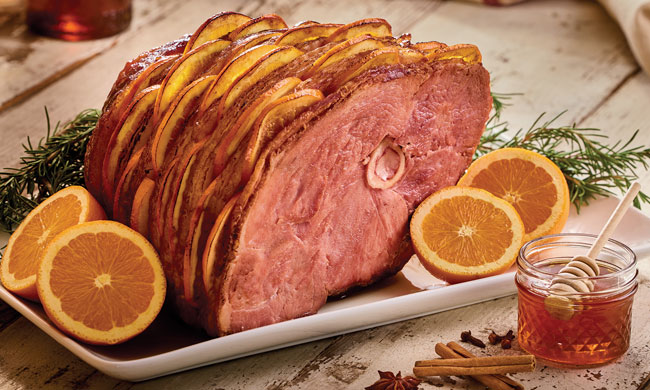
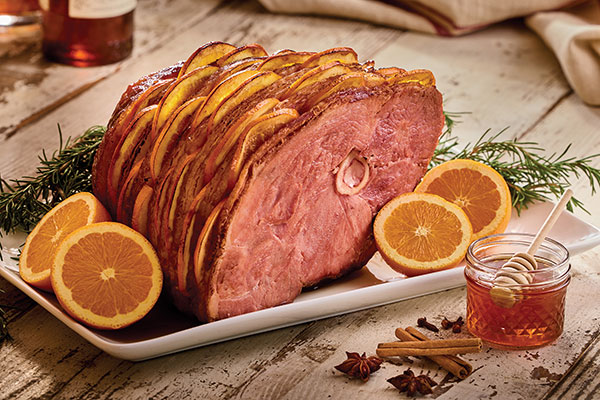
This holiday season, create a masterpiece such as a Hickory Smoked Spiral Sliced Ham with Bourbon, Honey and Orange Glaze for the perfect combination of sweet and savory with fresh orange juice, bourbon, ginger, cinnamon and honey that’ll leave guests asking for seconds.
Easy to prepare and ready to be served, Smithfield Spiral Hams are pre-sliced and only need to be heated. Plus, if you’re short on time during a hectic holiday season and unable to prepare a homemade glaze, a pre-glazed ham is an easy option.
For more easy-to-make holiday recipe inspiration, visit Smithfield.com.
Hickory Smoked Spiral Sliced Ham with Bourbon, Honey and Orange Glaze
Total time: 2 hours, 40 minutes
1 Smithfield Hickory Smoked Spiral Sliced Ham
1/2 cup bourbon
1/2 cup honey
1 1/2 cups fresh orange juice
1/2 cup brown sugar
1/2 teaspoon ground clove
1 teaspoon ground cinnamon
1 tablespoon ground ginger
Preheat oven to 325 F.
Remove packaging from ham, including glaze packet, and place face down in large roasting pan.
Heat ham, uncovered, 12-14 minutes per pound, or until internal temperature reaches 120 F. Heating time will vary by weight.
When about 30 minutes of cook time remains, in small saucepan over medium-high heat, whisk bourbon, honey, orange juice, brown sugar, clove, cinnamon and ginger; bring to boil.
Pour glaze over ham.
Continue baking ham, basting frequently.
For final 10 minutes of cook time, turn oven up to 425 F, continuing to baste with glaze.
When ham is heated through, remove from oven, drain liquid in bottom of baking dish and reserve to serve on side of hot ham.
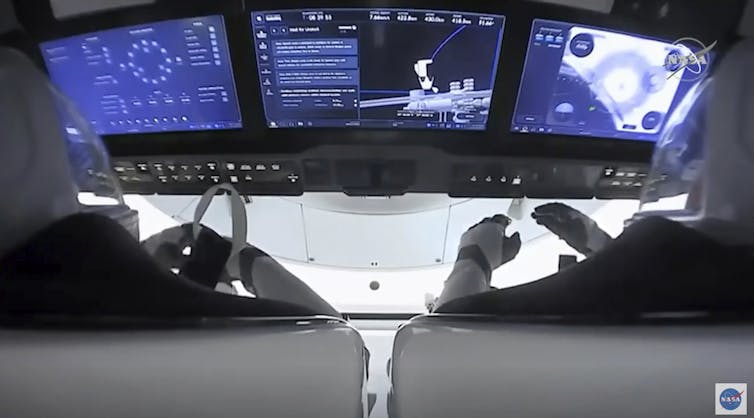
When landing on the surface of the Moon, astronauts can become spatially disoriented, which is when they lose sense of their orientation – they might not be able to tell which way is up. This disorientation can lead to fatal accidents.
Even on Earth, between 1993 and 2013, spatial disorientation led to the loss of 65 aircraft, US$2.32 billion of damages and 101 deaths in the U.S.
Could wearable technology augment the senses of astronauts, allowing them to overcome the limitations of their biological sensors? And what type of training could build a deeper bond between the astronaut and the wearable technology, so that astronauts would be able to rely on the technology when they can’t trust their own senses?
Spatial disorientation research may help astronauts in the future, and it can have applications for other fields, like vestibular disorders.
In a paper published in November 2023 in Frontiers in Physiology, we determined whether vibrotactors – small vibrating devices placed on the skin – could enhance the performance of participants put in a disorienting condition that mimicked spaceflight. We also studied what type of training could enhance the connection between the human and the device.
Vibrotactors communicate information through the touch receptors of the somatosensory system instead of the visual system. They have previously helped pilots flying helicopters and airplanes.
When pilots are disoriented, their visual system often gets overwhelmed with information. Vibrotactors can help because they send touch signals rather than visual signals.
Creating a spaceflight analog condition
For our first experiment, we wanted to figure out whether using vibrotactors would improve a particpant’s ability to stabilize themselves in a disorienting spaceflight condition.
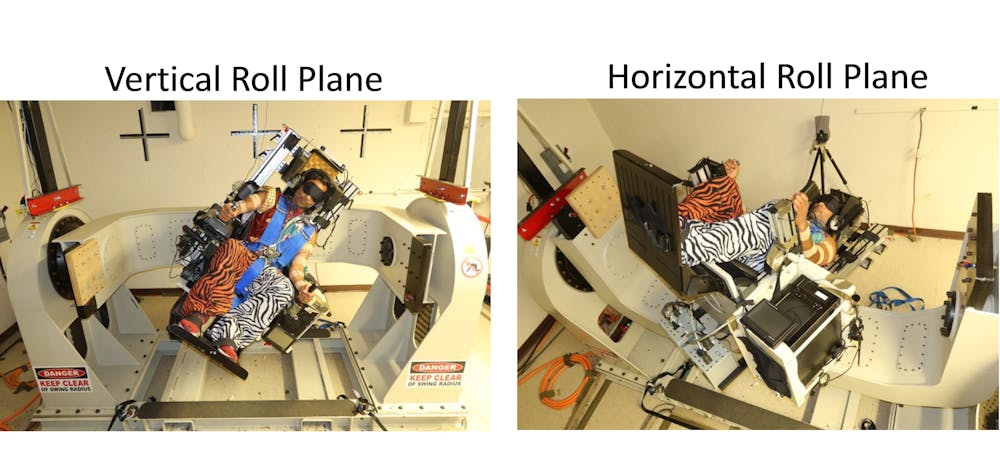
We strapped participants into a multi-axis rotation device, which is a machine containing a chair that’s programmed to behave like an inverted pendulum. Like a pencil falling left or right as you try to balance it on your fingertip, the multi-axis rotation device tilts to the left or right. Participants used a joystick to try to balance themselves and keep the chair upright.
We blindfolded the participants, because spatial disorientation often occurs when pilots can’t see – like when they fly at night or through clouds.
On Earth, tiny organs in the inner ears called otoliths help people keep their balance by sensing how far the body is tilted away from an upright position, also called the gravitational vertical. In space and especially during gravitational transitions, such as while landing on a planet or the Moon, the gravitational information detected by the otoliths is very different than on Earth. This can cause disorientation.
Additionally, long-duration spaceflight will change how the brain interprets the signals coming from the otoliths. This can also lead to disorientation when landing.
In our Earth analog condition, which was meant as a control to compare against the spaceflight condition we tested, participants sat in the multi-axis rotation device and used a joystick to stabilize themselves around the balance point. The balance point was at an upright position, or the gravitational vertical.
Because the otoliths can sense tilt from the gravitational vertical, participants always had a good sense of their orientation and the location of the balance point. We called this the Earth analog condition because they could use gravitational cues to do the task. Every participant learned and improved their performance on this over time.
Then, in the spaceflight analog condition, we had the multi-axis rotation device pitch the participants back by 90 degrees. The balance point was still in the center, and the multi-axis rotation device was programmed to tilt to either the left or right while participants were on their back.
In the Earth condition, the balance point was lined up with the upright, so it was easy to use the otoliths to determine how much one was tilted. However, in the spaceflight condition, participants no longer tilted relative to the gravitational vertical, because they were always on their back. So even though the balance point they were trying to find was the same, they could no longer use gravity to determine how much they were tilted from the balance point.
Similarly, astronauts have minimal gravitational cues when initially landing. In our spaceflight condition, the participants showed very poor performance and had high rates of losing control.
In the Earth analog condition, participants balance in the upright vertical plane, while in the spaceflight analog condition, participants are tilted back and they balance in the horizontal plane. There, they can no longer use gravitational information to figure out where they are.Ashton Graybiel Spatial Orientation Lab
For each of the 13 participants in the experimental group, we attached four vibrotactors on each arm. The farther a participant titled from the balance point, the more vibrotactors vibrated on the same side.
We found that vibrotactile feedback helped performance in the disorienting spaceflight condition. But it also led to a feeling of conflict between a participant’s incorrect perception of their orientation and their actual orientation, as indicated by the vibrotactors.
Because of this conflict, the participants’ performance in the spaceflight condition was not as good as it was in the Earth condition.
Surprisingly, even knowing that they were disoriented and reporting high levels of trust in the vibrotactors was not enough to allow people to continue learning and improving their performance. This suggests that cognitive trust, or their self-reported level of trust, may differ than their gut-level trust – and cognitive trust alone does not ensure people will be able to rely on the vibrotactors when disoriented.
Building a human-device bond
Previous research in sensory substitution has found that allowing participants to freely explore and play around with the device during training builds a bond between the human and the device.
In our first experiment, we provided participants with time to explore how the device works. We gave them 40 minutes to explore the vibrotactile feedback in the Earth condition the day before they were tested in the spaceflight condition. While this helped participants perform better than those who did not have vibrotactors, their improvements were modest, and these participants did not show any further improvement in performance after being given 40 minutes in the spaceflight condition.
So, why was this free exploration not enough for our test condition but sufficient for other experiments? One reason could be that the majority of prior studies on sensory augmentation have had the training and testing occur in the same environment. However, astronauts will most likely receive their training on Earth before being in space, where their sensory information will be very different.
To determine whether specialized training could lead to better results, we ran another group of participants through a training program.
Participants spent the first day in the Earth analog condition, where they had to stabilize themselves while searching for hidden balance points that were different than the upright, or gravitational vertical. In order to find the hidden balance point, they had to disengage from their desire to align with the upright while focusing on the vibrotactors, which indicated the location of the balance point.
When this group was tested on Day 2 in the spaceflight analog condition, they performed significantly better than the group that had the vibrotactors but hadn’t received the training program. Our findings suggest that simple exposure to sensory augmentation devices will be not be enough training for astronauts to rely on the device when they cannot rely upon their own senses.
Also, cognitive trust in the device may not be enough to ensure reliance. Instead, astronauts will need specialized training that requires disengaging from one sense while focusing on feedback from the device.
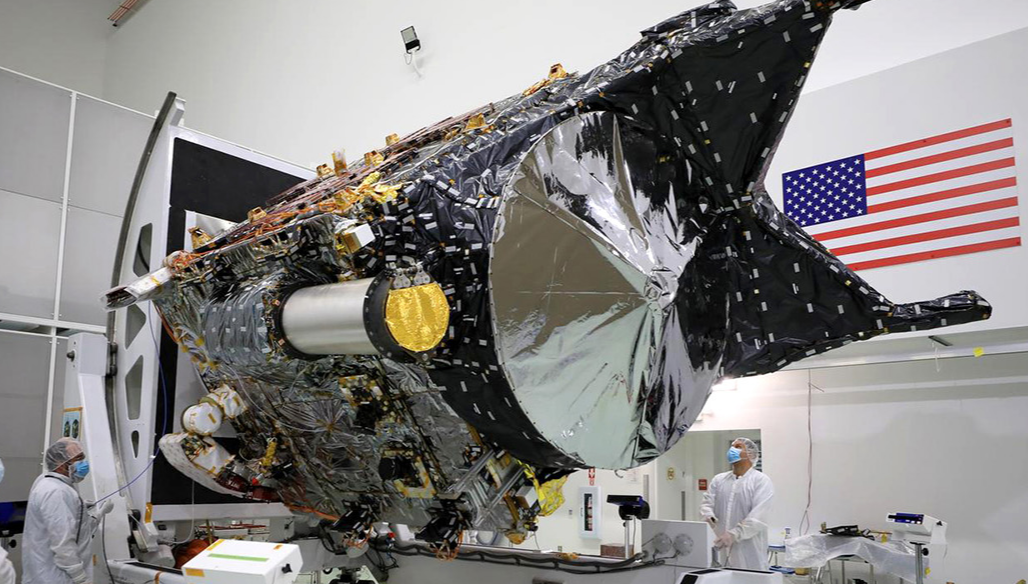
The first tests of optical communications far from Earth will take place aboard the asteroid-bound Psyche spacecraft
By John Johnson Jr.
NASA’s recently launched asteroid hunter, Psyche, is designed to give us a look at a body that could resemble depths far within the Earth, where we can never go. But one instrument tagging along for a ride is exciting scientists who specialize in a completely different field — that of space communications. Since the dawn of the Space Age, they have depended on radio waves, just a sliver of the electromagnetic spectrum. But scientists hope to soon expand into another part of the spectrum. Their aim is to add lasers to our cosmic communications toolkit.
The Psyche spacecraft’s main mission is to explore a 144-mile-long, potato-shaped asteroid with an orbit roughly three times farther from the Sun than Earth’s. A leading theory holds that the target asteroid, also named Psyche (16 Psyche, to be exact), is the metal core of a once hopeful planet whose rocky surface was stripped away by hit-and-run collisions in the asteroid belt between Mars and Jupiter.
If so, getting a whiff of its unique mix of iron, nickel and rock may be the closest we will ever come to investigating the metal core of Earth.
It will take six years for the craft to arrive and find out if measurements of the asteroid suggesting a metallic surface are correct. If they are, we might be presented with an object more alien than pulp writers of the 1940s and ’50s ever imagined, with metal ejecta frozen into bizarre shapes from encounters with other asteroids.
But space communications researchers will start seeing results much sooner. The Deep Space Optical Communications (DSOC) test will be the first demonstration of laser, or optical, communication beyond the Moon, and could help ease the way as astronauts return to the Moon and take the next giant leap — to Mars. It also represents a key step in opening a new era in space communications.
If this and related tests work as expected, lasers will offer a needed boost for the bandwidth limits faced by the major off-planet communications system, called the Deep Space Network (DSN). The DSN’s three radio antenna sites, each dominated by a 70-meter dish and located 120 degrees apart in Spain, Australia and the California desert, face a traffic jam of Houston rush-hour proportions, some say. Currently, demands from dozens of space missions, ranging from the James Webb telescope to small commercial satellites (which pay for the service) must compete for the network’s time.
“There can be requests in conflict among various missions,” says Mike Levesque, DSN project manager at NASA’s Space Communications and Navigation office (SCaN). “Twenty percent of requests are not serviceable today. The problem will only get worse over time. It will be 40 percent by 2030.”
And another 40 space missions are due to come online in the near future, each demanding time on the communications network. Even more important, some of those missions will be manned, with instruments beaming high-definition video as well as moment-to-moment metabolic readings of astronauts as they work on the Moon, building laboratories and shelters. They won’t want to be told to stand down for a commercial CubeSat, the mini-satellites that transmit various types of scientific data and provide internet connectivity, and which have proliferated in low-Earth orbit.
“Delays may be OK for science, but for human missions we need all hands on deck,” says Jason Mitchell, program executive at SCaN. “As we look at what human astronauts want as we move to the Moon and plan for Mars, science instruments will grow as well. We could be sending terabytes of data a day.”
In the recently launched demonstration, researchers seek to tap the greater information-carrying capacity of laser light over radio waves. Optical wavelengths in the near-infrared part of the electromagnetic spectrum are so small — measured in nanometers — and the frequencies so high that much more information can be packed into the same space, pushing data rates 10 to 100 times greater than is possible with radio.
“That’s why optical is such a great option,” Mitchell says. “The data rates are so high.”
For similar capabilities, laser systems can also be more petite than radio ones, thus requiring less power, another important factor as spacecraft travel a few hundred million miles from home.
Over the past decade, NASA has been testing the new technology in different environments from low-Earth orbit to the Moon. The instrument aboard Psyche will enable the first test in deeper space, an important milestone since optical communication does have drawbacks. Because the laser beam is narrow, it must be pointed toward receivers on Earth with high accuracy, a challenge that only grows with distance.
Abhijit Biswas, DSOC project technologist at NASA’s Jet Propulsion Laboratory, which built the instrument, compares the difficulty to trying to hit a moving dime from a mile away. Even a jiggle could interfere: To keep the transceiver stable on Psyche, JPL installed special struts and actuators to isolate it from the vibrations of the 81-foot-long spacecraft.
Other potential problems include clouds on Earth that can block the optical beam, and significant weakening of the signal as the distance increases and the beam spreads out. This limits its use in distances beyond Mars, at least with current technology. That is why the test will be conducted only during the first two years of the mission, before the craft travels farther out to the asteroid itself.
For these reasons, as well as the fact that no ground-based network of optical receivers exists today, nobody is predicting a time when laser communication would replace radio waves. But it could add a new channel. “Future operations will be designed for diversity,” says Biswas.
During the tests aboard Psyche, a five-kilowatt transmitter on Table Mountain in Southern California will send a low-rate communication package — nothing exotic, mostly random patterns, Biswas says — to a laser transceiver attached to the spacecraft’s 8.6-inch telescope. The instrument will lock onto the beam and download the message, using a camera that counts the light particles, or photons, before relaying it back down at a high rate to the 200-inch Hale telescope on Mount Palomar near San Diego, where it can be compared for accuracy to the original.
Even at distances nearer than Mars, the laser signal is relatively fragile. The package arriving at the Hale telescope from Psyche will consist of only a few photons, which is why decoding it relies on an extremely sensitive, cryogenically cooled photon-counting detector (made with superconducting nanowire) attached to the telescope.
For Biswas, whose background is in laser spectroscopy, the optical communications test is the culmination of an effort a decade in the making. “It’s very exciting,” he says. “There are so many things we are doing for the first time.”
While laser communication, like highway carpool lanes, might not prevent future traffic jams on the Deep Space Network, it just might help some messages avoid gridlock in space.
John Johnson Jr. is a science writer and author based outside Los Angeles. A member of three Pulitzer Prize-winning reporting teams at the Los Angeles Times, he is the author of Zwicky: The Outcast Genius Who Unmasked the Universe.
This article originally appeared in Knowable Magazine, an independent journalistic endeavor from Annual Reviews.
After more than a month of being subjected to sustained bombing, the besieged people of the Gaza Strip are now confronted with another threat to life: disease.
History has proved timeand again that war zones can be a breeding ground for disease. Anywhere impoverished and underresourced people crowd for shelter or access to resources – often in facilities with inadequate living conditions, sanitation services or access to clean water – is prone to the spread of disease. This can be through airborne or droplet transmission, contaminated food or water, living vectors like fleas, mosquitoes or lice, or improperly cleaned and managed wounds.
In any situation of armed conflict or mass displacement, the threat of infectious disease is among the primary concerns of public health professionals. And from the outset of the Israeli bombing campaign, experts have predicted dire health consequences for Gaza.
After all, the Gaza Strip had fragile health and water, sanitation and hygiene sectors long before the Oct. 7, 2023, Hamas attack that killed 1,200 Israelis and prompted the retaliatory airstrikes. The health system of Gaza, one of the most densely populated places in the world, has long been plagued by underfunding and the effects of the blockade imposed by Israel in 2007.
Waterborne illness was already a major cause of child mortality – the result of the contamination of most of Gaza’s water. In early 2023, an estimated 97% of water in the enclave was unfit to drink, and more than 12% of child mortality cases were caused by waterborne ailments, like typhoid fever, cholera and hepatitis A, that are very rare in areas with functional and adequate water systems.
Other forms of infectious disease spread have also been reported in recent years. Gaza had experienced several previous outbreaks of meningitis – an inflammation of the tissues surrounding the brain and spinal cord typically caused by infection – notably in 1997, 2004 and 2013.
In late 2019, a small outbreak of measles – a highly contagious, airborne virus – was reported in Gaza, with almost half of reported cases in unvaccinated people. Despite a relatively high vaccination rate in Gaza generally, these gaps in vaccination and the inability to respond quickly to outbreaks were attributed by the WHO to “the continuous socio-economic decline since 2009, conflict, and closure.”
The vulnerability of Gaza’s health care meant that from the outset of the latest conflict, organizations such as the WHO voiced concern that the violence and deprivation could quickly overwhelm the system.
There are several ways war in general, and the conflict in Gaza in particular, accelerates and promotes infectious disease risk.
Almost concurrently with the start of the bombing campaign, Israel imposed siege conditions on Gaza. This prevented the import of fuel needed to run generators for vital infrastructure. Generators are needed because Israel shut off electricity to Gaza.
As fuel has essentially run out in recent days, this has meant no power for desalination plants or for solid waste collection. As a consequence, many people have been forced to consume contaminated water or live in conditions where living carriers of disease, like rodents and insects, thrive.
Even basic cleaning supplies are scarce, and equipment used to sterilize everything from medical equipment to baby bottles is inoperable.
These unhygienic conditions come as hundreds of thousands of Palestinians in Gaza attempt to flee the bombing to the few remaining places left to shelter. This has caused massive overcrowding, which increases the risk of an infectious disease outbreak.
Children especially vulnerable
Already, the WHO has reported worrying trends since mid-October 2023, including more than 44,000 cases of diarrhea in Gaza.
Diarrhea is a particular risk for young children who are prone to profound dehydration. It represents the second-leading cause of death worldwide in children younger than 5 years of age. Half of the diarrhea cases reported in Gaza since the Israeli bombing campaign began have been in children under 5.
Meanwhile, nearly 9,000 cases of scabies – a skin rash caused by mites – have been reported, as have more than 1,000 cases of chickenpox.
More than 70,000 cases of upper respiratory infections have been documented, far higher than what would be expected otherwise. These are just cases that were reported; undoubtedly, more people who were unable to get to a health facility for diagnosis are also sick.
Reports of the spread of chickenpox and upper respiratory infections like influenza and COVID-19 are particularly dangerous considering children’s vaccination schedules are being highly disrupted by conflict. With health services overstretched and the mass movement of families, young children and newborns are likely going without vital, lifesaving inoculations just as winter – the peak season for respiratory infections – arrives.
Upper respiratory infections are also exacerbated by the amount of dust and other pollutants in the air due to the destruction of buildings during bombing.
Then there is the direct impact of the bombing campaign. A lack of antibiotics – due to both the siege and the destruction of health facilities – means physicians are unable to adequately treat thousands of patients with open wounds or in need of medical operations, including amputations.
More death and suffering
Increasingly, doctors are even running out of wound dressings to protect injuries from exposure. Poor infection prevention controls, high casualty rates and high concentrations of toxic heavy metals, among other factors, are leading to reports of antimicrobial resistance, which occurs when bacteria and viruses evolve over time to no longer respond to antibiotics and other antimicrobial medications. This has the potential to lead to health issues long after the bombing stops. Similar trends were also seen in Iraq, where antimicrobial resistance rates remain high despite the peak of bombing campaigns ending many years ago.
And with many bodies laying under rubble, unable to be retrieved, and the necessity of digging multiple mass graves near sites where people are sheltering, there is also increased risk of disease arising from an inability to adequately dispose of the dead.
While the images and photos from Gaza of areas and people that have been bombed are devastating and have caused a massive death toll – at least 12,000 by mid-November, according to Gaza health authorities – the rapid spread of infectious disease has the ability to cause even greater mortality and suffering to a population reeling from weeks of sustained bombing.
This holiday season, you can spread the spirit of meaningful giving and deliver impact for children globally. With crises and emergencies all over the world, make a difference with gifts that give back while showing your loved ones just how much you care.
Handcrafted by talented artisans from all around the world, UNICEF Market is a unique collection of carefully curated gifts ranging from jewelry to apparel, home decor, kitchenware and more. The gifts give back three times over by supporting artisans and helping local economies thrive, assisting vulnerable children in need and making for thoughtful and compassionate gifts for loved ones. By purchasing gifts from the market, individuals can contribute to creating a more equitable world for every child.
Additionally, UNICEFInspired Gifts provide meaningful opportunities to make a difference by donating important resources in the name of a loved one alongside a personalized print-at-home card or e-greeting. With millions of children on the move, driven from their homes by conflict, poverty and climate change, you can make a donation to provide essential supplies such as blankets, first aid kits, vaccines, lifesaving Ready-to-Use Therapeutic Food and more. You can also send warmth to children in need in places where freezing winter temperatures and heavy snowfall are approaching. Your purchase of a “Warm Winter Kit” could provide four fleece blankets and 24 cans of therapeutic milk to provide warmth, safety and lifesaving nutrition.
To help support the organization’s lifesaving mission of protecting every child, consider UNICEF USA’s partners, including Cle de Peau Beaute, Hallmark and Marriott Bonvoy when shopping and traveling this holiday season. For every purchase of Cle de Peau Beaute’s Serum, $3 will be donated to support impactful programs for the education and empowerment of girls around the world; Hallmark’s UNICEF greeting cards and keepsake ornament, which are holiday favorites, can be purchased in store and online to support the world’s most vulnerable children; and Marriott Bonvoy members can donate their points to the organization.
Elevate your gift-giving this year for friends, family and loved ones by making a real impact for children globally. Visit market.unicefusa.org, where you can support efforts to ensure every child is healthy, educated, protected and respected.
When clouds loom overhead and winds pick up in your area, it’s crucial to keep an eye on the sky and an ear toward local news broadcasts. Capable of destroying buildings, uprooting trees and sending dangerous debris flying, tornadoes are rotating columns of air that extend from the base of thunderstorms to the ground.
With the potential to reach wind speeds of up to 300 miles per hour, these violent storms can wreak havoc on communities and put families in danger. Keep your loved ones safe with these tips to prepare for and shelter from tornadoes.
Pay Attention to Weather Forecasts
Staying weather alert is always a good idea, particularly as strong thunderstorms build and approach your location. Check the forecast regularly to understand the risk for severe weather and, if possible, sign up for smartphone alerts or notifications.
Put a Plan in Place
Each member of your family should understand what to do in an emergency situation. Create a plan that includes where to shelter in the event of a tornado warning. Typically, this is a basement, storm cellar or interior room on the lowest floor of the home with no windows. If you have a safe room or storm shelter, which is a hardened structure designed to provide near-absolute protection in extreme weather events like tornadoes and hurricanes, this is the time to utilize it. Clearly define who is expected to gather emergency materials, such as flashlights, blankets, a first-aid kit and extra food and water.
Understand Watches vs. Warnings
Key phrases from sources like the National Weather Service include “tornado watch” and “tornado warning.” Make sure you understand the differences to react appropriately.
Tornado Watch: Tornadoes are possible in or near your location. Review emergency plans with loved ones and be ready to act quickly if a warning is issued.
Tornado Warning: A tornado is active according to sightings or weather radar. It’s time to take action and follow your family’s safety plan.
Build Your Home with Resistant Materials
If constructing a new home is on the horizon, consider the benefits of building with durable materials like insulated concrete forms (ICFs), which are a more resilient alternative to wood framing. For areas prone to natural disasters, ICF walls from Nudura provide superior strength to withstand extreme wind and impact damage from tornadoes and hurricanes. They also protect against wildfires due to a fire protection rating of up to four hours, compared to 45 minutes for wood framing, and provide greater comfort, durability and lower life cycle costs compared to wood structures.
Shelter Safely
When a tornado warning is in effect, acting quickly is crucial. If at home, head to the basement, safe room or interior room away from windows and, if possible, stay tuned to local news for updates. At school or the workplace, follow the guidelines in place from tornado drills and proceed calmly but quickly to the shelter location. If driving and unable to get to shelter, pull over and get down in your vehicle with your head covered or leave your car and seek shelter in a low-lying ditch or ravine.
With two big shopping days on the horizon – Black Friday and Cyber Monday – U.S. retailers are getting ready for the most important time of the year. The stakes are high: For some companies, the holiday shopping season accounts for 50% of annual revenue. But economic uncertainty and recent inflation could put a damper on customers’ holiday spending, our new research suggests.
As marketingprofessors, we know that consumer spending drives the U.S. economy. So for the second year in a row, we surveyed more than 500 Americans about their holiday shopping plans. We found that consumers are conflicted: They’re excited for deals and looking forward to treating themselves, but they’re feeling squeezed by high prices.
Consumers are starting the season cautiously optimistic …
When it comes to Black Friday and Cyber Monday, two-thirds of respondents say they think deals will be as good as or better than they were last year — up from 56% in 2022. That’s in line with the predictions of market research firm Adobe Analytics, which expects record discounts this year.
Shoppers also plan to splurge a little on Black Friday and Cyber Monday. The share who plan to prioritize shopping for necessities fell slightly from 2022, while those who plan to buy luxury items rose modestly. Meanwhile, plans to spend on big-ticket items stayed stable at 15%.
Despite a minor shift to more expensive items, these findings are concerning for retailers. That’s because big-ticket items have historically been one of the top three categories for consumers spending money on Black Friday and Cyber Monday, and 15% is on the low side.
Like in 2022, the majority of consumers we surveyed — 68.2% — plan to shop mostly online. Fewer than 11% of the respondents in our survey said they plan to shop in-store this Black Friday, so malls may suffer from lower foot traffic.
… but they’re still acting like there’s a recession
Last year, despite the brightening economic outlook, we found that customers were pinching pennies and otherwise behaving in ways most commonly seen in times of economic crisis. This year, inflation-fatigued consumers plan to do much the same.
High prices and inflation are still consumers’ main concerns, with roughly 90% of our respondents saying that those issues will affect their holiday shopping. On average, they plan to spend about US$665 on gifts this holiday season — about $35 less than last year, and substantially less than the National Retail Federation’s 10-year average of $826.
On a more optimistic note, the number of people who said they intend to spend “slightly less” or “much less” than last year fell to 24.2% this year — a 10-percentage-point drop from 2022. While nearly 39% of respondents said they will spend “about the same” amount, in nominal terms this means that they will be spending less accounting for inflation.
As usual, all eyes are on the American consumer this holiday season.Ted Shaffrey/AP Photo
Meanwhile, shoppers seem to be budget-planning more than ever. Customers told us they plan to use a variety of strategies to control their purchases, such as strict shopping lists and starting shopping earlier to spread their spending out.
However, we found a silver lining for retailers: While consumers are planning to spend less this year, they expressed more interest in brand names and expensive gifts, which tend to have higher profit margins.
One notable change from 2022 is that more customers think retailers will offer “great value.” This indicates that while consumers are looking for the best prices and affordable options, they aren’t necessarily looking for cheap products.
In times of economic uncertainty, consumers want to stay in control of their spending. So it’s not surprising that almost 50% of our respondents said they would be doing their holiday spending using funds they’d saved for that purpose. A similar proportion said they plan to use credit cards.
However, the use of buy-now, pay-later options is stagnating at about 15%, even though many big retailers have adopted them. This suggests that even though these options are more readily available to consumers, budget-conscious shoppers may be avoiding them.
That makes sense, given the broader economic context. Although the U.S. unemployment rate is relatively low at 3.9%, more than half of our survey respondents said they were worried about their job security, with about one-third saying they were “moderately” or “severely” worried. Only 13% said they had no financial concerns at all.
As the U.S. economy is still experiencing uncertainty, consumers are continuing to adopt recession-related shopping behaviors this holiday season. That means retailers would be wise to focus on providing true value.
Moving into a new home offers an opportunity to create a space that reflects your family’s values, enhances comfort and is better for the environment.
Whether you’re shopping for a new home, renovating your current space or building from scratch, consider some of the latest trends while searching for inspiration.
Home Automation
From ovens that can be turned on remotely to skylights that open and close automatically and more, there are a multitude of ways to integrate smart home technology into your living space to make it more energy efficient and convenient. Start small with a voice assistant, smart light bulbs, home security system or a programable thermostat. After that, you can implement additional features like smart appliances, remote-controlled window blinds and other electronic devices you can control from your phone for a complete smart home system.
Sustainable Design
A long popular trend, sustainable design has evolved over the years to include more than energy-efficient appliances and LED light bulbs. Now, it’s about reducing your carbon footprint and minimizing impact on the environment. To try the trend yourself, think big and get creative – install solar panels on your roof, choose highly insulated building materials that don’t require deforestation and upcycle old furniture or decor instead of buying new.
Disaster Resiliency
From wildfires that last for months to devastating tornadoes and major floods that impact entire cities, an increase in natural disasters due to climate change has required changes when building homes. Opting for disaster-resilient materials is an important first step. For example, using strong, energy-efficient insulated concrete forms (ICFs), like those from Nudura, instead of traditional wood framing helps homes better withstand extreme weather. Additionally, ICFs can endure winds of up to 250 miles per hour (equivalent to an F4 tornado) and offer a fire protection rating of up to 4 hours.
Outdoor Living
Transforming your backyard can help you make the most of your existing space. To take full advantage of your yard or patio, consider incorporating elements from the interior such as a television and comfortable seating options. Outdoor kitchen setups complete with refrigerators and sinks can make entertaining easier and a fire pit or fireplace can allow your friends and family to enjoy the outdoors even on cool nights.
Customization
You no longer have to settle for run-of-the-mill floor plans or what works for others. If you’re considering a new build, work with an architect to create exactly what you’re looking for, or speak with a contractor about including personalized architectural features and custom-built storage, for example, in your existing home.
5 tech devices to make navigating campus life easier
College students are always on the move, which means they need the right gear and tools to keep up with their busy schedules. From the lecture hall to the dormitories and everywhere in-between, staying connected, focused and productive is crucial for success.
The right tech gadgets – like smartphones, wearables, headphones and laptops – can help get you one step closer to your degree and navigate both your coursework and social life with ease. Consider these essentials and find more options to inspire success in the classroom and beyond at Qualcomm.com/snapdragonbts.
Customize Your Sound Experience
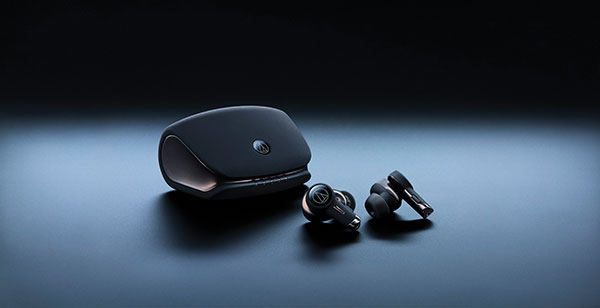
Made to connect people through sound, the Audio-Technica ATH-TWX9 Wireless Earbuds are equipped with advanced features, making these hybrid headphones optimal while working out or commuting back and forth to class. Featuring digital hybrid noise-canceling technology with five preset modes, these wireless earbuds offer the freedom to customize your sound space for an immersive audio experience. Utilizing Snapdragon Sound technology to provide higher quality music, video and calls, the non-slip, compact, ergonomic and splashproof headphones also include deep-UV sterilization and 360 Reality Audio for a realistic 3D sound stage.
Take Flexible, Portable Performance Anywhere
In the classroom, in the dorms or on the go – the Microsoft Surface Pro 9 5G provides tablet-style flexibility with the performance and battery life of a premium laptop – all in one ultra-portable device – to help you move through all the tasks of the day. Running the Snapdragon 8cx Gen 3 Compute Platform, this 2-in-1 offers an always on, always connected computing experience with up to 19 hours of battery life, optional 5G connectivity and advanced camera and audio technology that enables crisp video and crystal-clear audio.
Stay Connected on Campus
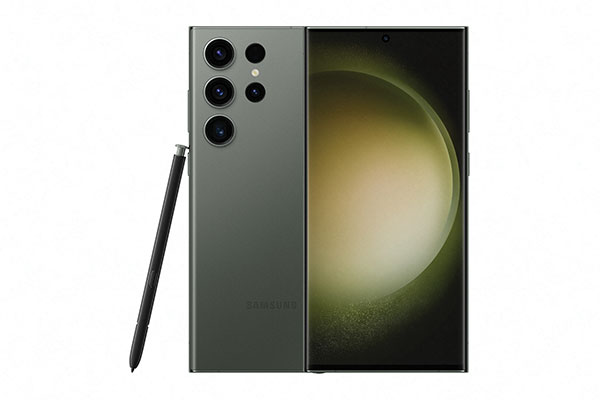
Whether you’re working hard, playing hard or doing both at the same time, the Samsung Galaxy S23 Ultra is equipped with Snapdragon 8 Gen 2 Mobile Platform for Galaxy to deliver accelerated performance, unparalleled connectivity, champion-level gameplay and ingenious capture. With Qualcomm FastConnect 7800, students can unlock intuitive experiences across AI, 5G, WiFi and Bluetooth, such as faster natural language processing with multi-language translation and transcription, AI cinematic video capture, direct voice command of apps and more.
Navigate the World from Your Wrist
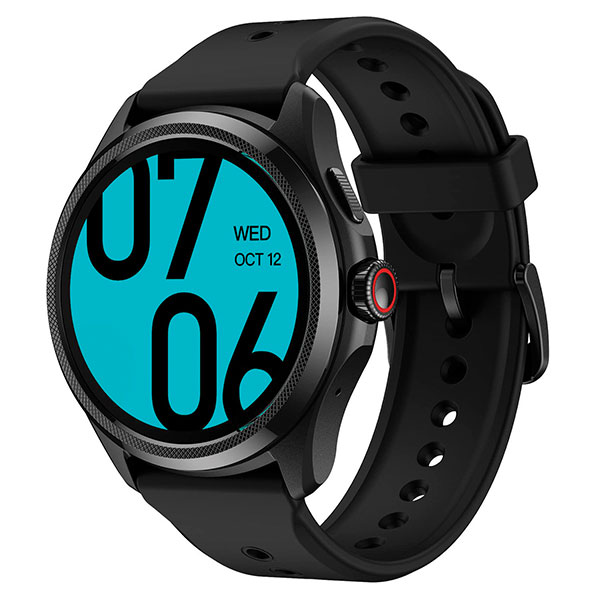
While many college students are used to having the world at their fingertips via smartphones, tablets and laptops, that same level of seamless connectivity and lightning-fast responsiveness can now be harnessed via the Mobvoi TicWatch 5 Pro. Featuring the Snapdragon W5+ Gen 1 Wearable Platform and the latest version of Wear OS by Google, this smartwatch opens up a world of cutting-edge apps and services, including maps, mobile wallet, music and more. With fast-charge technology, the water-resistant watch tracks real-time fitness and health data, includes one-tap measurements of multiple heart metrics and provides effortless yet versatile control via the rotating crown, complete with haptic feedback.
Enjoy Powerful Sound with Hands-Free Control
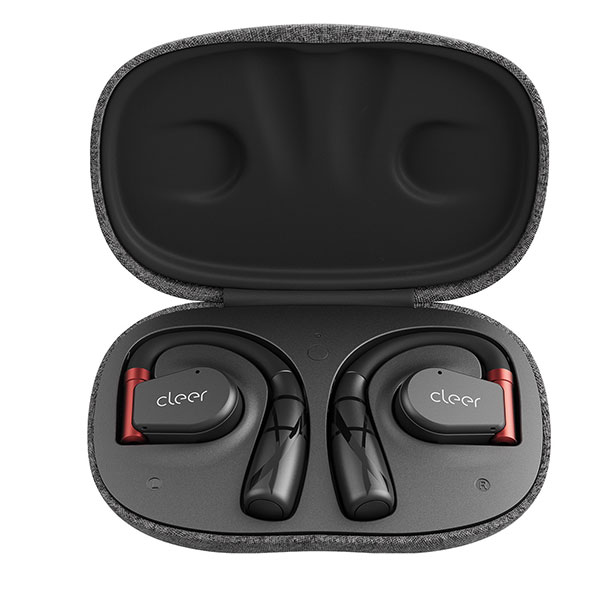
Designed for complete indoor and outdoor situational awareness while enjoying lossless audio, the Cleer Arc II Sport Open Ear Sport Earbuds powered by the Qualcomm S3 Gen 2 Sound platform feature multipoint connectivity, allowing you to seamlessly switch between devices so you can listen to a lecture on your computer and quickly answer a call on your phone. With an open-ear design and flexible hinge for a secure and comfortable all-day listening experience, the earbuds also feature head gesture controls for hands-free operations, IPX5 water and sweat resistance and improved battery life with an enhanced charging case with built-in UV-C light to reduce bacteria during charging.
Family reunions, birthday celebrations and holiday gatherings all bring loved ones together for special occasions that call for delicious meals and snacks. To help elevate entertaining in your household, make hosting a cinch with quick, shareable recipes.
Pizza, for example, is a nearly universally beloved dish ideal for sharing. This version is simple, fresh and perfect for entertaining guests or just for a night in with fresh mozzarella, Prosciutto di Parma and fresh basil.
For savory seasonal flavor, look no further than Sweet Potato Rounds topped with fried sage leaves, goat cheese and prosciutto. When guests arrive, greet them with easy hors d’oeuvres that balance wellness with indulgence like this Crudites Platter or Fresh Snack Board.
To help ensure the freshest of ingredients in these tasty appetizers, look for the “Parma Crown” on packages of Prosciutto di Parma, which you can find pre-packaged or available for slicing at many gourmet deli counters and specialty food stores. Containing no additives, preservatives or hormones, Parma ham contains no additives, preservatives or hormones and is 100% natural. Aged twice as long as many other options, it creates a depth of flavor that’s delicate and sweet-savory with a buttery texture.
Find more easy appetizers perfect for entertaining at parmacrown.com.
Fresh Snack Board
1/3 pound Prosciutto di Parma
1 apple, sliced
1 handful pecans, walnuts or almonds
1/2 cup pomegranate seeds
1/2 cup fig jam
1/2 pound sharp cheddar cheese, sliced
crackers
On charcuterie board or platter, arrange prosciutto, apple slices, nuts, pomegranate seeds, fig jam and cheddar cheese slices. Serve with crackers.
Prosciutto Pizza
Yield: 8 slices
Olive oil
flour
1 container (16 ounces) store-bought pizza dough
1/4 cup tomato sauce
4 ounces fresh mozzarella, cubed
5 slices Prosciutto di Parma
6 fresh basil leaves
Remove dough from refrigerator and let sit at room temperature at least 30 minutes. Preheat oven to 500 F. Grease baking sheet with olive oil.
Roll out pizza dough onto floured work surface to form oblong shape about 16 inches long and 12 inches wide. Remove to oiled baking sheet and stretch out edges to fill length of baking sheet.
Bake 4 minutes. Remove from oven and evenly spread tomato sauce over surface, leaving 1/2 inch from edges bare. Dot with mozzarella. Bake until edges are golden and mozzarella is bubbling, about 12 minutes.
Drape prosciutto over mozzarella. Garnish with fresh basil.
Sweet Potato Rounds
Yield: 16-20 rounds
2 medium sweet potatoes
2 teaspoons olive oil
salt, to taste
2 tablespoons butter
1 bunch fresh sage, stems removed
4 ounces goat cheese
8 slices Prosciutto di Parma, halved
Preheat oven to 425 F. Line baking sheet with foil or parchment paper. Peel and slice sweet potatoes into 1/2-inch rounds. In medium bowl, toss sweet potatoes with oil and lightly season with salt, to taste. Arrange rounds in single layer on prepared pan; bake until sweet potatoes are lightly browned and tender, about 20 minutes, flipping halfway through.
In small skillet over medium heat, bring butter to simmer. Add half the sage leaves. Cook until crispy, 2-3 minutes. Remove to paper towel and season lightly with salt, to taste. Repeat with remaining sage leaves. Reserve 2 teaspoons butter. In small food processor, combine goat cheese and reserved butter; whirl until smooth.
To make rounds, remove goat cheese to plastic zip-top bag. Cut off one corner and pipe small dollops of cheese onto each round. Top with half slice prosciutto and one crispy sage leaf.
Crudites Platter
Platter:
8 asparagus
water
2 soft-boiled eggs
5 baby carrots, halved lengthwise
4 radishes with tops, halved lengthwise
1 head little gem lettuce, quartered
6-8 slices Prosciutto di Parma
Dip:
2 teaspoons white miso
1 tablespoon lemon juice
1 teaspoon water
1/2 cup full-fat Greek yogurt
2 tablespoons chopped herbs (dill, tarragon or parsley)
1/4 teaspoon salt
fresh black pepper, to taste
To make platter: Trim asparagus. To blanch, bring pot of water to boil and place asparagus in pot 2-3 minutes. While asparagus is cooking, fill large bowl with ice water. After 3 minutes, plunge asparagus in ice bath and let cool.
To soft-boil eggs, bring pot of water to boil. Gently place room temperature eggs in water and simmer 3-4 minutes. Remove eggs with slotted spoon and cool under running water.
Serve asparagus and eggs alongside baby carrots, radishes and little gem lettuce. Drape prosciutto slices over some vegetables and between others.
To make dip: In small bowl, whisk miso, lemon juice and water until smooth. Add yogurt, herbs and salt. Season generously with cracked pepper, to taste; mix and serve with platter.
Winter weather, while often beautiful, can prove challenging for homeowners. Snow and ice accumulation can cause damage or disruption to many components of homes and properties, including heating systems and appliances, communication and access to and from property.
Utilizing a reliable, efficient and affordable energy source like propane can help power critical systems – home heating, cooktops, ovens, fireplaces, boilers and water heaters. Because propane is stored on-site, it’s resilient enough to withstand some of the dangers of winter weather, such as power outages that interrupt access to the electric grid. Available in a variety of capacities to fit the needs of any size home, propane-powered generators can provide supplemental power in as little as 10 seconds after an electrical grid failure, ensuring vital systems like home heating, cooking and smoke and fire detection systems are not interrupted when you need them the most.
Consider these tips from the experts at the Propane Education & Research Council to help prepare your family and home for winter weather and find more resources at Propane.com.
Get to Know Your Propane System
If you’re unfamiliar with your propane system, take a few minutes to review it. Identify core components, including the tank, regulators, meter, piping and supply valves, as well as any appliance vents. Locate the main gas supply valve in case you need to turn off the propane in the event of an emergency. Call a propane professional to inspect the system before restoring it.
Ensure an Adequate Supply of Propane
Establish a regular delivery schedule with your propane provider – particularly during the winter months – or call to schedule a delivery when the tank gauge reads 30% to give your provider enough time to make a delivery and ensure you have an adequate supply in your tank.
Mark Your Tank
Especially if your home’s propane tank is buried, be sure to mark its location with a brightly colored stake or flag taller than the maximum anticipated snow depth. This will help propane suppliers easily locate your tank, ensuring they can refill it during scheduled appointments.
Ready Your Furnace
If it’s time to upgrade your home’s climate control system, it’s a smart idea to do your homework and explore all options. Consider propane-powered furnaces, which last 50% longer than electric heat pumps for a lower lifetime investment. Propane furnaces also provide warmer air than other heat sources (115-125 F), are less impacted by outdoor temperatures and produce 50% fewer greenhouse gas emissions than electric furnaces and 12% less than fuel oil furnaces.
Take Advantage of Your Fireplace
The warm glow of a fire isn’t only comforting; it can be a practical and effective way to increase the heat inside your home. Not only do propane fireplaces offer 5-6 times the heating capacity of electric fireplaces, they’re also more energy efficient, environmentally friendly, convenient to use and easier to install than woodburning models. They also emit less soot and other emissions.
Install Gas and Carbon Monoxide Detectors
Installing UL-listed propane gas detectors and carbon monoxide detectors can provide you and your family with additional peace of mind. Be sure to follow the manufacturer’s instructions regarding installation, location and maintenance. SOURCE: Propane Education & Research Council
If your little one has ever caught you off guard by dropping a verbal bomb or your young child struggles with separation anxiety, you’re certainly not alone.
It’s important for parents to recognize inappropriate language, separation anxiety and attention-seeking behaviors are all normal and expected parts of early childhood. Just as important is understanding their root causes and steps to take to curb these undesired behaviors.
To help parents looking to tackle these issues, Dr. Lauren (Starnes) Loquasto, senior vice president and chief academic officer at The Goddard School, and Dr. Kyle Pruett, clinical professor of child psychiatry at Yale School of Medicine and member of The Goddard School’s Educational Advisory Board, provide this guidance and reassurance.
Inappropriate Language The use of foul or inappropriate language by children is typically learned by hearing adults in their lives use these words or by imitating language overheard on handheld devices or in television shows or movies. The best way to prevent this is to buffer exposure to such language.
If a child uses a curse word, pause before giving the cursing immediate attention so the word isn’t unintentionally reinforced. Next, ask the child how they are feeling or help the child label their emotion. For example, “I think you are angry and hurt because you hit your toe on the step.”
Suggest alternate language and label the word that was used as “not nice,” “bad” or “not OK.” Then ensure this is modeled by adults. If a child hears adults use the language again, they are likely to repeat it, too.
Separation Anxiety
As a normative developmental behavior that reflects a strong attachment to parents and caregivers, separation anxiety frequently manifests as clinging to a parent or caregiver when being dropped off at school or having an emotional reaction to being left with a different caregiver.
While infants, toddlers and preschoolers have different developmental reasons for showing this behavior, handling it should be consistent across all early childhood ages. First, ensure drop-offs take place when the child is not overly hungry or tired. A well-rested and well-fed child is often less stressed and may transition easier.
Second, make drop-offs short and consistent. Create a simple routine such as giving the child a hug, telling him or her when you expect to be back then turning and leaving. Maintain the same routine and do not return to the classroom after dropping off, as this could make the separation anxiety worse and trigger a heightened emotional reaction. The more consistent and steadfast the drop-off routine, the quicker the separation anxiety will resolve.
Attention-Seeking Behaviors
Children desire attention and some will seek it through any means available. This may include hurting others, throwing tantrums, overly dramatizing “injuries,” whining or showing blatant defiance in full visibility of parents or caregivers.
It is important that adults interpret the behavior as communication and understand the child is asking for attention for a reason. Evaluate if the child has an unmet need, such as hunger, tiredness or self-care. When possible, ignore the attention-seeking behavior and then seek opportunities to provide overt, strong attention for positive behaviors.
For example, after ignoring the child throwing blocks across the room, strongly emphasize positive behavior when they put away the toys neatly. Label emotions and ask how they are feeling. Discuss ways to show these feelings in more appropriate ways.
Also be consistent with consequences. If the child hurts another or causes a mess, explain the consequence in simple terms. For example, “We cannot break our crayons, even when we are angry. You broke your crayons so you cannot play with your art materials.”
To watch a “Parenting with Goddard” webinar recording featuring Loquasto and Pruett providing additional tips, and to access a wealth of actionable parenting insights, guidance and resources, visit GoddardSchool.com.



























 The use of foul or inappropriate language by children is typically learned by hearing adults in their lives use these words or by imitating language overheard on handheld devices or in television shows or movies. The best way to prevent this is to buffer exposure to such language.