Wednesday, December 13, 2023

Rapid experiments to improve health-care delivery

Public health experts are borrowing a technique from the tech world to make messaging more effective — so that patients are more likely to get preventive care

Death from colorectal cancer can be prevented by early detection. Controlling high blood pressure would prolong the lives of the nearly 500,000 Americans who die from this disease each year. Vaccinations prevent tetanus, which could otherwise be lethal.

Clearly, preventive medicine can make a big difference to health.

And yet most people don’t get the preventive care that could save their lives. Indeed, as of 2015, only 8 percent of US adults 35 and older had received all immunizations, cancer screenings and other high-priority services recommended for them.

Researchers seeking to change that are borrowing a page from Facebook, Google and other tech companies. By rapidly comparing small differences in how they communicate with patients — a process known in the tech world as A/B testing — health-care workers can quickly learn what works and what doesn’t. The approach has already delivered several actionable improvements, though not everyone is convinced of its value.

Tech-oriented companies use A/B testing to make decisions about marketing slogans, web page colors and lots of other options. The key is randomization, meaning that people are randomly assigned to see different versions of whatever is being tested. Does a bigger “subscribe” button on a website generate more clicks than a small one? Does one headline over a story capture more readers than another?

Leora Horwitz, an internist and health services researcher at NYU Langone Health, and her colleagues adopted this technique — which they call rapid randomized controlled trials — to learn how to improve the delivery of health-care services. Randomized controlled trials, or RCTs, are widely used in medicine, typically to test new drugs or other disease treatments. For example, patients may be randomly assigned to receive a new drug or the current standard treatment, then followed for months or years to assess whether the new drug works better. But those trials are slow and expensive, in part because researchers have to recruit people willing to be in a medical experiment.

Rapid RCTs, by contrast, are not used to study new treatments, so nobody has to be recruited to participate. Rather, Horwitz’s goal is to improve health-care delivery through quick trials in which one could repeatedly test and fine-tune changes to health-care delivery based on what researchers learn from each test.

“We are randomizing what we’re doing so that we can quickly and accurately assess whether what we are doing is working,” says Horwitz, who wrote about the approach in the 2023 Annual Review of Public Health.

For example, Horwitz and her colleagues wanted to figure out how to get patients to book appointments for care gaps — preventive services that are overdue. Because of the huge number of patients, physicians’ offices can’t contact everyone by telephone or through the online patient portal that NYU Langone uses to communicate with patients. So the health system needed to understand what type of reminders were most effective.

In the A/B test, patients with care gaps were divided into two sets: those who had signed up for an online portal account and those who had not. Patients in each set were then sorted into different groups based on their health-care history. Patients who, based on past behavior, were unlikely to initiate appointments on their own were put in higher-risk groups; those who in the past had eventually booked their own appointments were assigned to lower-risk groups.

In one part of the test, several thousand patients who had no portal account were randomized so that some received a telephone call reminder and others did not. Among those who received a phone call, patients booked appointments to address 6.2 percent of the care gaps, compared with just 0.05 percent among those who did not.

In another part of the test, some patients with patient portal accounts received a reminder message through that channel, while others did not. Of those who received the message, 13 percent scheduled the needed services, compared with 1.1 percent of those who were not contacted.

Importantly, the experiments revealed that for the subgroups of patients who were high-risk and the least likely to get their preventive services without a nudge, a phone call reminder was the most effective way to reach them. Shortly after the test results were known, NYU Langone prioritized all its highest-risk patients to receive telephone reminders and greatly expanded its use of patient portal messages for the rest.

“When we learn something, we apply that to all of our messaging quickly,” Horwitz says. That immediately extends what they’ve learned to tens of thousands of people. “That’s gratifying,” she says.

Langone’s A/B testing is why thousands of NYU Langone’s female patients are now receiving short messages to remind them to schedule their mammograms. The researchers used rapid RCTs to test the wording on reminders sent through the online portal: Would shorter messages get better results? Indeed, nearly twice as many patients scheduled mammograms after getting a 76-word reminder as those who received the old 155-word message.

In another investigation, to find out how to boost vaccination rates among very young children, Horwitz and her team turned to rapid randomized tests that compared one-text and two-text reminders to parents, against parents who received no text reminder at all. Only the two-text reminder — one sent at 6 p.m., the other sent at noon two days later — made a difference, tripling the number of appointments scheduled. Most appointments were made after the second text, suggesting that this booster reminder was what triggered the parents to act.

Though it’s still new to the health-care sector, the idea of rapid RCTs is catching on. One research team — an economist, a physician and a public policy expert, none of whom was affiliated with Horwitz’s group — used the technique to learn how to increase the use of preventive care services by Black men, the US demographic group with the lowest life expectancy.

They recruited more than 1,300 Black men from Oakland-area barbershops and flea markets, asked them to fill out a health questionnaire, and gave them a coupon for a free health screening. A pop-up clinic, staffed with 14 Black and non-Black male doctors, was set up to provide the screenings, and the participating men were randomly assigned to a Black or a non-Black doctor. The result: Black men randomly assigned to Black physicians were much more likely to get diabetes screenings, flu vaccinations and other preventive services than those assigned to non-Black doctors.

Some experts doubt that rapid A/B testing will ever become commonplace in health care. Darren DeWalt, a physician who directs the Institute for Healthcare Quality Improvement at the University of North Carolina, likes the concept but he thinks most health-care organizations will avoid it for ethical reasons, because people often disapprove of randomization, even in the context of something as innocuous as appointment reminders. “People in this country don’t like the idea that they are randomly allocated to something, even something as simple as that,” DeWalt says. “There’s a lot of suspicion around researchers in health care.”

Others criticize A/B testing as tinkering at the margins. Pierre Barker, chief scientific officer for the nonprofit Institute for Healthcare Improvement in Boston, believes that significant improvements in health-care delivery require an in-depth analysis of the problem to be solved, which may require many changes to the system. By contrast, rapid randomized controlled trials focus on a single, discrete change — say, the words used in a telephone script — rather than a broader effort to understand why patients don’t get preventive services and what can be done to change that.

“The attractiveness is how fast it can move, more than the size of the impact,” he says. “I remain to be convinced that you can get more than a small incremental change” from rapid randomized controlled trials.

It is true that the vast majority of NYU Langone’s care gaps were not resolved by the new reminders, says Horwitz, but the tests did provide information that led to thousands of potentially life-saving services being performed. That is what convinces her that the health-care industry should embrace rapid randomized trials.

“If you were working for a web company or an airline or any other industry, you would randomize as a matter of course — this is the standard practice,” she says. “But it is still very foreign in health care, and it shouldn’t be.”

This article originally appeared in Knowable Magazine, an independent journalistic endeavor from Annual Reviews. 

Serve Flavorful, Sustainable Seafood

Whether seafood night at your house means sauteed shrimp, baked fish or anything in between, it’s an exciting excuse to bring the family together for favorite meals. Delicious recipes abound when seafood is on the menu.

However, this is no longer your grandparents’ seafood. Today, more than half of all seafood consumed in the U.S. is farm-raised – a practice known as aquaculture. While the industry has made strides throughout the last few decades, from increasingly sustainable farming practices to technological advancements that can help feed a growing population, not all farmed seafood is equal and neither are the certifications you see on its packaging.

For more than a decade, the global nonprofit Aquaculture Stewardship Council (ASC) has created and enforced the world’s strictest standards for farmed seafood. Its sea green ASC certification label is only found on farmed seafood that meets these high standards – helping seafood shoppers make informed purchasing decisions.

It’s a movement some of the nation’s leading seafood grocers and chefs are getting behind.

“About 2/3 of our seafood offerings are raised on farms, which reflects both growing supply and demand,” said Abe Ng, CEO of the Sushi Maki restaurant chain and market stations. “There’s a much broader customer understanding and appreciation of aquaculture than, say, 10 years ago. However, not all farmed seafood is equal in terms of quality, environmental sustainability and social responsibility.”

A unique combination of standards help ensure supply chain integrity from the farm to the store while protecting the environment, workers and communities. ASC’s sea green label only appears on seafood from farms that have been independently assessed and certified as environmentally and socially responsible.

“Whether your seafood is wild-caught or farmed, what matters to today’s shoppers is that it’s high-quality, flavorful and was fished or farmed in a responsible way that’s good for you and the planet,” said Roger O’Brien, president and CEO of the Santa Monica Seafood market and cafe. “Farm-raised seafood that’s been responsibly certified by the ASC delivers on the assurance that the seafood you’re buying is what it claims to be, which is a key commitment we make to our customers.”

With a trusted certification like the ASC, you can confidently enjoy make-at-home recipes like Honey Mustard Crunch Salmon, Blackened Shrimp Tacos with Creole Remoulade Slaw and Almond Stuffed Rainbow Trout without sacrificing taste or sustainability.

To find more certification information and discover family-friendly seafood recipes, visit SeaGreenBeGreen.org.

Honey Mustard Crunch Salmon

Recipe courtesy of North Coast Seafoods

  • 1          bag (1 pound, three 6-ounce portions) North Coast Seafoods ASC-certified Naked Norwegian Salmon
  • salt, to taste
  • pepper, to taste

Honey Mustard Glaze:

  • 1/3       cup honey
  • 1/4       cup whole-grain mustard
  • 2          tablespoons smooth Dijon mustard
  • 2          tablespoons mayonnaise
  • 2          teaspoons horseradish
  • 1          teaspoon smoked paprika

Crunch:

  1. 3/4       cup panko breadcrumbs
  2. 2          tablespoons dried parsley
  3. 2          tablespoons olive oil
  • Thaw salmon and pat dry. Arrange on oiled baking tray. Season with salt and pepper, to taste.
  • To make glaze: In small bowl, combine honey, mustard, Dijon mustard, mayonnaise, horseradish and paprika; mix until well combined. Chill glaze until ready to use.
  • To make crunch: In bowl, combine breadcrumbs, parsley and oil; mix well. Reserve.
  • Preheat oven to 400 F.
  • Top each salmon portion with 1 tablespoon glaze and spread evenly over fish. Press crunch evenly onto glaze.
  • Bake 15-17 minutes until fish is cooked through.
  • Serve with drizzle of remaining glaze.

Blackened Shrimp Tacos with Creole Remoulade Slaw

Recipe courtesy of Coastal Seafoods and Fortune Fish & Gourmet
Prep time: 30 minutes
Cook time: 10 minutes

Coleslaw:

  • 1/3       cup mayonnaise
  • 1          tablespoon capers, chopped
  • 1          teaspoon stone ground mustard
  • 1/3       cup parsley, chopped
  • 1/2       teaspoon horseradish
  • 1/3       cup red onion, diced
  • 1          tablespoon Cajun seasoning
  • 1/2       bag coleslaw mix

Tacos:

  • 6          small corn tortillas
  • 1          tablespoon Cajun seasoning
  • 1/2       pound peeled and deveined ASC-certified shrimp, thawed
  • 3          green onions, sliced
  • fresh salsa or pico de gallo (optional)
  • 1          lime, sliced (optional)
  1. To make coleslaw: In bowl, mix mayonnaise, capers, mustard, parsley, horseradish, red onion and Cajun seasoning. Mix coleslaw and about 3/4 of dressing. Stir until coated then add more dressing, if desired. Refrigerate coleslaw until ready to serve.
  2. To make tacos: Heat grill to medium heat. Once hot, toast tortillas on each side until browned on edges. Stack toasted tortillas on plate and cover with towel until ready to serve.
  3. Pour Cajun seasoning over shrimp and stir until shrimp are coated.
  4. Cook shrimp 3-5 minutes per side, or until shrimp are firm and Cajun seasoning is blackened. Remove shrimp from grill to prevent overcooking.
  5. To serve, place about 1/4 cup coleslaw in each tortilla then top with 3-5 shrimp and green onions. Top with salsa or pico de gallo, if desired. Squeeze wedge of fresh lime over top, if desired.

Almond Stuffed Rainbow Trout

Recipe courtesy of Riverence Provisions

  • 2          ASC-certified Riverence Steelhead Trout fillets (8 ounces each)
  • nonstick cooking spray
  • 1/2       cup sliced almonds, toasted and coarsely chopped
  • 2          tablespoons lemon zest
  • 2          tablespoons lemon juice
  • 1/4       cup chives, chopped
  • 1 1/2    cups breadcrumbs
  • 1/4       cup Italian parsley
  • salt, to taste
  • pepper, to taste
  • 1          egg, beaten
  • kitchen twine (6-inch lengths)
  • 1          tablespoon olive oil
  1. Preheat oven to 350 F.
  2. Rinse steelhead trout fillets and pat dry with paper towel. Line baking pan with parchment paper and spray with nonstick cooking spray.
  3. Mix almonds, lemon zest, lemon juice, chives, breadcrumbs and parsley. Season with salt and pepper, to taste.
  4. Add beaten egg to breadcrumb mixture and stir until well incorporated.
  5. Lay first trout fillet skin side down on baking pan. Place twine pieces underneath fish, spacing 1 1/2 inches apart; leave untied.
  6. Place breading mixture over trout fillet and remaining trout fillet on top of breadcrumb mixture, skin side up.
  7. Secure trout fillets together using kitchen twine. Brush olive oil on trout and sprinkle with salt and pepper, to taste.
  8. Bake 15-20 minutes, or until fish is cooked through. Slice into portions to serve.
SOURCE:
Aquaculture Stewardship Council

In the Great Pacific Garbage Patch, new marine ecosystems are flourishing

Sea life, stuck to plastic bottles and other human trash, has journeyed far from coastal habitats — and may threaten local species

In the Pacific Ocean, between Hawaii and California, at least 79,000 metric tons of plastic has coalesced to create the Great Pacific Garbage Patch. The patch, kept together by ocean currents and spanning an area of roughly 1.6 million square kilometers — about twice the size of Texas — is one of the most incriminating examples of human pollution on the planet. It’s also a huge hazard for marine life, killing up to 1 million seabirds and 100,000 marine mammals each year via ingestion of plastic or entanglement in plastic pieces.

But while the Great Pacific Garbage Patch is harming some creatures, it’s actually helping others to survive. In a study published in April 2023 in Nature Ecology & Evolution, a team of interdisciplinary scientists fished 105 pieces of plastic from the patch and found barnacles and bryozoans stuck to items like toothbrushes, clothes hangers and shampoo bottles. In addition to open-ocean species, coastal organisms were frequently found on the items — the plastics were acting as little rafts, carrying creatures far from their shallow coastal homes.

Common coastal stowaways included amphipods, isopods, hydroids and bryozoans, most of which originated from the northwest Pacific. Many of the coastal species were likely carried out to sea as debris from the Japan earthquake and tsunami of 2011. Not only had these tenacious creatures survived the journey to the garbage patch, but crustacean eggs and anemone buds (new anemones growing from old ones) indicate that many of them “are clearly capable of living, surviving and reproducing in the open ocean with the aid of plastic pollution,” says study coauthor and invertebrate zoologist Henry Choong of the Royal BC Museum in Victoria, Canada. The plastics, he says, provide them with a “permanent, non-biodegradable ‘home.’”

These findings challenge our understanding of marine migration and survival, says study coauthor Matthias Egger, an environmental scientist at the Ocean Cleanup, a Netherlands-based nonprofit developing technologies to rid the oceans of plastic. They suggest that in the past, “lack of flotsam limited the colonization of the open ocean by coastal species, rather than physiological or ecological constraints,” Egger says.

While this may sound like a positive development, the repercussions could be serious. “The subtropical oceanic gyres are often referred to as the deserts of the sea, as these waters contain low amounts of nutrients,” Egger says. “Thus, coastal species are now competing with native open-ocean species for limited resources, and we see evidence that they are also actively feeding on open-ocean species.”

It’s still unclear how the establishment of coastal species on the high seas will affect the native open-ocean ecosystems, Egger adds. “However, history has shown that the introduction of invasive species can significantly impact endemic ecosystems.”

Of course, plastic is not the only mode of transport carrying organisms from one environment to another. “There’s always been debris in the oceans, and it hasn’t all been human-generated,” says Casey O’Hara, a conservation data science lecturer and researcher at the University of California, Santa Barbara, who coauthored an assessment of the future of the world’s oceans in the 2022 Annual Review of Environment and Resources. “Think of logs washing down rivers out into the ocean. Those would also pick up similar kinds of things, and they would also probably end up in the same kind of gyre,” he says.

Still, “plastic does stand out because of its large quantities, high buoyancy and slow degradation — all of which potentially contribute to broader dispersion of the plastic debris,” says Andrey Shcherbina, an oceanographer at the University of Washington and coauthor of the study. Whereas logs decompose after a while, plastic can easily travel across the world’s oceans, introducing animal hitchhikers to other fragile ecosystems such as the Papahānaumokuākea Marine National Monument on the shores of the Hawaiian Archipelago, where plastic from the garbage patch frequently washes up.

If these recent findings have answered some questions about plastic’s impact on marine life, they have raised others. In the future, Choong says, the researchers plan to look at whether the hitchhiking coastal species become a permanent part of open-ocean ecosystems and whether their extended presence will harm the species that call those oceans home.

This article originally appeared in Knowable Magazine, an independent journalistic endeavor from Annual Reviews. 

Government and nonprofit workers are getting billions in student loan debt canceled through a public service program

The cost of that diploma could fall, depending on this little piggy’s career path. Rawf8/iStock via Getty Images Plus
William Chittenden, Texas State University

The Public Service Loan Forgiveness program, which the George W. Bush administration created in 2007 to encourage people to work for the government and nonprofits, has grown significantly during Joe Biden’s presidency. The Conversation asked economist William Chittenden to explain what this student loan program is, who is eligible and what has changed lately.

How does the Public Service Loan Forgiveness program work?

To qualify, borrowers must currently work for the government or a nonprofit.

Americans getting this debt relief include many nurses, teachers, first responders, Peace Corps volunteers and social workers.

Once enrolled, borrowers can have their remaining student loan balance forgiven if they remain employed in public service and make 10 years of monthly on-time payments.

The government can cancel only the balance of the direct loans the Department of Education makes through this program. Any student debt that borrowers owe private lenders remains outstanding.

Why are many more loans being forgiven now?

Borrowers began to apply in 2017, after the requisite decade of on-time payments, for their remaining balances to be forgiven. However, nearly all of these applications were rejected – about 98% of them.

The vast majority of these denials were due to technicalities. Many borrowers felt cheated after holding up their end of the deal but still finding themselves burdened with debts they didn’t believe they should have to repay. Some of them filed a class-action lawsuit, which the Biden administration settled in 2021.

Recognizing these concerns, the government streamlined and overhauled the Public Service Loan Forgiveness program.

The Department of Education announced several important changes in 2021. The federal government expanded the types of loans that are eligible for forgiveness and gave borrowers a way to get credit for past payments.

However, most student loan borrowers did not see the impact of this change until October 2023, when student loan payments resumed for other borrowers after being paused starting in March 2020 because of the COVID-19 pandemic.

How much debt has been forgiven so far?

An estimated 750,000 Americans have gotten US$53.5 billion in student debt erased through this program. That’s more than one-third of the roughly $132 billion in student debt relief the Biden administration says it has approved through late 2023 for 3.6 million borrowers, through several programs.

But the deleted debt has chipped less than one-tenth of the total outstanding debt off the government’s ledgers. About 43.6 million Americans owe a total of $1.64 trillion in federal student loan debt. Some of the Biden administration’s efforts to cancel larger chunks of this debt have failed because of legal challenges that went all the way to the Supreme Court.

The total amount of student debt, including both the federal and private varieties, declined slightly in the second and third quarters of 2023 because the value of the student loans paid off or forgiven exceeded the value of new student loans being issued.

There is currently no expiration date for the Public Service Loan Forgiveness program. However, some borrowers have only until Dec. 31, 2023, to try to consolidate their student loans so they can qualify for this program and some other kinds of student loan forgiveness.

What about people in college now or going soon?

Current and future college students will also be able to apply to the program if they embark on public service careers.

There are also several income-driven repayment plans that student loan borrowers can apply for. The monthly student loan payment under these plans is typically between 5% and 20% of the borrower’s monthly discretionary income, depending on the specific plan.

Any remaining loan balances will be forgiven after 20 to 25 years of on-time monthly payments. People who participate in an income-driven repayment plan can also apply to the Public Service Loan Forgiveness program.

An estimated 855,000 borrowers currently qualify to have $42 billion in loans forgiven based on making their student loan payments for the past 20 years.

What else is going on with student debt forgiveness?

Over the past few decades, many Americans took out student loans to attend a college or technical school that defrauded them. Others took out loans to enroll in schools that went out of business before those borrowers could complete their degrees. The Biden administration has made it easier for these people to have their loans canceled through the borrower defense to repayment program.

And the Biden administration has canceled $11.7 billion in debt owed by almost 513,000 borrowers with a total and permanent disability.

In addition, many borrowers have loan balances that have grown to a sum that exceeds what they originally borrowed. And there are Americans who have been paying on their student loans for at least 25 years. The Department of Education is also considering making these former students eligible for loan forgiveness.

William Chittenden, Associate Professor of Finance, Texas State University

This article is republished from The Conversation under a Creative Commons license. 

6 Tips to Prepare for a Cold, Stormy Winter

Weather fluctuations are the norm these days, and cold winter weather is on the horizon.

This winter, don’t get caught out in the cold when it comes to heating costs. There are things you can do now to help save money by reducing your energy consumption. Consider these tips from the experts at Carrier to help you reduce usage and home heating costs this season.

1. One of the easiest ways to save on your heating bill is turning the heat down to the lowest setting you are comfortable with. According to the U.S. Department of Energy, turning the temperature down an additional 10-15 F while you are sleeping or away can help save about 10% a year on energy costs.

2. Installing a programmable thermostat can make turning down the heat automatic. Depending on the model, you can set different temperatures for when you are home, away or asleep. Better yet, a WiFi-connected smart thermostat can make automatic adjustments and is controllable remotely using a smartphone.

3. Keep up with regular maintenance of your home heating system so it runs efficiently. Change your filter as recommended by the manufacturer and have a professional conduct an inspection and tune-up before the weather gets cold and appointments become harder to get. A dirty or clogged furnace filter can cause your furnace to work harder than needed and waste energy in the process. According to the experts at Carrier, regular, routine maintenance and cleaning can help your furnace run more efficiently and potentially extend its life. 

4. The average life of a furnace is 15-20 years, so be prepared when it comes time to replace. Oftentimes, people wait to buy a new furnace until their current system breaks down and have to resort to buying what’s in stock. Planning ahead lets you shop for a system that’s right for your home and preferences. Right now may be a good time to consider replacing your aging furnace with available manufacturer promotions, energy company incentives and tax credits associated with the Inflation Reduction Act.

5. If you replace your furnace, consider switching to a high efficiency model. They offer a higher level of comfort and energy cost savings. Many homeowners are opting for higher efficiency heat pumps, units that handle both heating and cooling. They are powered by electricity and a growing choice for consumers who want to use less fossil fuels. For example, Carrier’s award-winning Infinity line is among the most energy efficient on the market and operates down to -15 F.

6. Check for drafts around doors, windows and other openings. Seal with caulk or weatherstripping. Also ensure your home is insulated properly. Some utility companies offer to check your home’s insulation for free. Having less cold air to heat can yield considerable cost savings.

Being prepared for cold weather can help save money in the long run. Find more tips at Carrier.com/Residential.

SOURCE:
Carrier

The Napoléon that Ridley Scott and Hollywood won’t let you see

The 1802 Battle of Crête-à-Pierrot was part of Napoléon’s effort to retake Haiti − then known as Saint-Domingue − and reestablish slavery in the colony. Wikimedia Commons
Marlene Daut, Yale University

Critics have been raking Ridley Scott’s new movie about Napoléon Bonaparte over the coals for its many historical inaccuracies.

As a scholar of French colonialism and slavery who studies historical fiction, or the fictionalization of real events, I was much less bothered by most of the liberties taken in “Napoleon” – although shooting cannons at the pyramids did seem like one indulgence too far.

I have argued elsewhere that historical fictions need not necessarily be judged by adherence to facts. Instead, inventiveness, creativity, ideology and, ultimately, storytelling power are what matter most.

But in lieu of offering a fresh and imaginative take on Napoléon, Scott’s film rehearsed the well-known battles of Austerlitz, Wagram and Waterloo, while erasing perhaps the most momentous – and consequential – of Bonaparte’s military campaigns.

As with every other Napoléon movie, Scott’s version will leave viewers with no understanding of the genocidal war to restore slavery that Bonaparte waged against Black revolutionaries in the French colony of Saint-Domingue – what’s known as Haiti today.

To me, leaving out this history is akin to making a movie about Hitler without mentioning the Holocaust.

‘I am for the whites, because I am white’

France’s seemingly eternal on-again, off-again war with Great Britain did not change the immediate boundaries of either country. These wars were often fought over land in the American hemisphere and included a historic contest over Martinique, a small island in the Caribbean, whose fate had far-reaching repercussions for slavery.

In 1794, following three years of slave rebellions in Saint-Domingue – events now known as the Haitian Revolution – the French government abolished slavery in all French overseas territories.

Martinique, however, was not included: The French had recently lost the island to the British in battle.

In a 1799 speech to the French government, Bonaparte explained that if he had been in Martinique at the time the French lost the colony, he would have been on the side of the British – because they never dared to abolish slavery.

“I am for the whites, because I am white,” Bonaparte said. “I have no other reason, and this is the right one. How could anyone have granted freedom to Africans, to men who had no civilization.”

Once he rose to power, Bonaparte signed the 1802 Treaty of Amiens with the British, which returned Martinique to French rule. Afterward, he passed a law permitting slavery to continue in Martinique. And in July 1802, Bonaparte formally reinstated slavery on Guadeloupe, another French colony in the Caribbean. Slavery then persisted in France’s overseas empire until 1848, long after his death in 1821.

Meanwhile, in Saint-Domingue, Bonaparte authorized his generals to eliminate the majority of the adult Black population, and he signed a law to reinstate the slave trade to the island.

A Black general’s rise

For the mission to succeed, Bonaparte’s troops would have to contend with a formerly enslaved man called Toussaint Louverture, who had become a prominent leader during the early years of the Haitian Revolution.

After general emancipation, when the Black population had become citizens – rather than slaves – of France, Louverture joined the French army. He went on to play a key role in helping France combat and eventually defeat Spanish and British forces, who had since invaded the colony in an attempt to take it over.

Recognizing his military prowess, the French consistently promoted Louverture until he became the second Black general in a French army – after General Thomas-Alexandre Dumas, father of the famous French novelist Alexandre Dumas. (Thomas-Alexandre Dumas incidentally appears in the film as a character with a nonspeaking part.)

Illustration of Black man dressed in military regalia opposite a man in religious garb. They are surrounded by soldiers and citizens, and a god-like figure looks over them from the clouds.
A print of Toussaint Louverture holding a copy of the Constitution of 1801. Library of Congress

In 1801, as a testament to his growing authority, Louverture issued a famous constitution that appointed him governor-general of the whole island. Yet he still professed fealty to France even as the colony became semi-autonomous.

By then, however, Bonaparte had assumed power as first consul of France – and had made it his mission to “annihilate the government of the Blacks” in Saint-Domingue so he could bring back slavery.

In January 1802, Bonaparte sent his brother-in-law Charles Victor Emmanuel Leclerc to Saint-Domingue with tens of thousands of French troops.

Bonaparte’s instructions?

Arrest Louverture and reinstate slavery.

The fall of Louverture

One of the film’s writers, David Scarpa, said Napoléon represents for him “the classic example of the benevolent dictator.”

If that Napoléon ever did exist, Louverture never met him.

In June 1802, Napoléon’s army arrested Louverture and deported him to France. As Louverture wasted away in a French prison, Bonaparte refused to put Louverture on trial. Throughout his incarceration, the guards at the jail denied Louverture food, water, heat and medical care. Louverture subsequently starved and froze to death.

With Louverture gone, Napoléon’s army operated with more bloodlust than ever before. In addition to conventional weapons, his troops fought the freedom fighters with floating gas chambers, mass drownings and dog attacks – all in the name of restoring slavery.

The Black freedom fighters, now calling themselves the armée indigène, led by Haiti’s founder General Jean-Jacques Dessalines, definitively defeated French forces in the historic Battle of Vertières on Nov. 18, 1803. On Jan. 1, 1804, they officially declared independence from France and changed the name of the island to Haiti.

‘A fatal move’

If the filmmakers had included Napoléon’s failed mission to restore slavery in Saint-Domingue, it could have served as a propitious moment to tie the movie back to one of its only coherent arcs: Napoléon’s undying love for Joséphine de Beauharnais, his first wife.

In one memorable scene in the film, Joséphine tells Bonaparte that he is nothing without her, and he agrees.

Painting of woman with short brown hair wearing two necklackes and a white ruffled blouse.
Joséphine de Beauharnais advised Napoléon to let Saint-Domingue operate as a semi-autonomous colony. Wikimedia Commons

However, Joséphine’s posthumously published memoir suggests that Bonaparte disregarded his wife’s most prescient counsel. Joséphine wrote that she urged her husband not to send an expedition to Saint-Domingue, prophesying this as a “fatal move” that “would forever take this beautiful colony away from France.” She advised Bonaparte, alternatively, to “keep Toussaint Louverture there. That is the man required to govern the Blacks.”

She subsequently asked him, “What complaints could you have against this leader of the Blacks? He has always maintained correspondence with you; he has done even more, he has given you, in some sense, his children for hostages.”

Louverture’s children had attended Paris’ storied Collège de la Marche, alongside the children of other prominent Black Saint-Domingue officials. Although Bonaparte ended up sending Louverture’s children back to the colony with Leclerc, another Black general from Saint-Domingue who fought to oppose slavery’s reinstatement was not so lucky.

Just before Bonaparte’s troops began their genocidal war in the name of restoring slavery, Haiti’s future king, General Henry Christophe, sent his son, François Ferdinand, to the Collège de la Marche.

After the Haitian revolutionaries defeated France and declared the island independent in 1804, Bonaparte ordered the school closed. Many of its Black students, like young Ferdinand, were then thrown into orphanages. The abandoned child died alone in July 1805 at the age of 11.

Only at the end of his life, during his second exile on the remote island of St. Helena, did Napoléon express remorse for any of this.

“I can only reproach myself for the attempt on that colony,” the defunct emperor said. “I should have contented myself with governing it through Toussaint.”

A missed opportunity

By including some of this rich material, Ridley Scott could have made a truly original film with historical and contemporary relevance.

After all, Napoléon’s history of trying to stop the Haitian Revolution – the most significant revolution for freedom the modern world has ever seen – has never been depicted on a Hollywood screen.

Instead, hiding behind beautiful cinematography, magnificent costuming and Vanessa Kirby’s masterful portrayal of Joséphine, Scott ultimately produced an unimaginative film about the already well-trodden military successes and failures of the man depicted as having literally crowned himself France’s emperor.

If “Napoleon” doesn’t exactly glorify its main subject, its creators certainly seemed to sympathize with the man whose wars were responsible for more than 3,000,000 deaths, as the film’s final caption reads.

The film did not say whether that number includes the tens of thousands of Black people Napoléon’s army killed in Saint-Domingue.

Marlene Daut, Professor of French and African American Studies, Yale University

This article is republished from The Conversation under a Creative Commons license.

5 Steps to Start Planning Your Estate

Regardless of your age, it’s never too early to plan your estate and ensure last wishes are met. Estate planning isn’t just for the wealthy – it’s a process that allows you to determine how your assets are bequeathed and managed upon incapacitation or death.

Aiming to promote cultural preservation and secure funds for Jewish institutions, the Jewish Future Pledge is a global initiative empowering families to discuss the importance of estate planning, including why patriarchs and matriarchs should ensure charitable giving continues after their passing. The organization estimates $68 trillion will be transferred to the next generation over the next 25 years with around 20% of this wealth coming from Jewish donors.

Discuss these basic estate planning steps with your loved ones and consider consulting an attorney for individual guidance.

Document Wishes
Although not typically legally binding, preparing a letter of final wishes allows you to share information and requests, like funeral arrangements, which often fall outside of the will. It may also include an explanation of will provisions or suggestions for how funds you’ll leave behind should be used.

Prepare a Will
A legally binding last will and testament is often considered the most important aspect of estate planning. This involves naming guardians for minor children and pets, listing all property, designating people and organizations that should receive assets, directing funds to charities and naming an executor.

Consider Causes Important to You
As part of will creation and estate planning, consider charitable causes you’d like to support after passing. Talking with loved ones can be a way to gather input on important causes, and those conversations can act as a springboard for generations to support a particular cause or organization, based on their shared values.

The Jewish Future Pledge asks Jews and their allies to prioritize these intergenerational conversations as they can be catalysts for families to include Jewish causes and Israel in their estate planning to ensure the future of Jewish people. By signing the pledge, individuals promise that 50% or more of the funds intended for charity will be earmarked for Jewish charities or Israel.

Taking the pledge means individuals can ensure their legacy aligns with their values and clarifies their intentions after passing. For those who already donate to Jewish causes, the pledge acts as a beacon to others to make the same commitment.

“Signing the Jewish Future Pledge is more than just an act – it’s a deeply rooted, emotional declaration of my unwavering dedication to my cherished community,” said Jewish social media influencer and entrepreneur Elizabeth “Lizzy” Savetsky, who became the 15,000th person to commit to the initiative. “In taking this step, I’m fiercely determined to safeguard the rich values and time-honored traditions that have shaped my identity and the lives of countless others.”

Find more information by visiting JewishFuturePledge.org.

Assign Beneficiaries
Naming people who should inherit assets like life insurance policies or retirement accounts is something you may have completed long ago when creating those assets. However, it’s important to ensure the beneficiaries named align with your will to avoid conflict as designated beneficiaries often take precedence over a will, which could create confusion and legal headaches.

Regularly Review Your Plan

Establishing your estate plan is important for ensuring last wishes are met, but it’s also beneficial to revisit the plan regularly to update when necessary. For example, many people review their plans every couple of years or at major life events, such as the birth of a child or grandchild, marriage or divorce, purchasing a large asset, changing life insurance coverage and career changes.

How Universities Can Develop Entrepreneurial Ecosystems

by Dominic D. J. Endicott and David J. Staley
Wednesday, December 6, 2023

Woman in front of a backdrop of entrepreneur concept drawing

American universities can access new multi-trillion markets by blending tech, place, and talent.

American higher education plays a key role in today's economy. It generates close to $600 billion a year in direct revenue, but its impact is far wider. The 140 million American degree holders generate 70% of U.S. income and account for 80% of U.S. wealth. Venture-backed companies, often spin-outs from academic institutions and financed via academic endowment funds, have driven almost 80% of American stock market growth since 1979. The tech-driven revolution has, in turn, fueled American wealth growth this past decade, almost tripling the combined net-worth of Americans to $146 trillion between 2010 and 2021.

Nevertheless, many American higher ed institutions are in crisis and our broader society is under stress. Higher ed enrollment is in decline, especially in the slowing East Coast and Mid-West regions. The upcoming 'Demographic Cliff' will accelerate by 2025, further pressuring the balance sheets of many institutions. Whereas general inflation since 1980 has totaled 236%, college tuition inflation in the same period has risen by 1200%. Behind the tuition increases is a system that is ineffective at containing its costs, as evidenced by the vast expansion in administrative staff. Americans are also increasingly questioning the value of a university degree. A survey by the Wall Street Journal in 2023 indicated that only 44% of those surveyed believed a college education was worth the cost, and 56% believed it was not worth it. In contrast, in a similar survey in 2013, 53% of those surveyed viewed college as worth its cost and 40% did not. Although colleges and universities are still among the most trusted institutions, a recent survey indicated that this trust was declining, especially among Gen Z.

The United States is undergoing a simultaneous revolution on three interconnected fronts: artificial intelligence, remote work, and reindustrialization. A fourth front is opening: the need for between 20 million and 50 million new homes. Our core thesis is that a distributed network of 1,000 or more 'Knowledge Towns' will emerge as a result, creating opportunities for universities and their surrounding communities to create new industrial clusters and improve the quality and abundance of place. Unlike the past decades of tech concentration in places like Silicon Valley and Boston, the Knowledge Towns revolution will be dispersed across the entire country.

Recognizing this opportunity, close to 400 university-linked consortia across the U.S. applied this summer for a Tech Hubs award, out of which 31 passed the first cut to now bid for $500m in funding, in a program that could reach up to $10 billion in eventual funding. Universities, especially those with strong research capabilities, are expected to be key players in many elements of the President's Investing in America agenda, which ultimately adds up to over $1 trillion in investment.

At the more than 4,000 degree-granting universities in the U.S., there is an opportunity to participate in the new zeitgeist. Universities have vast reservoirs of often hidden or underutilized assets, including intellectual property; alumni and local networks; property, plant, and equipment (PP&E); faculty, staff, and students; or sister institutions such as hospitals or institutes. There are massive underserved markets they are not reaching today. In education, this could include workforce development, later-life degrees, or micro-degrees. As major players in housing and as significant landowners, they could help solve the housing scarcity problem, for example by helping to form a mission-oriented development corporation. They could harness their research and talent networks by helping to create a university-linked venture capital firm, in partnership with other local and global stakeholders with aligned interests. By blending housing and place-making with venture capital, research, and education they can help incubate new high-growth industry clusters.

For many universities, expanding into these new markets will feel uncomfortable. They lack some of the skills to become housing developers, venture capitalists, or new industrial cluster orchestrators. Making these moves could raise questions around the mission of the university or hit practical constraints such as existing debt levels. Teaching in areas such as workforce development, mid-career or late-career may clash with a traditional focus on the 18-22-year school-leaver market.

Nevertheless, as universities face significant revenue and cost pressures in their core business, they would do well to lean into these new areas of opportunity. Just like auto companies in the internal combustion engine (ICE) are being required to address the opportunity in Battery Electric Vehicles (BEV), or commercial real estate (CRE) companies are confronting the shift from the traditional office model to a new hybrid work model, the university system is not immune to change.

Some universities have successfully crossed the chasm and evolved into becoming transformational agents of their community. A good example of a small city strategy is that pursued by Oxford University in the city of Oxford, England (population 129,000). Although ranked among the top 10 universities in the world, Oxford University recognized a decade ago that it had failed to develop the kind of tech ecosystem of rivals such as Stanford and MIT in the U.S. or Cambridge in England. Cambridge University estimated in 2022 that it generated over $36 billion a year in economic contribution, heavily concentrated around its local environment and almost 12 times the annual operating cost of the university. Oxford's response was to develop Oxford Science Enterprises (OSE) as an explicit strategy to create its own venture ecosystem. With $800m under management, the amount of annual tech investment around Oxford has grown 10-fold from about circa $100m in 2017 when OSE was set up, to the range of $1 billion by 2022, according to recent interviews we conducted. Part of this was the direct impact of OSE investment and the related co-investment it attracted, but equally important was attracting global investors to now add Oxford to their set of preferred locations for investment.

Colby College in Maine has invested $85 million in revitalizing the downtown of its host city of Waterville, driving a total of $200 million in investment. This includes a new hotel, student lodgings, and a technology center, as well as strategies making the downtown core pedestrian-friendly. When President Green first came to Colby in 2014, its endowment was insufficient to support this kind of strategy. A high priority was to launch an ambitious campaign to boost its endowment under the 'Dare Northward' brand. This campaign helped to double the size of Colby's endowment from $500m to over $1 billion and provided key funding for the downtown revitalization.

Looking at all the assets of a university with a fresh perspective could help them realize that there is an exciting path forward. They often have the strongest collection of capabilities and assets in their surrounding community, and if they are willing to take a lead, they will find that they can unlock a new wave of revenue growth for their institution, while participating in the improvement of their surrounding communities, and a renewal of their founding mission by solving priority 21st-century problems.

HigherEdJobs

This article is republished from HigherEdJobs® under a Creative Commons license. 

Monday, December 11, 2023

How electroconvulsive therapy heals the brain − new insights into ECT, a stigmatized yet highly effective treatment for depression

Electroconvulsive therapy involves inducing a controlled seizure under anesthesia. Inkoly/iStock via Getty Images Plus
Sydney E. Smith, University of California, San Diego

When most people hear about electroconvulsive therapy, or ECT, it typically conjures terrifying images of cruel, outdated and pseudo-medical procedures. Formerly known as electroshock therapy, this perception of ECT as dangerous and ineffective has been reinforced in pop culture for decades – think the 1962 novel-turned-Oscar-winning film “One Flew Over the Cuckoo’s Nest,” where an unruly patient is subjected to ECT as punishment by a tyrannical nurse.

Despite this stigma, ECT is a highly effective treatment for depression – up to 80% of patients experience at least a 50% reduction in symptom severity. For one of the most disabling illnesses around the world, I think it’s surprising that ECT is rarely used to treat depression.

Contributing to the stigma around ECT, psychiatrists still don’t know exactly how it heals a depressed person’s brain. ECT involves using highly controlled doses of electricity to induce a brief seizure under anesthesia. Often, the best description you’ll hear from a physician on why that brief seizure can alleviate depression symptoms is that ECT “resets” the brain – an answer that can be fuzzy and unsettling to some.

As a data-obsessed neuroscientist, I was also dissatisfied with this explanation. In our newly published research, my colleagues and I in the lab of Bradley Voytek at UC San Diego discovered that ECT might work by resetting the brain’s electrical background noise.

Despite its high effectiveness in alleviating depression symptoms, misperceptions about ECT made it unpopular.

Listening to brain waves

To study how ECT treats depression, my team and I used a device called an electroencephalogram, or EEG. It measures the brain’s electrical activity – or brain waves – via electrodes placed on the scalp. You can think of brain waves as music played by an orchestra. Orchestral music is the sum of many instruments together, much like EEG readings are the sum of the electrical activity of millions of brain cells.

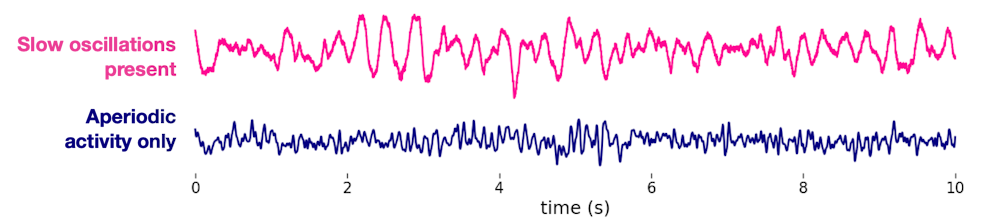
Two types of electrical activity make up brain waves. The first, oscillations, are like the highly synchronized, melodic music you might hear in a symphony. The second, aperiodic activity, is more like the asynchronous noise you hear as musicians tune their instruments. These two types of activities coexist in the brain, together creating the electrical waves an EEG records.

Importantly, tuning noises and symphonic music shouldn’t be mistaken for one another. They clearly come from different processes and serve different purposes. The brain is similar in this way – aperiodic activity and oscillations are different because the biology driving them is distinct.

Diagram showing EEG reading of neural oscillations and aperiodic activity
This diagram shows two EEG readings: One signal contains slow neural oscillations and the other contains only aperiodic activity. Although these signals can be tricky to visually distinguish, certain data analysis methods can help tease them apart. Sydney Smith, CC BY-ND

However, the methods neuroscientists have traditionally used to analyze these signals are unable to differentiate between the oscillations (symphony) and the aperiodic activity (tuning). Both are critical for the orchestra, but so far neuroscientists have mostly ignored – or entirely missed – aperiodic signals because they were thought to be just the brain’s background noise.

In our new research, my team and I show that ignoring aperiodic brain activity likely explains the confusion behind about how ECT treats depression. It turns out we’ve been missing this signal all along.

Connecting aperiodic activity and ECT

Since the 1940s, ECT has been associated with increases in slow oscillations in the brain waves of patients. However, those slow oscillations have never been linked to how ECT works. The degree to which slow oscillations appear is not consistently related to how much symptoms improve following ECT. Nor have ideas about how the brain produces slow oscillations connected those processes to the pathology underlying depression.

Because these two types of brain waves are difficult to separate in measurements, I wondered if these slow oscillations were in fact incorrectly measured aperiodic activity. Returning to our orchestra analogy, I believed that scientists had misidentified the tuning sounds as symphony music.

To investigate this, my team and I gathered three EEG datasets: one from nine patients with depression undergoing ECT in San Diego, another from 22 patients in Toronto receiving ECT and a third from 22 patients in Toronto participating in a clinical trial of magnetic seizure therapy, or MST, a newer alternative to ECT that starts a seizure with magnets instead of electricity.

We found that aperiodic activity increases by more than 40% on average following ECT. In patients who received MST treatment, aperiodic activity increases more modestly, by about 16%. After accounting for changes in aperiodic activity, we found that slow oscillations do not change much at all. In fact, slow oscillations were not even detected in some patients, and aperiodic activity dominated their EEG recordings instead.

How ECT treats depression

But what does aperiodic activity have to do with depression?

A long-standing theory of depression states that severely depressed patients have too few of a type of brain cell called inhibitory cells. These cells can turn other brain cells on and off, and maintaining the balance of these on and off states is critical for healthy brain function. This balance is particularly relevant for depression because the brain’s ability to turn cells off plays an important role in how it responds to stress, a function that, when not working properly, makes people particularly vulnerable to depression.

Microscopy image of a long green neuron touching a red neuron
This microscopy image shows a mouse inhibitory neuron (red) contacting a pyramidal neuron (green). McBain Laboratory, NICHD/NIH via Flickr, CC BY-NC-ND

Using a mathematical model of cell type-based electrical activity, I linked increases in aperiodic activity, like those seen in the ECT patients, to a huge change in the activity of these inhibitory cells. This change in aperiodic activity may be restoring the crucial on and off balance in the brain to a healthy level.

Even though scientists have been recording EEGs from ECT patients for decades, this is the first time that brain waves have been connected to this particular brain malfunction.

Altogether, though our sample size is relatively small, our findings indicate that ECT and MST likely treat depression by resetting aperiodic activity and restoring the function of inhibitory brain cells. Further study can help destigmatize ECT and highlight new directions for the research and development of depression treatments. Listening to the nonmusical background noise of the brain could help solve other mysteries, like how the brain changes in aging and in illnesses like schizophrenia and epilepsy.

Sydney E. Smith, Ph.D. Candidate in Computational Neuroscience, University of California, San Diego

This article is republished from The Conversation under a Creative Commons license. 

Social Goodness: How digital is helping public institutions drive impact

While companies that want to stay competitive in the private sector often rely on new technologies to boost productivity and drive efficiencies, public institutions – including the criminal justice system – frequently lag behind in applying these digital tools. However, when implemented correctly, technology can help level the playing field for underserved communities.

Making a Case for Transformation
In the United States, more than 10,000 developmentally disabled people are sent to prison each month. California opened a complex legal pathway in 2021 for developmentally disabled people to appeal for treatment instead of prison time. Most of these individuals are represented by public defenders – attorneys provided by the county. For public defenders, locating and gaining access to their clients’ records, including medical and mental health records, has historically been time- and labor-intensive. The inefficient analog system that handled hundreds of millions of court documents contributed to this burden.
To help combat these time-consuming challenges, public defenders are turning toward technology and harnessing its capabilities for the good of their clients. For example, a modern client case management system created by digital consultancy Publicis Sapient and the Los Angeles County Public Defender’s Office – the first public defender’s office ever established and still the nation’s largest – helped a developmentally disabled defendant avoid a lengthy prison sentence after an altercation with his brother-in-law.

Lights, Camera, Impact
The case is now chronicled in a short film, “Forgiving Johnny,” which was created by Academy Award-winning director Ben Proudfoot and produced by Publicis Sapient, to shed light on the positive impact technology can have on people and, ultimately, society. The film follows the journey of Los Angeles County public defender Noah Cox and the case against his client, Johnny Reyes, an individual with developmental disabilities who faced a 20-year prison sentence.

Cox needed access to Reyes’ past case files, including documentation that showed how his fetal alcohol syndrome disorder led to intellectual impairment. Using the cutting-edge client case management system that helped digitize about 160 million files and records for the Los Angeles County Public Defender’s Office, Cox was able to digitally access the documentation he needed quickly and push for diversion and treatment for Reyes rather than incarceration.

It was this system that allowed Cox to be more effective and work faster than he had before, ultimately giving him more time to build a stronger case. This digital solution required a few clicks, when in the past, the paper mountain would have made forgiveness for clients next to impossible.

To learn more about how digital business transformation can lead to more positive human outcomes, and to watch the film, visit publicissapient.com.

Photos courtesy of Breakwater Studios

SOURCE:
“Forgiving Johnny”

Understanding and Reducing Stroke Risks

As the second leading cause of death worldwide, according to World Health Organization, stroke will affect 1 in 4 adults over the age of 25 globally. A condition where the blood supply to the brain is disrupted, a stroke results in oxygen starvation, brain damage and loss of function.

There are two main types of strokes: ischemic, which occur when a blood vessel carrying oxygen and nutrients to the brain is blocked by a clot, and hemorrhagic, which are less common but can be more serious, occur when a weakened blood vessel ruptures and begins leaking blood. According to the Center for Disease Control and Prevention (CDC), 87% of strokes are ischemic.

Because a stroke can cause lasting disability and pain for those impacted and their loved ones, it’s important to learn how to identify the signs and symptoms of stroke, how to reduce risk factors and where to go for timely treatment. Consider this information from the experts at Cerenovus, who are committed to changing the trajectory of stroke and offering a broad portfolio of devices used in the endovascular treatment of stroke, to learn more.

Know the Signs and Symptoms
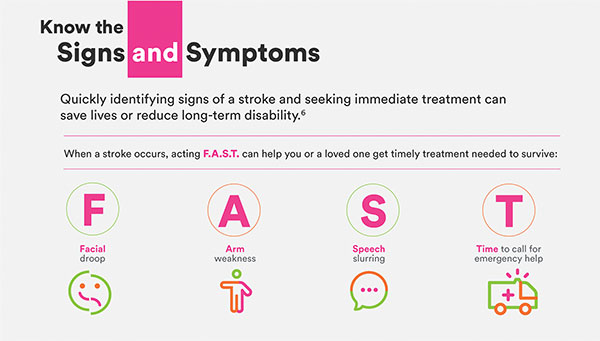
If you suspect yourself or a loved one is experiencing a stroke, acting F.A.S.T. is critical in getting timely treatment necessary to survive. If you recognize the signs and symptoms of a stroke – face weakness, arm weakness and speech slurring – it’s time to call for help. Reducing the amount of time between the onset of stroke and treatment can make a difference in how well the brain, arms, legs, speech and thinking are able to recover. The longer a stroke goes untreated, the greater the chances are of experiencing long-term disability, brain damage or death.

Reduce Stroke Risks
While strokes can be devastating and deadly, up to 90% are preventable, according to the World Stroke Organization, and many risk factors can be controlled before they cause a stroke. By managing conditions like high blood pressure, diabetes, obesity and atrial fibrillation (AFib); ceasing smoking; eating a healthy diet; getting regular exercise; and taking prescribed medications, you can decrease your risk.

Address Health Inequities
Communities of color are disproportionately affected by stroke risk factors and have poorer experiences when it comes to timeliness and access to stroke care, referral patterns, treatment utilization and outcomes, according to research published in the “Journal of Stroke and Cerebrovascular Diseases. In fact, the risk of having a first stroke is nearly twice as high for Black people, according to the CDC, and members of the Black community have the highest rate of death due to stroke. Additionally, according to the American Stroke Association, non-white stroke patients are less likely to arrive by EMS and experience longer emergency department waiting times compared to white patients.

Know Where to Go
For every minute a stroke occurs, 1.9 million brain cells are lost, and the longer a stroke goes untreated, the greater the chances are of experiencing long-term disability and brain damage. That’s why it’s critical to seek immediate treatment at the nearest comprehensive (or Level 1) stroke center. These facilities offer a full spectrum of neuroendovascular care, which can help patients taken directly there survive without long-term disabilities.

Understand Treatment Options
Seeking immediate treatment for stroke means you have more treatment options available, such as being eligible to receive tissue plasminogen activator or mechanical thrombectomy (MT) for ischemic stroke. MT, a minimally invasive blood clot retrieval procedure, helps improve the chances you’ll survive an ischemic stroke and make a full recovery. Treatment options for hemorrhagic stroke include surgery to remove, repair or clip a ruptured aneurysm.

If you or a loved one experience signs of stroke, seek immediate emergency medical services. To learn more about stroke risks and treatment options, visit jnjmedtech.com.

Content courtesy of Cerenovus
EOS #258724-230920 | © CERENOVUS 2023

SOURCE:
Cerenovus

Efficient Ways to Warm Your Home

Creating reliable and efficient heat for your home during the winter months may be easier than you think. Using propane appliances like furnaces, water heaters, fireplaces and kitchen appliances alongside other energy sources, like electricity, can help reduce the strain on the electrical grid.

With the capability to power all major systems in a home, propane offers homeowners an affordable, comfortable, reliable and efficient energy source. It’s a clean, low-carbon option that is made in the United States and available right now.

Consider these energy-efficient, propane-powered appliances and their benefits compared to other energy sources, according to the experts at the Propane Education & Research Council.

Furnaces
Not only are propane-powered furnaces more efficient than other energy sources, but they can also provide a lot of comfort. They heat air to 115-125 F, making the indoor air feel consistently warmer than other options. Heat from air source heat pumps often supply temperatures lower than 100 F and are more affected by outdoor temperatures.

A propane-powered furnace has a 50% longer lifespan than an electric heat pump, reducing its overall lifetime costs to a homeowner. Energy Star-qualified propane furnaces can save up to $75 in energy costs each year and are 15% more efficient than standard propane models. In addition, propane-powered residential furnaces emit up to 50% fewer greenhouse gas emissions than electric furnaces and 12% fewer greenhouse gas emissions than fuel oil furnaces.

Fireplaces
A propane-powered fireplace is a great source for secondary heat and can be used in all climates. They provide 5-6 times the heating capacity of an electric fireplace and emit less soot and other air-polluting emissions than wood-burning fireplaces.

In fact, some parts of the U.S. have banned wood-burning fireplaces due to their negative effects on the environment. What’s more, traditional wood fireplaces are about 15% efficient as secondary sources of heat while high-efficiency propane fireplaces are up to 90% efficient.

Boilers
Many homeowners appreciate the versatility of propane boilers, which offer high-level performance and space savings while also providing heat, hot water and even snow melt capabilities. This versatility also extends to the type of heating delivery system propane boilers serve, including hydronic baseboard systems, in-floor hydronic systems or even forced-air systems, in which hot water from the boiler (instead of a furnace) acts as the heat source.

Propane boilers have an expected lifespan of up to 30 years, according to the Environmental Protection Agency, but many boilers can last longer if serviced and maintained properly. Thus, the initial investment can provide long-term value beyond other heating alternatives. High-efficiency propane boilers also result in significantly reduced carbon dioxide emissions compared with those fueled by heating oil.

Learn more about how you can rely on propane to heat your home at Propane.com/ForMyHome.

SOURCE:
Propane Education & Research Council