Tuesday, September 2, 2025

The growing link between microbes, mood and mental health


New research suggests that to maintain a healthy brain, we should tend our gut microbiome. The best way to do that right now is not through pills and supplements, but better food.

It is increasingly well understood that the countless microbes in our guts help us to digest our food, to absorb and produce essential nutrients, and to prevent harmful organisms from settling in. Less intuitive — perhaps even outlandish — is the idea that those microbes may also affect our mood, our mental health and how we perform on cognitive tests. But there is mounting evidence that they do.

For nearly two decades, neuroscientist John Cryan of University College Cork in Ireland has been uncovering ways in which intestinal microbes affect the brain and behavior of humans and other animals. To his surprise, many of the effects he’s seen in rodents appear to be mirrored in our own species. Most remarkably, research by Cryan and others has shown that transplanting microbes from the guts of people with psychiatric disorders like depression to the guts of rodents can cause comparable symptoms in the animals.

These effects may occur in several ways — through the vagus nerve connecting the gut to the brain, through the influence of gut bacteria on our immune systems, or by microbes synthesizing molecules that our nerve cells use to communicate. Cryan and coauthors summarize the science in a set of articles including “Man and the Microbiome: A New Theory of Everything?,” published in the Annual Review of Clinical Psychology. Cryan told Knowable Magazine that even though it will take much more research to pin down the mechanisms and figure out how to apply the insights, there are some things we can do already.

This conversation has been edited for length and clarity.

“Man and the Microbiome: A New Theory of Everything?” — with all due respect, isn’t that a wee bit ambitious?

That title is admittedly a bit overstated. But the point we are trying to make is that it isn’t really so odd that the microbiome is involved in everything, because the microbes were there first, and so our species has evolved in their presence. We have been able to show that growing up in a germ-free environment really affects the development of the mouse brain, for example, in a variety of ways.

Our immune system is also completely shaped by microbial signals. Via that route, inflammation in our gut can affect our mood and cause symptoms of sickness behavior that are quite similar to important aspects of depression and anxiety. Many psychiatric disorders are also known to be associated with various gastrointestinal issues, though cause and effect often aren’t clear yet. So if you study the body, including the brain, you ignore microbes at your own peril.

Most people are on board with the idea that gut microbes affect our health, but it may be more difficult to accept that they also influence how we feel and think. How did you convince yourself this was true?

I’m a stress neurobiologist, so I was trained in stress-related disorders like depression and anxiety, and my interest was really in using animal models of stress to look for novel therapeutic strategies.

When I moved to University College Cork in 2005, I met a clinical researcher, Ted Dinan, and we started working together to study irritable bowel syndrome, a very common disorder that is characterized by alterations in bowel habits and abdominal pain.

That was interesting to me, as it had become very clear that this is also a stress-related disorder. So we started working on an animal model called the maternal separation model, where rat pups are separated from their moms early in life and develop a stress-like syndrome when they grow up.

Siobhain O’Mahony, a graduate student at the time, also wanted to look at the microbiome, and I remember telling her, “No! Focus, focus!” But she went ahead anyway and found a signature of this early-life stress in the microbiome of adult rats. That was kind of a eureka moment for me.

The next part of the puzzle came when we showed that mice born in a germ-free environment have an exaggerated stress response when they grow up. So we’d already shown that stress was affecting the microbiome, and now we’d shown that the microbiome is regulating how a mouse responds to stress. It turned out that a very nice study from Japan had already shown this.

The third part of the puzzle for me was to ask whether we could alter the microbiome to alleviate some of the effects of stress. In 2011, we were able to show that a specific strain of the bacterium Lactobacillus, when given to normal, healthy mice in a stressful situation, was able to dampen down the stress response, and that the vagus nerve connecting the gut to the brain was required for that.

These three things together, from 2006 to 2011, really crystallized my interest in the link between the gut microbiome, brain and behavior. Since then, we’ve been on this magical journey to try and understand these discoveries, uncover the mechanisms and find how they translate to humans.

Can you explain what a depressed or anxious mouse looks like, and how you quantify that?

One way to look at fear is to quantify how often mice venture into wide open areas, which they normally avoid. If we give a mouse Valium or another anxiety-reducing drug, it will go out and explore and be carefree, not to say a bit reckless. Depression is often studied by looking at mice in a cylinder of water. They are good swimmers, but they don’t like swimming, so after a while, they’ll stop and adopt an immobile posture. Yet if you give them antidepressant drugs, they keep going.

These types of paradigms have shown their validity in studies of pharmacological agents used in human psychiatry, and so they’re ideal to explore whether microbiome manipulations have similar effects. This can be done by transplanting the microbes from a mouse model for a psychiatric disease to a healthy mouse to see whether that creates similar issues, or vice versa, to see if it can resolve them.

Following a similar logic, we have shown that the microbiome can be important in brain aging and cognitive decline. We took the microbiome from eight-week-old mice and gave it to 22-month-old animals — these are very old mice. And we were able to show wide-scale changes across the body — in the microbiome and the immune system, but also in the hippocampus, a brain structure involved in memory.

In the old animals that received the microbiome from young ones, the hippocampus looked completely rejuvenated in its chemical composition. They also performed significantly better in mazes designed to test their memory. This finding has now been replicated in two other labs, giving it further credence.

Such experiments are difficult if not impossible to do in people. How to make that jump?

One thing we can do is to transplant microbes from the guts of people with psychiatric disorders to rodents, to see if they cause comparable behaviors. This has now been done for depression, anxiety, schizophrenia, social anxiety disorder and even Alzheimer’s disease. In one of our own studies, we transferred fecal microbiota from depressed patients to a rat model. This resulted in behavior reminiscent of that in rat models for depression, such as increased anxiety and an uninterest in rewards, in addition to inflammation.

In addition, we can see if bacterial strains we’ve identified as troublemakers in rodents also occur in people with psychiatric issues, and if strains that are beneficial in rodents can help humans as well.

What I’d really like to do is follow a large group of healthy people for a couple of years and track their mental and brain health as well as the changes in their microbiome, and regularly transplant their gut microbes into mice. This would give us a much better view on how this relationship evolves.

Do you think some of the probiotics available in stores today might be helpful, or not quite?

In my opinion, many so-called probiotics aren’t probiotics at all. Probiotics, per definition, are live microorganisms that, when taken in adequate amounts, can confer a health benefit. Most of what’s for sale in shops would never meet that criterion. To demonstrate that something confers a health benefit, you need clinical trials to show it is more effective than a placebo. That’s the first thing. Second, you have to show that the microbes are alive, and that they can survive the stomach acid.

There have been properly randomized controlled trials for some products. But for most products available over the counter today, such studies haven’t been done, because the regulatory authorities do not require them for probiotics as they would for medicines.

There’s a lot of snake oil out there. For most people, it’s probably harmless, but if you are immunosuppressed, it could be dangerous: Even beneficial bacteria can cause great harm if your immune system does not function properly.

Don’t get me wrong, I think there are many promising findings, but this field is very much in its infancy. I’m much more enthusiastic right now about whole-food approaches that adjust people’s diets to include more fermented foods — a source of beneficial bacteria — and the fibers that many beneficial members of our microbiome need to survive. And this, everyone can already do.

Have you done any experiments that show such a diet can improve mental health?

We’ve just done a small study with what we call a psychobiotic diet. Kirsten Berding, a German dietician who did a post-doc in my group, took a group of people with bad diets who were stress-sensitive — namely, our student population — and put them on a one-month diet to really ramp up fermented foods and fibers to the benefit of the microbiome. What we showed was that the better individuals followed the diet, the greater the reduction in stress.

The study wasn’t perfectly blinded, because people knew what they were eating, but they didn’t know what they were eating it for. And this was just the beginning: We’re now doing a much longer study trying to really untangle this.

We’ve also done a small randomly controlled study with a polydextrose fiber that was shown to improve the performance of healthy volunteers on a range of cognitive tests.

Obviously, more work of this kind is necessary. But in this case, I don’t think we should wait for that. Think about the experiment where we’ve transplanted microbes from young to old mice, for example: I’m not advertising poop transplants for aging adults. What we’ve found is that the more diverse your diet, the more diverse your microbiome, and the better your health when you get old. If you look at the beige, bland food served in many nursing homes and hospitals today, that is not the kind of diet that helps people to maintain a healthy microbiome and therefore a healthy brain.

“Perhaps if you’re thinking of having a midlife crisis, forget about the motorbike and start growing vegetables.”

— JOHN CRYAN

We’ve done a study in mice where we adjusted their diet to contain much more inulin, a fiber that we know supports the growth of beneficial bacterial strains, and found we could dampen down the neuroinflammation that is often associated with cognitive decline in aging. This fiber is present in our everyday diet — there is a lot of it in vegetables like leeks, artichokes and chicory. So perhaps if you’re thinking of having a midlife crisis, forget about the motorbike and start growing vegetables.

This is all in healthy patients. Do you think the diet might also help people with mental health issues?

I do, but we need to test it, of course. An earlier study of ours showed that students born by C-section, who missed out on some of the microbes that newborns acquire during vaginal birth, had an elevated immune and psychological response to both chronic and acute stress, in line with our findings in mice. It would be very interesting to test if a psychobiotic diet might benefit them.

As I said, many psychiatric disorders are also associated with inflammation and other problems in the gut. Of course, this relationship works both ways, and it’s not always clear to what extent the irregularities in the gut are the cause or the result of the mental issues — or whether it’s a bit of both. But if we can show a healthier microbiome can improve mental health, that would be great news.

This is what’s appealing about the microbiome: It’s probably more modifiable than the rest of our body. If we understand how it works, that might give people more options to improve their health, even if they didn’t have the best start, microbially speaking. That’s what we hope to achieve.

Monday, September 1, 2025

More than half of US teens have had at least one cavity, but fluoride programs in schools help prevent them – new research

The research looked at the results of 31 studies and a total sample of more than 60,000 students. monkeybusinessimages/iStock via Getty Images Plus
Christina Scherrer, Kennesaw State University and Shillpa Naavaal, Virginia Commonwealth University

Programs delivering fluoride varnish in schools significantly reduce cavities in children. That is a key finding of our recently published study in the American Journal of Preventive Medicine.

Fluoride varnish is a liquid that is applied to the teeth by a trained provider to reduce cavities. It does not require special dental devices and can be applied quickly in various settings.

Our research team found that school fluoride varnish programs, implemented primarily in communities with lower incomes and high cavity risk among children, achieve meaningful rates of student participation and reduced new cavities by 32% in permanent teeth and by 25% in primary – or “baby” – teeth.

We also found that school fluoride varnish programs reduced the progression of small cavities to more severe cavities by 10%. This positive impact held true among school children of various ages in preschool through high school, in rural or urban areas and in communities with and without fluoridated tap water. Fluoride varnish remained effective when delivered by various providers, including dentists, hygienists or trained lay workers.

This research was a large team collaboration on a systematic review, led by researchers from the Centers for Disease Control and Prevention and from our universities. A systematic review is when researchers carefully collect and study all the best available research on a specific topic to figure out what the overall evidence shows.

Ultimately, our conclusions were based on 31 published studies that were reported in 43 peer-reviewed articles involving 60,780 students.

Diets high in sugar promote cavities.

Why is this important?

Although preventable, dental cavities are very common, with well over half of teenagers affected.

Untreated tooth decay can diminish a child’s ability to eat, speak, learn and play, and can negatively affect school attendance and grades.

Reducing tooth decay in youths is a national health objective.

In addition, we believe that since there is a growing movement in the U.S. to remove water fluoridation, other ways of protecting teeth with fluoride, such as toothpaste and varnish, will become more important. About three-quarters of the U.S. population using public water systems has been receiving fluoridated water at levels designed to strengthen enamel and prevent cavities. They will be at higher risk for cavities if fluoride is removed from their drinking water.

Fluoride varnish is recommended by the American Dental Association, the American Academy of Pediatrics, the U.S. Preventive Services Task Force and others. However, many children don’t receive recommended preventive dental services, including fluoride varnish, at dental visits, with some estimates as low as 18% for children from families in low-income households.

This makes schools an important setting for delivery of fluoride varnish to increase access. Students typically receive a dental exam, oral health education and supplies, and referrals for dental care. Depending on state regulations, the varnish can be applied by dental and medical professionals or trained lay workers.

Our work led to the recommendation of school fluoride varnish by the Community Preventive Services Task Force, an independent panel of nationally recognized public health experts that provides evidence-based recommendations on programs and services to protect and improve health in the United States.

What still isn’t known

Limited funds are a barrier. We believe that further understanding the ways to reduce the cost of these programs would help to expand them and reach more students.

One key opportunity is relaxing the restrictions on application by health professionals such as medical assistants and registered nurses, which is allowed in some states but not others.

Programs also sometimes struggle to get schools and families fully engaged. More research could help us determine the best ways to increase the percentage of families that return their consent forms and make school fluoride programs easier to run.

Another barrier is that many states only provide insurance reimbursement for these programs through age 6. Thus, increasing the eligibility age served by medical providers can serve more children, increase the number of these programs and protect more children’s teeth from decay – supporting oral and overall health.

The Research Brief is a short take on interesting academic work.The Conversation

Christina Scherrer, Professor of Industrial and Systems Engineering, Kennesaw State University and Shillpa Naavaal, Associate Professor of Pediatric Dentistry, Virginia Commonwealth University

This article is republished from The Conversation under a Creative Commons license. 

New forms of steel for stronger, lighter cars

Automakers are tweaking production processes to create a slew of new steels with just the right properties, allowing them to build cars that are both safer and more fuel-efficient

Like many useful innovations, it seems, the creation of high-quality steel by Indian metallurgists more than two thousand years ago may have been a happy confluence of clever workmanship and dumb luck.

Firing chunks of iron with charcoal in a special clay container produced something completely new, which the Indians called wootz. Roman armies were soon wielding wootz steel swords to terrify and subdue the wild, hairy tribes of ancient Europe.

Twenty-four centuries later, automakers are relying on electric arc furnaces, hot stamping machines and quenching and partitioning processes that the ancients could never have imagined. These approaches are yielding new ways to tune steel to protect soft human bodies when vehicles crash into each other, as they inevitably do — while curbing car weights to reduce their deleterious impact on the planet.

“It is a revolution,” says Alan Taub, a University of Michigan engineering professor with many years in the industry. The new steels, dozens of varieties and counting, combined with lightweight polymers and carbon fiber-spun interiors and underbodies, hark back to the heady days at the start of the last century when, he says, “Detroit was Silicon Valley.”

Such materials can reduce the weight of a vehicle by hundreds of pounds — and every pound of excess weight that is shed saves roughly $3 in fuel costs over the lifetime of the car, so the economics are hard to deny. The new maxim, Taub says, is “the right material in the right place.”

The transition to battery-powered vehicles underscores the importance of these new materials. Electric vehicles may not belch pollution, but they are heavy — the Volvo XC40 Recharge, for example, is 33 percent heavier than the gas version (and would be heavier still if the steel surrounding passengers were as bulky as it used to be). Heavy can be dangerous.

“Safety, especially when it comes to new transportation policies and new technologies, cannot be overlooked,” Jennifer Homendy, chief of the National Transportation Safety Board, told the Transportation Research Board in 2023. Plus, reducing the weight of an electric vehicle by 10 percent delivers roughly 14 percent improvement in range.

As recently as the 1960s, the steel cage around passengers was made of what automakers call soft steel. The armor from Detroit’s Jurassic period was not much different from what Henry Ford had introduced decades earlier. It was heavy and there was a lot of it.

With the 1965 publication of Ralph Nader’s Unsafe at Any Speed: The Designed-In Dangers of the American Automobile, big automakers realized they could no longer pursue speed and performance exclusively. The oil embargos of the 1970s only hastened the pace of change: Auto steel now had to be both stronger and lighter, requiring less fuel to push around.

In response, over the past 60 years, like chefs operating a sous vide machine to produce the perfect bite, steelmakers — their cookers arc furnaces reaching thousands of degrees Fahrenheit, with robots doing the cooking — have created a vast variety of steels to match every need. There are high-strength, hardened steels for the chassis; corrosion-resistant stainless steels for side panels and roofs; and highly stretchable metals in bumpers to absorb impacts without crumpling.

Tricks with the steel

Most steel is more than 98 percent iron. It is the other couple of percent — sometimes only hundredths of a single percent, in the case of metals added to confer desired properties — that make the difference. Just as important are treatment methods: the heating, cooling and processing, such as rolling the sheets prior to forming parts. Modifying each, sometimes by only seconds, changes the metal’s structure to yield different properties. “It’s all about playing tricks with the steel,” says John Speer, director of the Advanced Steel Processing and Products Research Center at the Colorado School of Mines.

At the most basic level, the properties of steel are about microstructure: the arrangement of different types, or phases, of steel in the metal. Some phases are harder, while others confer ductility, a measure of how much the metal can be bent and twisted out of shape without shearing and creating jagged edges that penetrate and tear squishy human bodies. At the atomic level, there are principally four phases of auto steel, including the hardest yet most brittle, called martensite, and the more ductile austenite. Carmakers can vary these by manipulating the times and temperatures of the heating process to produce the properties they want.

Academic researchers and steelmakers, working closely with automakers, have developed three generations of what is now called advanced high-strength steel. The first, adopted in the 1990s and still widely employed, had a good combination of strength and ductility. A second generation used more exotic alloys to achieve even greater ductility, but those steels proved expensive and challenging to manufacture.

The third generation, which Speer says is beginning to make its way onto the factory floor, uses heating and cooling techniques to produce steels that are stronger and more formable than the first generation; nearly ten times as strong as common steels of the past; and much cheaper (though less ductile) than second-generation steels.

Steelmakers have learned that cooling time is a critical factor in creating the final arrangements of atoms and therefore the properties of the steel. The most rapid cooling, known as quenching, freezes and stabilizes the internal structure before it undergoes further change during the hours or days it could otherwise take to reach room temperature.

One of the strongest types of modern auto steel — used in the most critical structural components, such as side panels and pillars — is made by superheating the metal with boron and manganese to a temperature above 850 degrees Celsius. After becoming malleable, the steel is transferred within 10 seconds to a die, or form, where the part is shaped and rapidly cooled.

In one version of what is known as transformation-induced plasticity, the steel is heated to a high temperature, cooled to a lower temperature and held there for a time and then rapidly quenched. This produces islands of austenite surrounded by a matrix of softer ferrite, with regions of harder bainite and martensite. This steel can absorb a large amount of energy without fracturing, making it useful in bumpers and pillars.

Recipes can be further tweaked by the use of various alloys. Henry Ford was employing alloys of steel and vanadium more than a century ago to improve the performance of steel in his Model T, and alloy recipes continue to improve today. One modern example of the use of lighter metals in combination with steel is the Ford Motor Company’s aluminum-intensive F-150 truck, the 2015 version weighing nearly 700 pounds less than the previous model.

A process used in conjunction with new materials is tube hydroforming, in which a metal is bent into complex shapes by the high-pressure injection of water or other fluids into a tube, expanding it into the shape of a surrounding die. This allows parts to be made without welding two halves together, saving time and money. A Corvette aluminum frame rail, the largest hydroformed part in the world, saved 20 percent in mass from the steel rail it replaced, according to Taub, who coauthored a 2019 article on automotive lightweighting in the Annual Review of Materials Research.

New alloys

More recent introductions are alloys such as those using titanium and particularly niobium, which increase strength by stabilizing a metal’s microstructure. In a 2022 paper, Speer called the introduction of niobium “one of the most important physical metallurgy developments of the 20th century.”

One tool now shortening the distance between trial and error is the computer. “The idea is to use the computer to develop materials faster than through experimentation,” Speer says. New ideas can now be tested down to the atomic level without workmen bending over a bench or firing up a furnace.

The ever-continuing search for better materials and processes led engineer Raymond Boeman and colleagues to found the Institute for Advanced Composites Manufacturing Innovation (IACMI) in 2015, with a $70 million federal grant. Also known as the Composites Institute, it is a place where industry can develop, test and scale up new processes and products.

“The field is evolving in a lot of ways,” says Boeman, who now directs the institute’s research on upscaling these processes. IACMI has been working on finding more climate-friendly replacements for conventional plastics such as the widely used polypropylene. In 1960, less than 100 pounds of plastic were incorporated into the typical vehicle. By 2017, the figure had risen to nearly 350 pounds, because plastic is cheap to make and has a high strength-to-weight ratio, making it ideal for automakers trying to save on weight.

By 2019, according to Taub, 10-15 percent of a typical vehicle was made of polymers and composites, everything from seat components to trunks, door parts and dashboards. And when those cars reach the end of their lives, their plastic and other difficult-to-recycle materials known as automotive shredder residue, 5 million tons of it, ends up in landfills — or, worse, in the wider environment.

Researchers are working hard to develop stronger, lighter and more environmentally friendly plastics. At the same time, new carbon fiber products are enabling these lightweight materials to be used even in load-bearing places such as structural underbody parts, further reducing the amount of heavy metal used in auto bodies.

Clearly, work remains to make autos less of a threat, both to human bodies and the planet those bodies travel over every day, to work and play. But Taub says he is optimistic about Detroit’s future and the industry’s ability to solve the problems that came with the end of the horse-and-buggy days. “I tell students they will have job security for a long time.”

Knowable Magazine

Friday, August 29, 2025

I’m an astrophysicist mapping the universe with data from the Chandra X-ray Observatory − clear, sharp photos help me study energetic black holes

BlackBull MetaTrader 4
NASA’s Chandra X-ray Observatory detects X-ray emissions from astronomical events. NASA/CXC & J. Vaughan
Giuseppina Fabbiano, Smithsonian Institution

When a star is born or dies, or when any other very energetic phenomenon occurs in the universe, it emits X-rays, which are high-energy light particles that aren’t visible to the naked eye. These X-rays are the same kind that doctors use to take pictures of broken bones inside the body. But instead of looking at the shadows produced by the bones stopping X-rays inside of a person, astronomers detect X-rays flying through space to get images of events such as black holes and supernovae.

Images and spectra – charts showing the distribution of light across different wavelengths from an object – are the two main ways astronomers investigate the universe. Images tell them what things look like and where certain phenomena are happening, while spectra tell them how much energy the photons, or light particles, they are collecting have. Spectra can clue them in to how the event they came from formed. When studying complex objects, they need both imaging and spectra.

Scientists and engineers designed the Chandra X-ray Observatory to detect these X-rays. Since 1999, Chandra’s data has given astronomers incredibly detailed images of some of the universe’s most dramatic events.

The Chandra craft, which looks like a long metal tube with six solar panels coming off it in two wings.
The Chandra spacecraft and its components. NASA/CXC/SAO & J.Vaughan

Stars forming and dying create supernova explosions that send chemical elements out into space. Chandra watches as gas and stars fall into the deep gravitational pulls of black holes, and it bears witness as gas that’s a thousand times hotter than the Sun escapes galaxies in explosive winds. It can see when the gravity of huge masses of dark matter trap that hot gas in gigantic pockets.

An explosion of light and color, and a cloud with points of bright light.
On the left is the Cassiopeia A supernova. The image is about 19 light years across, and different colors in the image identify different chemical elements (red indicates silicon, yellow indicates sulfur, cyan indicates calcium, purple indicates iron and blue indicates high energy). The point at the center could be the neutron star remnant of the exploded star. On the right are the colliding ‘Antennae’ galaxies, which form a gigantic structure about 30,000 light years across. Chandra X-ray Center

NASA designed Chandra to orbit around the Earth because it would not be able to see any of this activity from Earth’s surface. Earth’s atmosphere absorbs X-rays coming from space, which is great for life on Earth because these X-rays can harm biological organisms. But it also means that even if NASA placed Chandra on the highest mountaintop, it still wouldn’t be able to detect any X-rays. NASA needed to send Chandra into space.

I am an astrophysicist at the Smithsonian Astrophysical Observatory, part of the Center for Astrophysics | Harvard and Smithsonian. I’ve been working on Chandra since before it launched 25 years ago, and it’s been a pleasure to see what the observatory can teach astronomers about the universe.

Supermassive black holes and their host galaxies

Astronomers have found supermassive black holes, which have masses ten to 100 million times that of our Sun, in the centers of all galaxies. These supermassive black holes are mostly sitting there peacefully, and astronomers can detect them by looking at the gravitational pull they exert on nearby stars.

But sometimes, stars or clouds fall into these black holes, which activates them and makes the region close to the black hole emit lots of X-rays. Once activated, they are called active galactic nuclei, AGN, or quasars.

My colleagues and I wanted to better understand what happens to the host galaxy once its black hole turns into an AGN. We picked one galaxy, ESO 428-G014, to look at with Chandra.

An AGN can outshine its host galaxy, which means that more light comes from the AGN than all the stars and other objects in the host galaxy. The AGN also deposits a lot of energy within the confines of its host galaxy. This effect, which astronomers call feedback, is an important ingredient for researchers who are building simulations that model how the universe evolves over time. But we still don’t quite know how much of a role the energy from an AGN plays in the formation of stars in its host galaxy.

Luckily, images from Chandra can provide important insight. I use computational techniques to build and process images from the observatory that can tell me about these AGNs.

Three images of a black hole, from low to high resolution, with a bright spot above and right from the center surrounded by clouds.
Getting the ultimate Chandra resolution. From left to right, you see the raw image, the same image at a higher resolution and the image after applying a smoothing algorithm. G. Fabbiano

The active supermassive black hole in ESO 428-G014 produces X-rays that illuminate a large area, extending as far as 15,000 light years away from the black hole. The basic image that I generated of ESO 428-G014 with Chandra data tells me that the region near the center is the brightest, and that there is a large, elongated region of X-ray emission.

The same data, at a slightly higher resolution, shows two distinct regions with high X-ray emissions. There’s a “head,” which encompasses the center, and a slightly curved “tail,” extending down from this central region.

I can also process the data with an adaptive smoothing algorithm that brings the image into an even higher resolution and creates a clearer picture of what the galaxy looks like. This shows clouds of gas around the bright center.

My team has been able to see some of the ways the AGN interacts with the galaxy. The images show nuclear winds sweeping the galaxy, dense clouds and interstellar gas reflecting X-ray light, and jets shooting out radio waves that heat up clouds in the galaxy.

These images are teaching us how this feedback process operates in detail and how to measure how much energy an AGN deposits. These results will help researchers produce more realistic simulations of how the universe evolves.

The next 25 years of X-ray astronomy

The year 2024 marks the 25th year since Chandra started making observations of the sky. My colleagues and I continue to depend on Chandra to answer questions about the origin of the universe that no other telescope can.

By providing astronomers with X-ray data, Chandra’s data supplements information from the Hubble Space Telescope and the James Webb Space Telescope to give astronomers unique answers to open questions in astrophysics, such as where the supermassive black holes found at the centers of all galaxies came from.

For this particular question, astronomers used Chandra to observe a faraway galaxy first observed by the James Webb Space Telescope. This galaxy emitted the light captured by Webb 13.4 billion years ago, when the universe was young. Chandra’s X-ray data revealed a bright supermassive black hole in this galaxy and suggested that supermassive black holes may form by the collapsing clouds in the early universe.

Sharp imaging has been crucial for these discoveries. But Chandra is expected to last only another 10 years. To keep the search for answers going, astronomers will need to start designing a “super Chandra” X-ray observatory that could succeed Chandra in future decades, though NASA has not yet announced any firm plans to do so.The Conversation

Giuseppina Fabbiano, Senior Astrophysicist, Smithsonian Institution

This article is republished from The Conversation under a Creative Commons license.

BlackBull MetaTrader 4

Thursday, August 28, 2025

Crispy Grilled Chicken with a Kick

Those first school bells may be ringing, but they don’t have to signal the end of grilling season. This Blackened Spatchcock Chicken keeps the meat moist, tender and tasty with crispy skin and a spicy seasoning to keep your summer spirit alive. Visit Culinary.net to find more recipes that keep your grill lit all year long.

Blackened Spatchcock Chicken

  • 1 whole chicken
  • 1 cup melted butter or ghee
  • 2 tablespoons heat-and-sweet seasoning
  • 1/2 tablespoon garlic powder
  • salt, to taste
  • pepper, to taste
  1. Heat grill to 375-400 F.
  2. Use kitchen shears or knife to remove backbone from chicken to lay flat. Remove rib cage, if desired, or push flat with hands.
  3. Mix butter, heat-and-sweet seasoning and garlic powder. Using meat injector, inject mixture into chicken. Rub remaining buttered seasoning over chicken and season with salt and pepper, to taste.
  4. Place spatchcock chicken breast-side up over indirect heat and cook 35-40 minutes.
  5. When internal temperature reaches 145 F, flip chicken breast-side down over direct heat 5 minutes, or until internal temperature reaches 165 F.
  6. Let rest 10 minutes before serving.


SOURCE:
Culinary.net

Wednesday, August 27, 2025

Shake Up Family Meals with a Versatile Superfood: 5 benefits of cooking with ghee

It’s easy to fall into a dinnertime rut, cooking the same meals with the same ingredients time and again. When your family is in search of a delicious way to shake things up in the kitchen, consider new ways to cook favorite dishes without completely rethinking the menu.

Replacing tired ingredients is an easy solution when classic recipes become bland and boring, which is a perfect reason to try cooking with 4th & Heart Ghee. As a 1:1 substitute for butter or oil, its spreadable texture makes it easy to use in baked goods, grilled dishes and beyond.

This superfood can do all the things butter can do – like make toast taste awesome and trick your kids into eating broccoli – but with additional benefits. For example, it maintains its molecular integrity at high temperatures, can be digested by lactose intolerant people, supports weight loss, improves digestion and reduces inflammation.

Consider these benefits of choosing 4th & Heart Ghee instead of butter:

  • Grass-fed and pasture-raised: It’s packed with naturally occurring fatty acids and CLA, which can improve gut health and biochemistry.
  • Spreadable and shelf-stable: Ghee is shelf-stable for up to 12 months and is best kept in the pantry. This means you never have to scramble to bring butter to room temperature quickly when baking or risk mangling your toast with cold butter.
  • High smoke point: When oil smokes, it becomes a trans fatty acid. With a smoke point of 485 F, ghee lets you cook away without worrying about high temperatures.
  • Natural source of butyric acid: Butyric acid naturally occurs in your gut and in ghee, helping your body absorb nutrients from the foods you eat.
  • Buttery taste: Ghee made in the traditional style provides a delicious, light and buttery taste, perfect for this Sweet Potato Bowl with Cilantro, Turmeric Ghee and Lime. It’s ideal for a light lunch or dinner as it’s bursting with vibrant flavors and wholesome ingredients.
To find more benefits of cooking with ghee, along with recipe inspiration, visit fourthandheart.com.

Sweet Potato Bowl with Cilantro, Turmeric Ghee and Lime

  • 2 large sweet potatoes, peeled and cubed
  • 2 tablespoons 4th & Heart Turmeric Ghee, divided
  • 1 teaspoon cumin powder
  • 1 teaspoon smoked paprika
  • salt, to taste
  • pepper, to taste
  • 1 cup quinoa
  • 1 can black beans, drained and rinsed
  • 1/4 cup red onion, finely diced
  • 1/4 cup fresh cilantro, chopped, plus additional for garnish, divided
  • 1 lime, juice only
  • 1/4 cup crumbled feta or goat cheese (optional)
  1. Preheat oven to 400 F.
  2. In large bowl, toss cubed sweet potatoes with 1 tablespoon turmeric ghee, cumin powder and smoked paprika; add salt and pepper, to taste. Spread sweet potatoes evenly on baking sheet and roast 25-30 minutes, or until tender and slightly crispy on edges, turning halfway through.
  3. Cook quinoa according to package instructions. Once cooked, fluff with fork and set aside.
  4. In medium bowl, mix cooked quinoa with black beans, red onion and 1/4 cup chopped cilantro.
  5. Drizzle half the lime juice over quinoa mixture and stir to combine. Add salt and pepper, to taste.
  6. In large serving bowl, top quinoa mixture with roasted sweet potatoes. Drizzle remaining turmeric ghee over bowl. Squeeze remaining lime juice over top. Garnish with additional chopped cilantro and crumbled feta or goat cheese, if desired.
SOURCE:
4th & Heart Ghee

Tuesday, June 24, 2025

Make Summer as Safe as It is Fun

With school out for summer, children will be away from teachers and coaches who might be trained in first aid and CPR, making it crucial for parents and summer caregivers to brush up on safety tips and life-saving skills.

No matter where your summer plans take you, make sure you’re equipped with the knowledge and tools you need for safe, fun days in the sun.

Keep a First Aid Kit on Hand
Having basic first aid supplies handy lets you take care of minor boo-boos so the summer play can carry on. Plan to include cleansers, wound dressings, bandages and tape; antibiotic ointment; scissors and tweezers; bug bite treatment; and over-the-counter medications such as pain relievers and antihistamines for allergic reactions.

Learn CPR
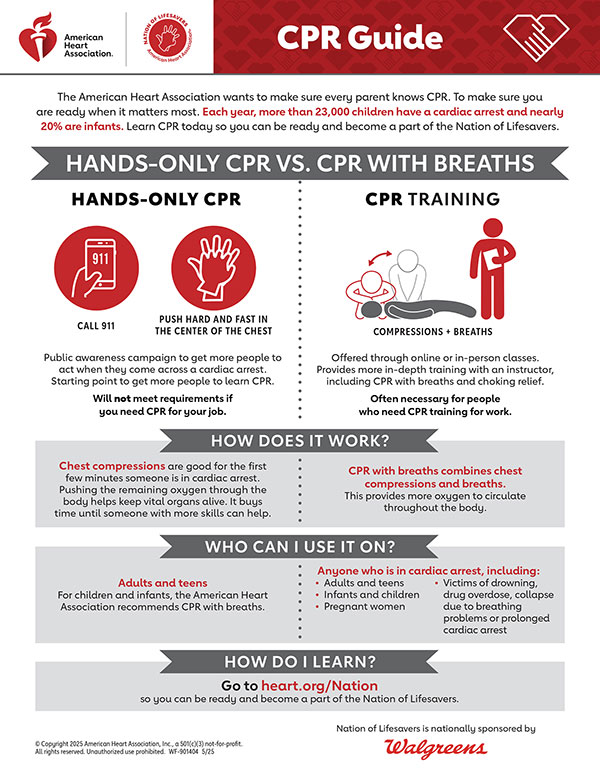
Sudden cardiac arrest can happen to anyone at any age. Summer activities like swimming, boating and other watersports can lead to drowning or serious injuries, but so can outdoor play and sporting events in extreme heat. In fact, more than 23,000 children experience cardiac arrest outside of the hospital each year, according to the American Heart Association, approximately 40% of which are related to sports.

Immediate CPR and automated external defibrillator (AED) use can double or even triple someone’s chance of surviving cardiac arrest. For teens and adults, Hands-Only CPR could save their life. For infants and children, CPR with breaths is recommended.

Studies show children as young as 9 years old can learn and retain CPR skills. This summer, there are many learning options available to families, including online CPR courses, local in-person Heartsaver courses, CPR Anytime Training Kits and CPR kiosks, available in public places and airports across the country.

Know the Signs of Heat Exhaustion
Even when it doesn’t seem extreme, heat and humidity can take a toll. On one end of the heat stress spectrum are heat cramps, which may ease if you take a break, drink water and cool off.

More serious heat exhaustion may occur when the body’s temperature rises to 100-102 F and can include an inability to maintain physical activity, dizziness, nausea, dehydration and rapid heart rate. Try to cool down and drink water, but if symptoms worsen or vomiting occurs, seek medical help.

Heat stroke may cause death or permanent disability. It is characterized by a body temperature of 104-106 F or higher, heat exhaustion symptoms, trouble walking and neurological difficulties such as slurred speech or confusion.

Be Smart Around Water
Drowning can happen quickly and silently. Every day, an average of 10 people of all ages die in the United States from accidental, non-boating related drowning. Always swim with a friend and keep watch, especially where water isn’t clear and underwater obstacles may be present. When boating, always wear a life jacket. At home, install fencing at least 4 feet high around pools and remove toys from the pool when it’s not in use so children aren’t tempted to play without supervision.

Bike Safely
Taking some safety precautions can make bike rides even more enjoyable. Before heading out, check all riders’ bikes to ensure everything is in good operating condition, including brakes, tires, chains and gears.

Always wear a helmet and consider guards to protect your knees, elbows and hands in the event of a fall. Avoid riding at night, when you’re less visible to drivers, and wear bright colors that make you stand out. Drive with traffic (not against it) and follow the same rules as a car when it comes to street signs and intersections. Remain alert at all times and avoid distractions such as music that can prevent you from hearing warning sounds such as a car horn.

Join the American Heart Association’s Nation of Lifesavers and make this summer as safe as it is fun with tips on CPR and other safety concerns at heart.org/nation.

SOURCE:

American Heart Association

Sunday, May 4, 2025

Supreme Court’s decision on deportations gave both the Trump administration and ACLU reasons to claim a victory − but noncitizens clearly lost

A prison officer guards a gate at the Terrorism Confinement Center in El Salvador, where hundreds of migrants from the United States were deported by the Trump administration. Alex Pena/Anadolu via Getty Images
Rebecca Hamlin, UMass Amherst and Paul M. Collins Jr., UMass Amherst

President Donald Trump has claimed victory at the Supreme Court in his campaign to deport Venezuelan migrants accused by the government of being part of a foreign terrorist organization.

“The Supreme Court has upheld the Rule of Law in our Nation by allowing a President, whoever that may be, to be able to secure our Borders, and protect our families and our Country, itself,” Trump posted on April 7, 2025, calling it, “A GREAT DAY FOR JUSTICE IN AMERICA!”

A 5-4 majority of the U.S. Supreme Court had just overruled a lower court that had temporarily barred the deportations, deciding the U.S. could move ahead with its plans to send those Venezuelans to a prison in El Salvador.

Eight minutes after Trump’s post, the American Civil Liberties Union, Democracy Forward and the ACLU of the District of Columbia, three advocacy groups that represented the Venezuelan nationals in the case, also claimed the decision was a win.

In a press release, lawyers from these organizations said that the case was “an important victory” in which the court determined that the “Trump administration acted unlawfully when it removed people from this nation with no process.”

Can both sides legitimately say they won a Supreme Court victory?

As professors of legal studies, we study the Supreme Court, including how the court approaches cases involving immigration law and presidential power.

Here’s why both sides are claiming a win in the case known as Trump v. J.G.G., what the court’s opinion actually said, and what you can take away from it.

A balding, serious looking man sitting in front of blue curtains.
The Supreme Court decision lifted the temporary restraining order blocking the deportations imposed by James Boasberg, chief judge of the U.S. District Court for the District of Columbia. Drew Angerer/AFP via Getty Images

Why both sides are claiming victory

The complexity of the court’s per curiam opinion – an unsigned opinion of a majority of the court – allows the Trump administration and the ACLU to view the ruling in Trump v. J.G.G. from different perspectives.

This has led them both to claim victory.

Trump sees the case as a win because the justices vacated a lower court decision that had temporarily barred the deportation of the Venezuelans. This means that the federal government was victorious in the case: His administration does not have to immediately stop deporting Venezuelan nationals.

At the same time, the ACLU claims the case is a victory for them because the Supreme Court’s opinion said that the government must give people the opportunity to challenge their removal under the Alien Enemies Act – which the government had not done. The Venezuelans’ right to due process was one of the key arguments advanced by the ACLU and its partners.

On April 9, judges in New York and Texas agreed, just two days after the Supreme Court’s decision, temporarily halting the deportation of five Venezuelans until the government can clarify what type of notice it will be giving to people it intends to deport.

Eventually, the Supreme Court will need to speak definitively about whether the Trump administration can use the Alien Enemies Act to deport those it alleges to be part of a foreign terrorist organization. The court has not yet addressed that issue.

This means the court will have to deal with some tricky questions down the road. These include whether a drug cartel can be said to be engaging in an “invasion” or “predatory incursion” into the United States, which the Alien Enemies Act requires if it is to be invoked. Another issue is the extent to which the Alien Enemies Act can be used when Congress hasn’t declared war.

And a big unanswered question is whether the Supreme Court, or any court, should even answer these questions at all. The political questions doctrine, which dates to 1803, is a principle saying that courts should avoid tackling thorny political questions that are best left to Congress or the president.

Men looking out of the cabin of a large airplane.
Venezuelans deported from the U.S. sit aboard the plane as they arrive at Simon Bolivar International Airport in Maiquetia, Venezuela, on March 28, 2025. Jesus Vargas/picture alliance via Getty Images

What the court decided and what it means for noncitizens’ rights

The court’s brief opinion, to which five members signed on, repeats the very basic constitutional premise that noncitizens are entitled to due process of law, even as they are being removed from the United States. Most significantly, due process includes the ability to protest their deportations before a court of law.

Justice Brett Kavanaugh’s concurrence emphasized the idea that the disagreement between the majority and the dissents is not about whether the noncitizens should have the opportunity to challenge their removal; all nine justices agree they have that right. Rather, Kavanaugh said, the justices disagreed on the question of venue, meaning the location in which these challenges should occur.

Kavanaugh’s focus on venue obscures the fact that what the justices granted to potential deportees is a significantly less robust type of judicial review than the one they were asking for.

The Venezuelans were challenging their removal as a class, because Trump had declared in a presidential proclamation that all Venezuelans over the age of 14 who were believed to be members of the Tren de Aragua cartel “are subject to immediate apprehension, detention, and removal.”

The Supreme Court majority made a group-based approach much more difficult in its April 7 ruling. It allowed for only individual, case-by-case appeals in which each potential deportee must retain legal counsel, file what’s known as a habeas corpus petition challenging their detention, and then try to convince a judge in the district where they are being held that they are not a member of Tren de Aragua in order to prevent their removal.

For most detainees, that would mean filing a petition in the Southern District of Texas, in the 5th U.S. Circuit Court of Appeals, known as the most conservative federal circuit in the country.

Unless more courts step in to prevent it, the impact of the decision will be more removals to El Salvador’s notorious CECOT prison, perhaps of people who are not actually gang members, or even Venezuelan. This has already happened in the previous round of removals under this program.

Further, at least 200 people have already been flown out of the U.S. to CECOT. Because they’ve been accused of no crime in El Salvador, they have no right to due process or legal counsel there, and no trial date set where they might prove their innocence. A recent CBS exposé also found that three-quarters of them had no criminal record in the United States either.

In the meantime, there is a separate but related case of a man, Kilmar Abrego Garcia, wrongly deported to El Salvador, despite having legal protection in the U.S. preventing his removal to his home country of El Salvador. The Trump administration is currently arguing before the Supreme Court that when it makes an error in the process of carrying out these removals, it does not have to correct it.

Not all due process is created equal. The court’s April 7 decision allowing the bare minimum process protecting people being removed makes errors more likely and thus raises the stakes for the outcome of the Abrego Garcia case tremendously.

Many parties have claimed victory in the Trump v. J.G.G. decision, but one thing is clear: It was a defeat for the rights of noncitizens in the United States.The Conversation

Rebecca Hamlin, Professor of Legal Studies and Political Science, UMass Amherst and Paul M. Collins Jr., Professor of Legal Studies and Political Science, UMass Amherst

This article is republished from The Conversation under a Creative Commons license. 

Combatting Cracked Concrete: Causes of failing concrete and how to solve them

Concrete is a strong, durable and easy-to-maintain material that is popular for driveways, walkways, patios and more. Like most materials, though, it can inevitably wear down over time.

When signs of failure show themselves, homeowners commonly face two options: repair or replace. Prepare and plan for eventual concrete deterioration with this advice from the experts at Thrasher Foundation Repair, which has served more than 150,000 families over the last 50 years.

Reasons for Concrete Failure
Natural elements like weather, water and earth are often to blame, but man-made mistakes can also contribute to concrete failure.

  1. Poorly compacted soil: When a home is constructed, a lot of soil is moved around and put back in place. This often results in loose, poorly compacted soil, which allows water to seep in, saturate and dry out. The constant expansion and contraction can create voids beneath the concrete, which it eventually sinks into.
  2. Weather: During hot weather, concrete expands and causes pressure throughout the slab, often resulting in cracks. Conversely, during cold weather, the moisture in the ground freezes and can cause the slab to shrink, causing concrete to lift, heave and crack.
  3. Excessive weight: Concrete is strong but not indestructible. Excessively heavy objects, like snow, can cause cracking.
  4. Shrinkage: When concrete is installed, water is used to facilitate mixing and pouring. As concrete cures, excess water evaporates and causes a reduction in concrete volume, sometimes leading to cracking.
Defects: Improper installation or a poorly prepared concrete mix may lead to a weak slab that’s prone to cracking.

Signs of Concrete Failure
Identifying failure can help you address issues before they get out of hand. One of the most common signs is cracking – while a few hairline cracks that aren’t actively growing aren’t typically a problem, larger cracks that spread can affect drainage, aesthetics and structural integrity.

If you notice water collecting in areas following heavy rain, that may indicate a soil issue that can lead to concrete failure. Pitting, flaking and staining are also signs of damaged concrete. Uneven surfaces or sinking concrete are serious signs that concrete slabs are struggling with external factors that need to be addressed.

Options for Addressing Concrete Failure
When homeowners notice signs of failure in their driveways, sidewalks or patios, they often assume replacement is the only option. However, concrete repair can revitalize slabs without a full replacement, typically at a lower price.

Repair: New technology makes repairing concrete less invasive, more affordable and quicker than total replacement. Consider Thrasher Foundation Repair’s PolyLevel process, which refers to a system using a two-part polyurethane polymer to fill voids and lift concrete slabs to their original position. It’s injected through a pencil eraser-sized hole and expands into a structural foam that compacts the soil. Quick, noninvasive and aesthetically pleasing, it’s a fast installation process with a curing time of 15-20 minutes so the surface can be used the same day. This repair process is recommended for cracks, settled and unlevel slabs or sunken steps.

“Repairing concrete, rather than full replacement, can save homeowners as much as 50-80%, depending on square footage,” said Dan Thrasher, CEO of Thrasher Foundation Repair. “It’s often a more economical solution that provides peace of mind, visual appeal and long-lasting results.”

Staining: After a repair, slabs may appear mismatched. Staining concrete adds visual appeal while helping to prevent pitting, flaking, cracking and moisture-related issues.

Replacement: As a long, disruptive and inconvenient process, full slab replacement can be overwhelming, both in terms of time and money. Some situations do call for full slab replacement, however, such as concrete older than 30 years, deep cracks and large potholes or a poorly installed base.

When choosing the right way to address concrete failure, it’s important to consider your time and budget. When in doubt, contact a professional who can walk you through the process by visiting GoThrasher.com.

SOURCE:

Thrasher Foundation Repair

Friday, May 2, 2025

Save a Life from Stroke

Strokes can happen to anyone, at any age – even young people. Despite being one of the leading causes of death and long-term disability in the United States, strokes are largely preventable, treatable and beatable – if you can control your risk factors.

According to the American Stroke Association, a division of the American Heart Association, every 40 seconds, someone in the U.S. has a stroke. Keeping blood pressure in check, living a healthy lifestyle and knowing stroke warning signs may help protect you and your loved ones.

Here are key insights from the American Stroke Association’s Together to End Stroke initiative, nationally supported by the HCA Healthcare Foundation.

Controlling Risk Factors
Up to 80% of strokes may be preventable, according to the American Stroke Association. You can take action to prevent strokes by managing your risk factors, like high blood pressure, a leading cause and controllable risk factor for stroke and heart disease.

Other risk factors include diabetes and obesity, which can be kept in check with healthy lifestyle behaviors such as good nutrition. Quitting smoking and being physically active are important. Atrial fibrillation, or AFib, which is a quivering or irregular heartbeat, also increases stroke risk. In fact, people with AFib are five times more likely to have a stroke, according to the American Heart Association.

Preventing a Second Stroke
Nearly 1 in 4 strokes occur in people who had a previous stroke, sometimes because they don’t know what caused the first, making identifying the cause of the stroke a key step toward future prevention. Treatment depends on the type of stroke someone is having, which can be determined with a series of medical evaluations and tests.

Work with your health care professional to develop a plan that helps you move forward after a first stroke while preventing a second. This plan should include controlling risk factors, like achieving and maintaining healthy blood pressure, blood sugar and cholesterol levels.

“Preventing a second stroke is possible with the right approach,” said Teresita Casanova, MD, HCA Healthcare affiliated neurologist and American Stroke Association volunteer expert. “Taking medicines as prescribed, monitoring health numbers, and making small, consistent lifestyle changes can make a big difference. Stroke survivors should feel empowered to take control of their health and work with their care team to build a strong prevention plan.”

To help you in your journey, you can rely on tools such as the Heart & Stroke Helper, a free self-management app available for stroke survivors and their caregivers. The app allows patients to oversee their health in one place with features that track progress on lifestyle habits, manage medications, track health numbers, provide information about stroke and allow patients to connect with others for inspiration.

Find more ways to manage second stroke risk at Stroke.org

Act F.A.S.T.: How to Detect Signs of Stroke
Most adults in the U.S. don’t know the stroke warning signs, nor that stroke is largely treatable if you call 911 as soon as you recognize the symptoms.

Learning the acronym F.A.S.T. can help you recognize that someone may be having stroke symptoms so you can take life-saving action.

F: Face Drooping. Does one side of the face droop, or is it numb? Ask the person to smile. Is the person’s smile uneven?

A: Arm Weakness. Is one arm weak or numb? Ask the person to raise both arms. Does one arm drift downward?

S: Speech. Is speech slurred? Is the person unable to speak or hard to understand? Ask the person to repeat a simple sentence, like “The sky is blue.”

T: Time to Call 911. If you or anyone else shows any of these symptoms, call 911 immediately.


SOURCE:

American Heart Association

Sunday, April 27, 2025

How does your brain create new memories? Neuroscientists discover ‘rules’ for how neurons encode new information

Neurons that fire together sometimes wire together. PASIEKA/Science Photo Library via Getty Images
William Wright, University of California, San Diego and Takaki Komiyama, University of California, San Diego

Every day, people are constantly learning and forming new memories. When you pick up a new hobby, try a recipe a friend recommended or read the latest world news, your brain stores many of these memories for years or decades.

But how does your brain achieve this incredible feat?

In our newly published research in the journal Science, we have identified some of the “rules” the brain uses to learn.

Learning in the brain

The human brain is made up of billions of nerve cells. These neurons conduct electrical pulses that carry information, much like how computers use binary code to carry data.

These electrical pulses are communicated with other neurons through connections between them called synapses. Individual neurons have branching extensions known as dendrites that can receive thousands of electrical inputs from other cells. Dendrites transmit these inputs to the main body of the neuron, where it then integrates all these signals to generate its own electrical pulses.

It is the collective activity of these electrical pulses across specific groups of neurons that form the representations of different information and experiences within the brain.

Diagram of neuron, featuring a relatively large cell body with a long branching tail extending from it
Neurons are the basic units of the brain. OpenStax, CC BY-SA

For decades, neuroscientists have thought that the brain learns by changing how neurons are connected to one another. As new information and experiences alter how neurons communicate with each other and change their collective activity patterns, some synaptic connections are made stronger while others are made weaker. This process of synaptic plasticity is what produces representations of new information and experiences within your brain.

In order for your brain to produce the correct representations during learning, however, the right synaptic connections must undergo the right changes at the right time. The “rules” that your brain uses to select which synapses to change during learning – what neuroscientists call the credit assignment problem – have remained largely unclear.

Defining the rules

We decided to monitor the activity of individual synaptic connections within the brain during learning to see whether we could identify activity patterns that determine which connections would get stronger or weaker.

To do this, we genetically encoded biosensors in the neurons of mice that would light up in response to synaptic and neural activity. We monitored this activity in real time as the mice learned a task that involved pressing a lever to a certain position after a sound cue in order to receive water.

We were surprised to find that the synapses on a neuron don’t all follow the same rule. For example, scientists have often thought that neurons follow what are called Hebbian rules, where neurons that consistently fire together, wire together. Instead, we saw that synapses on different locations of dendrites of the same neuron followed different rules to determine whether connections got stronger or weaker. Some synapses adhered to the traditional Hebbian rule where neurons that consistently fire together strengthen their connections. Other synapses did something different and completely independent of the neuron’s activity.

Our findings suggest that neurons, by simultaneously using two different sets of rules for learning across different groups of synapses, rather than a single uniform rule, can more precisely tune the different types of inputs they receive to appropriately represent new information in the brain.

In other words, by following different rules in the process of learning, neurons can multitask and perform multiple functions in parallel.

Future applications

This discovery provides a clearer understanding of how the connections between neurons change during learning. Given that most brain disorders, including degenerative and psychiatric conditions, involve some form of malfunctioning synapses, this has potentially important implications for human health and society.

For example, depression may develop from an excessive weakening of the synaptic connections within certain areas of the brain that make it harder to experience pleasure. By understanding how synaptic plasticity normally operates, scientists may be able to better understand what goes wrong in depression and then develop therapies to more effectively treat it.

Microscopy image of mouse brain cross-section with lower middle-half dusted green
Changes to connections in the amygdala – colored green – are implicated in depression. William J. Giardino/Luis de Lecea Lab/Stanford University via NIH/Flickr, CC BY-NC

These findings may also have implications for artificial intelligence. The artificial neural networks underlying AI have largely been inspired by how the brain works. However, the learning rules researchers use to update the connections within the networks and train the models are usually uniform and also not biologically plausible. Our research may provide insights into how to develop more biologically realistic AI models that are more efficient, have better performance, or both.

There is still a long way to go before we can use this information to develop new therapies for human brain disorders. While we found that synaptic connections on different groups of dendrites use different learning rules, we don’t know exactly why or how. In addition, while the ability of neurons to simultaneously use multiple learning methods increases their capacity to encode information, what other properties this may give them isn’t yet clear.

Future research will hopefully answer these questions and further our understanding of how the brain learns.The Conversation

William Wright, Postdoctoral Scholar in Neurobiology, University of California, San Diego and Takaki Komiyama, Professor of Neurobiology, University of California, San Diego

This article is republished from The Conversation under a Creative Commons license.