Wednesday, February 25, 2026

How Jesse Jackson set the stage for Bernie Sanders and today’s progressives

Bernie Sanders, then the mayor of Burlington, greets Jesse Jackson backstage at a 1988 Vermont rally where he endorsed Jackson’s presidential bid. AP Photo/Toby Talbot
Bert Johnson, Middlebury College

Jesse Jackson’s two campaigns for president, in 1984 and 1988, were unsuccessful but historic. The civil rights activist and organizer, who died on Feb. 17, 2026, helped pave the way for Barack Obama’s election a generation later as the nation’s first – and so far only – African American president.

Jackson’s campaigns energized a multiracial coalition that not only provided support for other late-20th-century Democratic politicians, including President Bill Clinton, but helped create an organizing template – a so-called Rainbow Coalition combining Black, Latino, working-class white and young voters – that continues to resonate in progressive politics today.

Vermont, where I teach political science, did not look like fertile ground for Jackson when he first ran for president. Then, as now, Vermont was one of the most homogeneous, predominantly white states in the country. But if Jackson seemed like an awkward fit for a mostly rural, lily-white state, he nonetheless saw possibilities there.

He campaigned in Vermont twice in 1984, buoyantly declaring in Montpelier, the state capital, “If I win Vermont, the nation will never be the same again.”

He did not win Vermont, taking just 8% of the Democratic primary vote in 1984 but tripling his share to 26% in 1988. Appealing to voters in small, rural New England precincts was a remarkable achievement for a candidate identified with Chicago and civil rights campaigns in the South.

Jackson’s presidential ambitions coincided with a pivotal moment in Vermont politics: The state’s voting patterns were shifting left, with new residents arriving and changing the state’s culture and economy. In 1970, nearly 70% of Vermonters had been born there. By 1990, that figure had dropped by 10 percentage points.

The Vermont Rainbow Coalition, which was formed to support Jackson’s first campaign, organized a crucial constituency in a fluid time, establishing patterns that would persist for decades.

Setting the standard in Vermont

Jackson created a “People’s Platform” that would sound familiar to today’s progressives, calling for higher taxes on businesses, higher minimum wages and single-payer, universal health care.

In light of Jackson’s efforts, Vermont activists saw the potential for a durable statewide organization. Rather than disband the Vermont Rainbow Coalition after the 1984 primary, they kept the group going, endorsing candidates in campaigns for the legislature and statewide office in each of the next three election cycles. The coalition also endorsed Bernie Sanders’ failed bid for Congress in 1988.

Sanders served eight years as mayor of Burlington as an “independent socialist,” cultivating a core collection of local allies known as the Progressive Coalition who sought to wrest power away from establishment members of the city’s Board of Aldermen.

In 1992, the Vermont Rainbow Coalition merged with Burlington’s Progressive Coalition to form the statewide Progressive Coalition.

The Jackson-Sanders lineage

Sanders eventually went on to win election to the House as an independent in 1990, serving in the chamber until winning his Senate seat, also as an independent, in 2006. His presidential runs in 2016 and 2020 made him a prominent national figure and a leader among progressives.

Alexandria Ocasio-Cortez, who unseated a member of the House Democratic leadership in a stunning 2018 primary upset in New York, had been a Sanders campaign organizer and remains his close ally. On Jan. 1, 2026, Sanders swore in Zohran Mamdani – like Ocasio-Cortez, a Democratic socialist – as mayor of New York City.

Sanders had endorsed Jackson for president in 1988. Years later, Jackson returned the favor.

Sanders paid tribute to Jackson at the 2024 Democratic National Convention. “Jesse Jackson is one of the very most significant political leaders in this country in the last 100 years,” Sanders said. “Jesse’s contribution to modern history is not just bringing us together – it is bringing us together around a progressive agenda.”

Not just Vermont

In Vermont, Jackson performed surprisingly well in unlikely places – taking nearly 20% of the 1984 primary vote in working-class Bakersfield and Belvidere, for example.

Today’s Vermont Progressive Party, which emerged out of the old Vermont Progressive Coalition, is one of the most successful third parties in the nation, winning official “major party” status in the state shortly after its official founding in 2000. The party has elected candidates to the state legislature, city councils and even a few statewide offices, including that of lieutenant governor.

Congresswoman Alexandria Ocasio-Cortez stands at a lectern and appears to shout to a campaign rally crowd.
New York Democratic Rep. Alexandria Ocasio-Cortez exhorts the crowd at a 2019 Bernie Sanders presidential campaign rally in Long Island City, N.Y. Invision/Greg Allen via AP

Vermont was not alone in experiencing the catalyzing effect of Jackson’s presidential runs. Jackson had a significant mobilizing impact on Black voters nationwide. In Washington state, the Washington Rainbow Coalition started in Seattle and spread across the state between 1984 and 1996. New Jersey and Pennsylvania had their own successful and independent Rainbow Coalitions. In 2003, the Rainbow Coalition Party of Massachusetts joined the Green Party to become the Green Rainbow Party.

In my own research, I’ve investigated the durability of the “Jackson effect” in Vermont. There is no better test of what differentiates the Vermont Progressive Party from the state’s Democratic Party than the 2016 Democratic primary race for lieutenant governor, which pitted progressive David Zuckerman against two prominent, mainstream Democrats.

Zuckerman beat the Democrats most handily in towns that had voted the most heavily for Jesse Jackson in 1984, an effect that persisted even when controlling for population, partisanship and liberalism.

Many people would point to Sanders as the catalyst for Vermont’s continuing progressive movement. But Sanders and the progressives owe much to Jackson.The Conversation

Bert Johnson, Professor of Political Science, Middlebury College

This article is republished from The Conversation under a Creative Commons license. 

Friday, February 20, 2026

Stop Texting and Emailing and Try Talking for a Change

by Daniel B. Griffith, J.D., SPHR, SHRM-SCP

Illustration of people talking

As a workplace mediator, I am astounded by the many times I've helped employees work through their conflicts simply by having them reassess their methods of communicating. Conflict often escalates because individuals rely on technology -- texts and emails -- to communicate rather than honestly talk face to face. For example:

  • A department chair and office manager rarely meet in person. The chair exercises his faculty privilege to work from home and the manager feels blamed for not addressing student and faculty needs, mostly because she can't get clarity through email from the chair about how to respond.
  • Initial emails in a long email stream between two faculty are seemingly innocuous but escalate over many weeks to barbed comments, sarcasm, innuendo, accusations, half-truths, and SHOUTING. They have never spoken directly with one another about their concerns.
  • Two students pull out their phones and trace the series of text exchanges between them, quickly realizing their frequent use of abbreviations, emojis, and curt replies, and overlooked texts within the stream led to significant misunderstandings and unfounded judgments and assumptions each made of the other.

My job as mediator is to help individuals unpack the causes of their conflict and see for themselves where their differences lie, but it is tempting in cases like these simply to say, "stop it!" The answer seems obvious but is evidently more difficult for many who have come to rely on their devices to communicate to the point they avoid, fear, or forget to communicate in person or have lost or never developed the skills for doing so.

If this is you, or fear it may be, consider these suggestions for evaluating your technology use and extricating yourself from the confusion to improve your relationships and conflict resolution skills:

Get clear on your reasons for relying on e-communication when dealing with conflict. Conflict resolution starts with identifying root causes. With respect to technology misuse, causes for users' misdeeds and misunderstandings that foment conflict include:

  • Cowardice. Hiding behind the keypad to send out missives, barbs, strident comments, and other conflict-enhancing messages due to a lack of courage, fortitude, or integrity to face others in person.
  • Fear. Avoiding face-to-face interaction due to either genuine or unfounded fear of confrontation, thereby finding safety in perpetuating the conflict behind the keypad.
  • Laziness or busyness. While we know we could talk over the cubicle or knock on a colleague's door (or do so virtually through a video meeting), we don't do so, either from inertia or by blaming our busy schedule. It is simply easier to stay behind the keypad.
  • Ignorance. Some individuals lack awareness of how their written exchange may come across as curt, dismissive, unclear, or harsh. Others may simply not know, or were never taught, that in-person exchange is the best option for addressing conflicts and more serious conversations.
  • Lack of skills. Some may recognize the need for face-to-face interaction but feel awkward, tongue-tied, and unskilled, feeling more comfortable behind the keypad. They will continue in this mode if they lack the means to develop skills or to ask for help.
  • Norms. When e-communication is the default within your organization, or among your community, age group, or friends, the thought of a different means for more important conversation never crosses your mind.

Change your mindset and manner of communicating. As conflict escalates, we experience diminishing returns in our ability to meaningfully communicate and resolve issues with colleagues. As this occurs and you get an inkling that your electronic foibles may be a contributing cause, it's time to wake up to the need for a different approach to your communication exchange.

These inklings may arise, among other means, if you sense your common use of abbreviations and emojis are being misinterpreted or causing offense, your written explanations become lengthier in response to a colleague's baseless accusations, you've lost track of the stream and wonder where the misunderstanding first arose, or you discontinue communication altogether -- electronic or otherwise -- because it has become exhausting and demoralizing to attempt further communication.

The first response to this dilemma is simple (physically, if not emotionally): take your fingers off the keypad. The next step is perhaps more challenging, particularly if you are accustomed to hiding behind the keypad: find a way to initiate face-to-face communication to address your conflict. This probably means walking down the hall to talk with your colleague (or to do the virtual equivalent by requesting a video meeting).

If this is too difficult to initiate cold, or your colleague is as or more skilled as you in hiding behind electronic walls, begin with a polite email, such as, "I think it would be best at this point to talk this through than to continue through email. Could we meet soon?" If your colleague continues to attempt electronic "conversation," you may need to be more direct: "I've requested previously that we meet to discuss this. I will not continue to respond to this concern through email. Would Tuesday at 3:00 or Wednesday at 9:00 be a better time to meet?"

The point is to back away from e-communication, minimize or discontinue e-responses until you can meet in person, and transition discussion on issues causing conflict to in-person exchange.

Don't get pulled into others' misuse of technology. Truly recalcitrant colleagues relying on electronic forms may disregard your message and continue their methods. In any conflict, someone must be the first to break the cycle. Don't give in and return to your old ways simply because the other person hasn't responded as requested. To the extent business must continue through electronic means, keep it to business, provide information only as pertinent to move forward with business decisions, and remind the person of your standing request to meet in person on the matter of concern.

While your awkward radio silence may further jeopardize your relationship momentarily, leave an information void, and generate further misunderstandings and frustration (perhaps even escalating the other person's e-responses), realize the cost in time, energy, and loss of goodwill to continue or return to an unhealthy cycle, tempting as it may be to respond in kind.

Establish clear expectations about how you will communicate and the methods you will use. Whether correcting a dysfunctional relationship precipitated by poor e-communication or establishing a new relationship to avoid such problems, establish an understanding of how you will address the natural miscommunications and conflicts that arise and how e- vs. in-person communication will play a role. Consider informal norms or grounds rules covering situations where e-communication is appropriate and when transition to in-person is needed. Hint: e-communication for general business and information exchange; in-person when a deeper conversation is needed, or when matters initiated through e-communication require transition to in-person to ensure clarity. So armed, you now have a basis for disrupting e-communication to transition to in-person without surprising your colleague and begin a fluid, productive process for addressing concerns through face-to-face interaction.

HigherEdJobs

This article is republished from HigherEdJobs® under a Creative Commons license. 

Wednesday, February 18, 2026

Lessons from sports psychology research


Scientists are probing the head games that influence athletic performance, from coaching to coping with pressure

Since the early years of this century, it has been commonplace for computerized analyses of athletic statistics to guide a baseball manager’s choice of pinch hitter, a football coach’s decision to punt or pass, or a basketball team’s debate over whether to trade a star player for a draft pick.

But many sports experts who actually watch the games know that the secret to success is not solely in computer databases, but also inside the players’ heads. So perhaps psychologists can offer as much insight into athletic achievement as statistics gurus do.

Sports psychology has, after all, been around a lot longer than computer analytics. Psychological studies of sports appeared as early as the late 19th century. During the 1970s and ’80s, sports psychology became a fertile research field. And within the last decade or so, sports psychology research has exploded, as scientists have explored the nuances of everything from the pursuit of perfection to the harms of abusive coaching.

“Sport pervades cultures, continents, and indeed many facets of daily life,” write Mark Beauchamp, Alan Kingstone and Nikos Ntoumanis, authors of an overview of sports psychology research in the 2023 Annual Review of Psychology.

Their review surveys findings from nearly 150 papers investigating various psychological influences on athletic performance and success. “This body of work sheds light on the diverse ways in which psychological processes contribute to athletic strivings,” the authors write. Such research has the potential not only to enhance athletic performance, they say, but also to provide insights into psychological influences on success in other realms, from education to the military. Psychological knowledge can aid competitive performance under pressure, help evaluate the benefit of pursuing perfection and assess the pluses and minuses of high self-confidence.

Confidence and choking

In sports, high self-confidence (technical term: elevated self-efficacy belief) is generally considered to be a plus. As baseball pitcher Nolan Ryan once said, “You have to have a lot of confidence to be successful in this game.” Many a baseball manager would agree that a batter who lacks confidence against a given pitcher is unlikely to get to first base.

Various studies suggest that self-talk can increase confidence, enhance focus, control emotions and initiate effective actions.

And in fact, a lot of psychological research actually supports that view, suggesting that encouraging self-confidence is a beneficial strategy. Yet while confident athletes do seem to perform better than those afflicted with self-doubt, some studies hint that for a given player, excessive confidence can be detrimental. Artificially inflated confidence, unchecked by honest feedback, may cause players to “fail to allocate sufficient resources based on their overestimated sense of their capabilities,” Beauchamp and colleagues write. In other words, overconfidence may result in underachievement.

Other work shows that high confidence is usually most useful in the most challenging situations (such as attempting a 60-yard field goal), while not helping as much for simpler tasks (like kicking an extra point).

Of course, the ease of kicking either a long field goal or an extra point depends a lot on the stress of the situation. With time running out and the game on the line, a routine play can become an anxiety-inducing trial by fire. Psychological research, Beauchamp and coauthors report, has clearly established that athletes often exhibit “impaired performance under pressure-invoking situations” (technical term: “choking”).

In general, stress impairs not only the guidance of movements but also perceptual ability and decision-making. On the other hand, it’s also true that certain elite athletes perform best under high stress. “There is also insightful evidence that some of the most successful performers actually seek out, and thrive on, anxiety-invoking contexts offered by high-pressure sport,” the authors note. Just ask Michael Jordan or LeBron James.

Many studies have investigated the psychological coping strategies that athletes use to maintain focus and ignore distractions in high-pressure situations. One popular method is a technique known as the “quiet eye.” A basketball player attempting a free throw is typically more likely to make it by maintaining “a longer and steadier gaze” at the basket before shooting, studies have demonstrated.

“In a recent systematic review of interventions designed to alleviate so-called choking, quiet-eye training was identified as being among the most effective approaches,” Beachamp and coauthors write.

Another common stress-coping method is “self-talk,” in which players utter instructional or motivational phrases to themselves in order to boost performance. Saying “I can do it” or “I feel good” can self-motivate a marathon runner, for example. Saying “eye on the ball” might help a baseball batter get a hit.

Researchers have found moderate benefits of self-talk strategies for both novices and experienced athletes, Beauchamp and colleagues report. Various studies suggest that self-talk can increase confidence, enhance focus, control emotions and initiate effective actions.

Moderate performance benefits have also been reported for other techniques for countering stress, such as biofeedback, and possibly meditation and relaxation training.

“It appears that stress regulation interventions represent a promising means of supporting athletes when confronted with performance-related stressors,” Beauchamp and coauthors conclude.

Pursuing athletic perfection

Of course, sports psychology encompasses many other issues besides influencing confidence and coping with pressure. Many athletes set a goal of attaining perfection, for example, but such striving can induce detrimental psychological pressures. One analysis found that athletes pursuing purely personal high standards generally achieved superior performance. But when perfectionism was motivated by fear of criticism from others, performance suffered.

Similarly, while some coaching strategies can aid a player’s performance, several studies have shown that abusive coaching can detract from performance, even for the rest of an athlete’s career.

Beauchamp and his collaborators conclude that a large suite of psychological factors and strategies can aid athletic success. And these factors may well be applicable to other areas of human endeavor where choking can impair performance (say, while performing brain surgery or flying a fighter jet).

But the authors also point out that researchers shouldn’t neglect the need to consider that in sports, performance is also affected by the adversarial nature of competition. A pitcher’s psychological strategies that are effective against most hitters might not fare so well against Shohei Ohtani, for instance.

Besides that, sports psychology studies (much like computer-based analytics) rely on statistics. As Adolphe Quetelet, a pioneer of social statistics, emphasized in the 19th century, statistics do not define any individual — average life expectancy cannot tell you when any given person will die. On the other hand, he noted, no single exceptional case invalidates the general conclusions from sound statistical analysis.

Sports are, in fact, all about the quest of the individual (or a team) to defeat the opposition. Success often requires defying the odds — which is why gambling on athletic events is such a big business. Sports consist of contests between the averages and the exceptions, and neither computer analytics nor psychological science can tell you in advance who is going to win. That’s why they play the games.

Knowable 

Monday, February 16, 2026

How to be Emotionally Present at Work When You Have Real Stuff Going on at Home

Cuban Cigars Guaranteed Delivery to the USA

by Eileen Hoenigman Meyer

Colleagues paying attention to a presentation
PeopleImages.com - Yuri A/Shutterstock

We all go through hard times. Whether it's managing an illness, supporting a sick family member, going through a divorce, aiding a struggling child, or dealing with a job loss in the family, weathering a crisis is an emotional and logistical undertaking.

Most of us have to work during these difficult stretches, which means we can't navigate them as privately or as independently as we'd like. While this can be challenging, there are benefits to managing stressful times in the comfort of our professional communities. Existing in a known space driven by a familiar routine and populated with supporters can be helpful when we're struggling.

It's important, though, to proceed with a plan. Developing a self-care strategy and remaining realistic about how much you're asking of yourself are key to staying emotionally grounded and present when you're working through a challenging time. Here's what to consider as you get started.

Lean Into Your Routine

According to Assistant Professor Nadia Ibrahim-Taney, being emotionally present in the workplace means "how one is connected to themselves, their work, and the people they do work with." Your daily routine fortifies this interconnectedness by providing a nourishing, familiar framework that you've carefully crafted over time.

Recognizing the familiarity of our professional rituals and relationships reminds us that one part of life continues to make sense, even during a crisis.

"Work is a constant in most people's lives so in difficult times, which can often coincide with chaos or change, having elements of daily life remaining constant and predictable can be reassuring and helps center us," explained Ibrahim-Taney.

While your workplace can offer a sense of reprieve from the stress of the situation at home, there is also pressure, expectation, and stress at work. It's a lot to manage, and you may be operating differently while carrying this additional weight. You may find that your patience, resilience, and attention is impacted. This is normal and understandable.

Recognize your new limitations. Don't apologize for them. Make a plan, and reach out for the help.

Get Clarity Around What You Need

Talk to someone outside of your situation who can help you see and sort your feelings. Use the wellness resources on campus. Meet with your mentor. Talk with a therapist. Consider doing these things before you discuss what you're weathering with anyone who is directly involved in your work.

Having a sense of what you need before you bring any team members into your situation puts you in control. While it can feel overwhelming to manage a difficult situation, it's helpful to be the one driving this.

As you work through it, outline what you need: Will you need to work remotely more often? Will additional support with certain projects help? Is a leave of absence possible?

Make a list. Review your employee handbook. See what your institution offers. Think through who you feel most comfortable coming to as you access your needs. Are you ready to talk with your manager or would it feel better to start with your human resources partner?

Even though your feelings run deep about what you're going through, try to think about the management of this like any workplace project. Plan it in stages with the colleagues with whom you work best.

Identify Your Support System

"Sometimes when it rains, it pours, right?" said Ibrahim-Taney. "It can often feel like that with work as well. If things are hard at home in your personal life and hard at work and it is tough all around- that's when you need to lean into your people."

It's important to be strategic about who you invite into your support network, especially at the start.

Share your news strategically rather than spilling it to try to get some comfort when you feel emotionally vulnerable.

"Consider who are the people at home and at work who can support you?" Ibrahim-Taney recommended. "What kind of support can they offer and how does that align with the support you need?"

Identify particular people for specific jobs. For example, some colleagues may be especially helpful when you're feeling vulnerable. Others may be resourceful assisting with logistics.

Keep in mind that you don't have to share what you're going through with everyone, and you don't have to discuss anything more than is comfortable for you. Make defining and maintaining your own boundaries a key part of your self-care plan.

Create Your Narrative

Sometimes, you don't have the opportunity to decide what to share or not. If a family member passes away, if you are returning from a medical leave, or if you encounter another obstacle that is known around campus, you may find yourself in the difficult spot of managing both the crisis and the communication around it.

This can be especially hard. Colleagues with the best intentions can be hurtfully clumsy in their efforts to soothe or they can ask questions that are beyond what you want to discuss at work.

It's helpful to develop a narrative, an elevator pitch, for what you're weathering. You get to decide how to shape, share, and discuss this news. You don't owe anyone information about your health or circumstances. Decide how you want to talk about it and stick to that script.

Doing this initial work can help you get some clarity around your feelings, and it puts you in charge.

"A sense of control is perception, if you feel out of control, change your perception of what you can control and be in control of yourself," Ibrahim-Taney advised.

Protect Yourself

Don't push yourself too hard. It's okay to move slowly. It's okay to need breaks. You may sometimes have to shut down for the day to take care of yourself. You don't have to be anyone's hero or inspire anyone with your strength. You just have to get through this.

Some years, we grow and thrive while other years we just survive. Both shape our character.

Recognize what you're managing. Accept it, and care for yourself accordingly. Give yourself the space, resources, and support you need to get through this. Adapt your thinking and allow yourself to be a person in pain.

Needing support is humbling and hard, but it seeds an awareness that forges deep connections among other benefits. Suffering is not the path to reinvention that most of us would choose, but it aids our reinvention nonetheless.

HigherEdJobs

This article is republished from HigherEdJobs® under a Creative Commons license. 

Cuban Cigars Guaranteed Delivery to the USA

Tuesday, February 10, 2026

4 Trends Showing Mental Health is a Continued Challenge for Americans

People with outward appearances of success, productivity and happiness often still deal with internal struggles. Mental health challenges continue to affect Americans, with nearly 3 of 4 (73%) U.S. adults reporting struggles with mental health in 2023.

These findings come from a mental health survey commissioned by RedBox Rx, a telehealth and online pharmacy provider, and conducted by Morning Consult.

“Mental health remains a struggle for many Americans,” said Dr. Daniel Fick, RedBox Rx’s chief medical officer. “The findings from this study demonstrate more resources and support are needed to help individuals manage their mental health, especially younger adults. We are focused on fulfilling this need by offering easy-to-access, affordable, discreet and convenient telehealth care and treatment for those struggling with mental health.”

In honor of Mental Health Awareness Month, consider these mental health trends identified in the survey:

1. Younger Generations are More Likely to Report Mental Health Struggles, Worsening Mental Health
Gen Zers and Millennials are more likely to report having mental health struggles and more likely to say those struggles worsened in the past year. In fact, 41% of Gen Zers and 36% of Millennials reported more mental health struggles in the past year compared with 21% of adults ages 45 and older.

2. Specific Life Events Affect People Differently
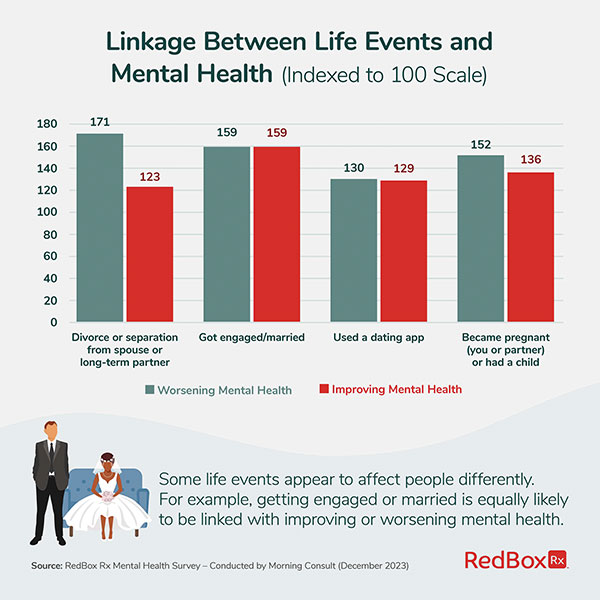
Some life events appear to affect people differently. For example, getting divorced or separated and becoming pregnant or having a child are linked with both worsening and improving mental health. Getting engaged or married and using a dating app are equally likely to be linked with both positive and negative impacts on mental health.

3. Younger Generations Endure Life Events Linked with Worsening Mental Health
Gen Zers and Millennials more frequently experience life events having the strongest links to worsening mental health. They more commonly report loneliness and a failure to achieve life goals, stressors also linked to worsening mental health. For example, 53% of Gen Zers reported feelings of loneliness and 52% shared feelings of failure to achieve life goals, compared with 39% and 34%, respectively, of all adults sampled.

The research also found recent life experiences, whether relational or personal, are linked to the state of one’s mental health. Those suffering from worsening mental health were more likely to have experienced:

  • Being a victim of verbal or emotional abuse
  • Being a victim of physical violence
  • The lack of a healthy home environment
  • The lack of a healthy work environment
  • Attending college or university
  • The breakdown in a relationship with a close family member

According to the study, if you’ve experienced verbal or emotional abuse – which is 12% more prevalent among Gen Zers – you are more than twice as likely to report worsening mental health.

4. Despite Mental Health Struggles, Most Americans Aren’t Seeking Professional Care
Even though mental health struggles are widespread among American adults, more than 6 out of 10 (63%) with consistent or worsening mental health struggles have not sought professional care, such as therapy or medications, in the past year.

Those not seeking care tend to downplay their situations or cite the cost of care as a barrier. Through its discreet, low-cost service model, RedBox Rx’s online platform makes it easy for patients to quickly schedule telehealth visits and privately meet with licensed medical providers to get help with treating a variety of mental health conditions including anxiety and depression, adult ADHD and insomnia.

“Telehealth offers an effective and convenient way for patients to easily access care for mental health conditions,” Fick said.

To view the full report, access infographics from the study and find more information about mental health therapy and medical treatments, visit RedBoxRx.com

SOURCE:
RedBox Rx

Friday, February 6, 2026

The Power of Pets

NYC Sightseeing Pass

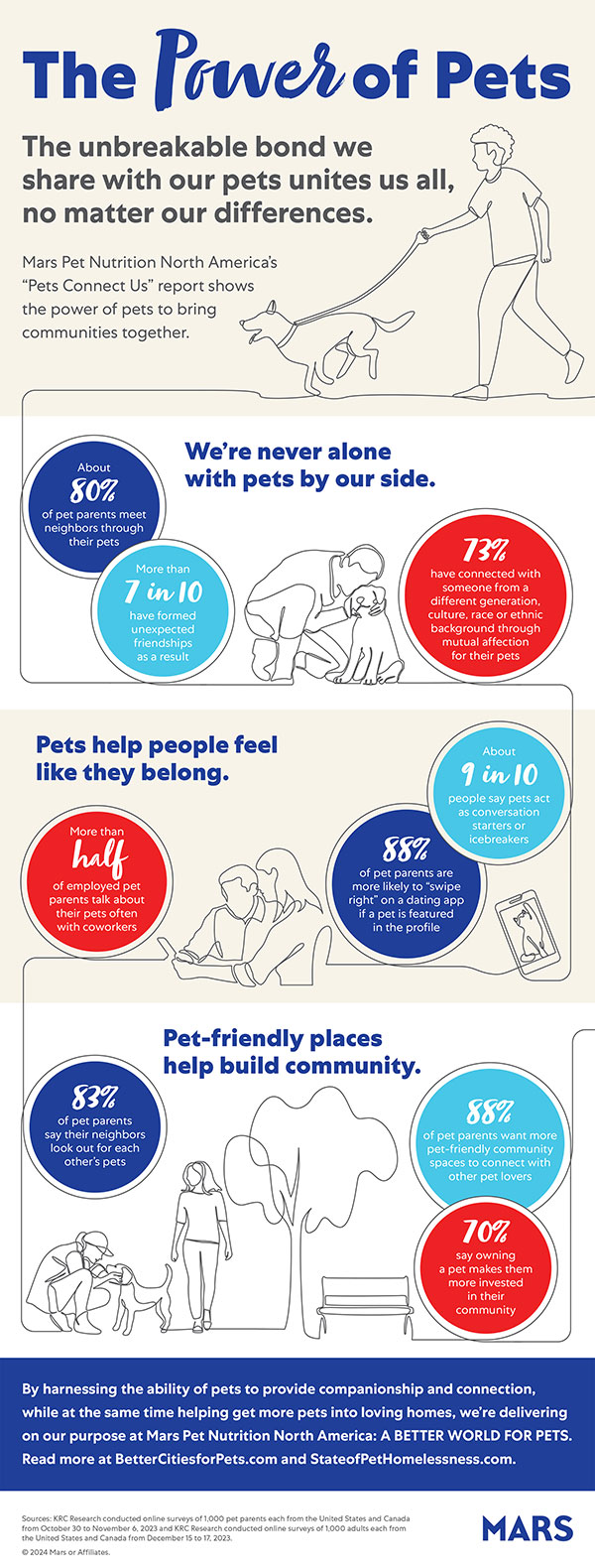
Love. Community. Belonging. Pets offer people the chance to explore friendships and connections they didn’t always think were possible.

Pets provide companionship and help bring people together. In fact, according to Mars’ “Pets Connect Us” report 73% of pet parents have made connections despite generational, cultural or ethnic differences because of their four-legged pals.

Learn more about the report, which leveraged consumer insights to shed light on the future of pet parenthood in the U.S. and Canada, at BetterCitiesForPets.com/2023report.

SOURCE:
Mars Petcare 


Saturday, January 31, 2026

The growing link between microbes, mood and mental health


New research suggests that to maintain a healthy brain, we should tend our gut microbiome. The best way to do that right now is not through pills and supplements, but better food.

It is increasingly well understood that the countless microbes in our guts help us to digest our food, to absorb and produce essential nutrients, and to prevent harmful organisms from settling in. Less intuitive — perhaps even outlandish — is the idea that those microbes may also affect our mood, our mental health and how we perform on cognitive tests. But there is mounting evidence that they do.

For nearly two decades, neuroscientist John Cryan of University College Cork in Ireland has been uncovering ways in which intestinal microbes affect the brain and behavior of humans and other animals. To his surprise, many of the effects he’s seen in rodents appear to be mirrored in our own species. Most remarkably, research by Cryan and others has shown that transplanting microbes from the guts of people with psychiatric disorders like depression to the guts of rodents can cause comparable symptoms in the animals.

These effects may occur in several ways — through the vagus nerve connecting the gut to the brain, through the influence of gut bacteria on our immune systems, or by microbes synthesizing molecules that our nerve cells use to communicate. Cryan and coauthors summarize the science in a set of articles including “Man and the Microbiome: A New Theory of Everything?,” published in the Annual Review of Clinical Psychology. Cryan told Knowable Magazine that even though it will take much more research to pin down the mechanisms and figure out how to apply the insights, there are some things we can do already.

This conversation has been edited for length and clarity.

“Man and the Microbiome: A New Theory of Everything?” — with all due respect, isn’t that a wee bit ambitious?

That title is admittedly a bit overstated. But the point we are trying to make is that it isn’t really so odd that the microbiome is involved in everything, because the microbes were there first, and so our species has evolved in their presence. We have been able to show that growing up in a germ-free environment really affects the development of the mouse brain, for example, in a variety of ways.

Our immune system is also completely shaped by microbial signals. Via that route, inflammation in our gut can affect our mood and cause symptoms of sickness behavior that are quite similar to important aspects of depression and anxiety. Many psychiatric disorders are also known to be associated with various gastrointestinal issues, though cause and effect often aren’t clear yet. So if you study the body, including the brain, you ignore microbes at your own peril.

Most people are on board with the idea that gut microbes affect our health, but it may be more difficult to accept that they also influence how we feel and think. How did you convince yourself this was true?

I’m a stress neurobiologist, so I was trained in stress-related disorders like depression and anxiety, and my interest was really in using animal models of stress to look for novel therapeutic strategies.

When I moved to University College Cork in 2005, I met a clinical researcher, Ted Dinan, and we started working together to study irritable bowel syndrome, a very common disorder that is characterized by alterations in bowel habits and abdominal pain.

That was interesting to me, as it had become very clear that this is also a stress-related disorder. So we started working on an animal model called the maternal separation model, where rat pups are separated from their moms early in life and develop a stress-like syndrome when they grow up.

Siobhain O’Mahony, a graduate student at the time, also wanted to look at the microbiome, and I remember telling her, “No! Focus, focus!” But she went ahead anyway and found a signature of this early-life stress in the microbiome of adult rats. That was kind of a eureka moment for me.

The next part of the puzzle came when we showed that mice born in a germ-free environment have an exaggerated stress response when they grow up. So we’d already shown that stress was affecting the microbiome, and now we’d shown that the microbiome is regulating how a mouse responds to stress. It turned out that a very nice study from Japan had already shown this.

The third part of the puzzle for me was to ask whether we could alter the microbiome to alleviate some of the effects of stress. In 2011, we were able to show that a specific strain of the bacterium Lactobacillus, when given to normal, healthy mice in a stressful situation, was able to dampen down the stress response, and that the vagus nerve connecting the gut to the brain was required for that.

These three things together, from 2006 to 2011, really crystallized my interest in the link between the gut microbiome, brain and behavior. Since then, we’ve been on this magical journey to try and understand these discoveries, uncover the mechanisms and find how they translate to humans.

Can you explain what a depressed or anxious mouse looks like, and how you quantify that?

One way to look at fear is to quantify how often mice venture into wide open areas, which they normally avoid. If we give a mouse Valium or another anxiety-reducing drug, it will go out and explore and be carefree, not to say a bit reckless. Depression is often studied by looking at mice in a cylinder of water. They are good swimmers, but they don’t like swimming, so after a while, they’ll stop and adopt an immobile posture. Yet if you give them antidepressant drugs, they keep going.

These types of paradigms have shown their validity in studies of pharmacological agents used in human psychiatry, and so they’re ideal to explore whether microbiome manipulations have similar effects. This can be done by transplanting the microbes from a mouse model for a psychiatric disease to a healthy mouse to see whether that creates similar issues, or vice versa, to see if it can resolve them.

Following a similar logic, we have shown that the microbiome can be important in brain aging and cognitive decline. We took the microbiome from eight-week-old mice and gave it to 22-month-old animals — these are very old mice. And we were able to show wide-scale changes across the body — in the microbiome and the immune system, but also in the hippocampus, a brain structure involved in memory.

In the old animals that received the microbiome from young ones, the hippocampus looked completely rejuvenated in its chemical composition. They also performed significantly better in mazes designed to test their memory. This finding has now been replicated in two other labs, giving it further credence.

Such experiments are difficult if not impossible to do in people. How to make that jump?

One thing we can do is to transplant microbes from the guts of people with psychiatric disorders to rodents, to see if they cause comparable behaviors. This has now been done for depression, anxiety, schizophrenia, social anxiety disorder and even Alzheimer’s disease. In one of our own studies, we transferred fecal microbiota from depressed patients to a rat model. This resulted in behavior reminiscent of that in rat models for depression, such as increased anxiety and an uninterest in rewards, in addition to inflammation.

In addition, we can see if bacterial strains we’ve identified as troublemakers in rodents also occur in people with psychiatric issues, and if strains that are beneficial in rodents can help humans as well.

What I’d really like to do is follow a large group of healthy people for a couple of years and track their mental and brain health as well as the changes in their microbiome, and regularly transplant their gut microbes into mice. This would give us a much better view on how this relationship evolves.

Do you think some of the probiotics available in stores today might be helpful, or not quite?

In my opinion, many so-called probiotics aren’t probiotics at all. Probiotics, per definition, are live microorganisms that, when taken in adequate amounts, can confer a health benefit. Most of what’s for sale in shops would never meet that criterion. To demonstrate that something confers a health benefit, you need clinical trials to show it is more effective than a placebo. That’s the first thing. Second, you have to show that the microbes are alive, and that they can survive the stomach acid.

There have been properly randomized controlled trials for some products. But for most products available over the counter today, such studies haven’t been done, because the regulatory authorities do not require them for probiotics as they would for medicines.

There’s a lot of snake oil out there. For most people, it’s probably harmless, but if you are immunosuppressed, it could be dangerous: Even beneficial bacteria can cause great harm if your immune system does not function properly.

Don’t get me wrong, I think there are many promising findings, but this field is very much in its infancy. I’m much more enthusiastic right now about whole-food approaches that adjust people’s diets to include more fermented foods — a source of beneficial bacteria — and the fibers that many beneficial members of our microbiome need to survive. And this, everyone can already do.

Have you done any experiments that show such a diet can improve mental health?

We’ve just done a small study with what we call a psychobiotic diet. Kirsten Berding, a German dietician who did a post-doc in my group, took a group of people with bad diets who were stress-sensitive — namely, our student population — and put them on a one-month diet to really ramp up fermented foods and fibers to the benefit of the microbiome. What we showed was that the better individuals followed the diet, the greater the reduction in stress.

The study wasn’t perfectly blinded, because people knew what they were eating, but they didn’t know what they were eating it for. And this was just the beginning: We’re now doing a much longer study trying to really untangle this.

We’ve also done a small randomly controlled study with a polydextrose fiber that was shown to improve the performance of healthy volunteers on a range of cognitive tests.

Obviously, more work of this kind is necessary. But in this case, I don’t think we should wait for that. Think about the experiment where we’ve transplanted microbes from young to old mice, for example: I’m not advertising poop transplants for aging adults. What we’ve found is that the more diverse your diet, the more diverse your microbiome, and the better your health when you get old. If you look at the beige, bland food served in many nursing homes and hospitals today, that is not the kind of diet that helps people to maintain a healthy microbiome and therefore a healthy brain.

“Perhaps if you’re thinking of having a midlife crisis, forget about the motorbike and start growing vegetables.”

— JOHN CRYAN

We’ve done a study in mice where we adjusted their diet to contain much more inulin, a fiber that we know supports the growth of beneficial bacterial strains, and found we could dampen down the neuroinflammation that is often associated with cognitive decline in aging. This fiber is present in our everyday diet — there is a lot of it in vegetables like leeks, artichokes and chicory. So perhaps if you’re thinking of having a midlife crisis, forget about the motorbike and start growing vegetables.

This is all in healthy patients. Do you think the diet might also help people with mental health issues?

I do, but we need to test it, of course. An earlier study of ours showed that students born by C-section, who missed out on some of the microbes that newborns acquire during vaginal birth, had an elevated immune and psychological response to both chronic and acute stress, in line with our findings in mice. It would be very interesting to test if a psychobiotic diet might benefit them.

As I said, many psychiatric disorders are also associated with inflammation and other problems in the gut. Of course, this relationship works both ways, and it’s not always clear to what extent the irregularities in the gut are the cause or the result of the mental issues — or whether it’s a bit of both. But if we can show a healthier microbiome can improve mental health, that would be great news.

This is what’s appealing about the microbiome: It’s probably more modifiable than the rest of our body. If we understand how it works, that might give people more options to improve their health, even if they didn’t have the best start, microbially speaking. That’s what we hope to achieve.


Wednesday, January 14, 2026

More than half of US teens have had at least one cavity, but fluoride programs in schools help prevent them – new research

The research looked at the results of 31 studies and a total sample of more than 60,000 students. monkeybusinessimages/iStock via Getty Images Plus
Christina Scherrer, Kennesaw State University and Shillpa Naavaal, Virginia Commonwealth University

Programs delivering fluoride varnish in schools significantly reduce cavities in children. That is a key finding of our recently published study in the American Journal of Preventive Medicine.

Fluoride varnish is a liquid that is applied to the teeth by a trained provider to reduce cavities. It does not require special dental devices and can be applied quickly in various settings.

Our research team found that school fluoride varnish programs, implemented primarily in communities with lower incomes and high cavity risk among children, achieve meaningful rates of student participation and reduced new cavities by 32% in permanent teeth and by 25% in primary – or “baby” – teeth.

We also found that school fluoride varnish programs reduced the progression of small cavities to more severe cavities by 10%. This positive impact held true among school children of various ages in preschool through high school, in rural or urban areas and in communities with and without fluoridated tap water. Fluoride varnish remained effective when delivered by various providers, including dentists, hygienists or trained lay workers.

This research was a large team collaboration on a systematic review, led by researchers from the Centers for Disease Control and Prevention and from our universities. A systematic review is when researchers carefully collect and study all the best available research on a specific topic to figure out what the overall evidence shows.

Ultimately, our conclusions were based on 31 published studies that were reported in 43 peer-reviewed articles involving 60,780 students.

Diets high in sugar promote cavities.

Why is this important?

Although preventable, dental cavities are very common, with well over half of teenagers affected.

Untreated tooth decay can diminish a child’s ability to eat, speak, learn and play, and can negatively affect school attendance and grades.

Reducing tooth decay in youths is a national health objective.

In addition, we believe that since there is a growing movement in the U.S. to remove water fluoridation, other ways of protecting teeth with fluoride, such as toothpaste and varnish, will become more important. About three-quarters of the U.S. population using public water systems has been receiving fluoridated water at levels designed to strengthen enamel and prevent cavities. They will be at higher risk for cavities if fluoride is removed from their drinking water.

Fluoride varnish is recommended by the American Dental Association, the American Academy of Pediatrics, the U.S. Preventive Services Task Force and others. However, many children don’t receive recommended preventive dental services, including fluoride varnish, at dental visits, with some estimates as low as 18% for children from families in low-income households.

This makes schools an important setting for delivery of fluoride varnish to increase access. Students typically receive a dental exam, oral health education and supplies, and referrals for dental care. Depending on state regulations, the varnish can be applied by dental and medical professionals or trained lay workers.

Our work led to the recommendation of school fluoride varnish by the Community Preventive Services Task Force, an independent panel of nationally recognized public health experts that provides evidence-based recommendations on programs and services to protect and improve health in the United States.

What still isn’t known

Limited funds are a barrier. We believe that further understanding the ways to reduce the cost of these programs would help to expand them and reach more students.

One key opportunity is relaxing the restrictions on application by health professionals such as medical assistants and registered nurses, which is allowed in some states but not others.

Programs also sometimes struggle to get schools and families fully engaged. More research could help us determine the best ways to increase the percentage of families that return their consent forms and make school fluoride programs easier to run.

Another barrier is that many states only provide insurance reimbursement for these programs through age 6. Thus, increasing the eligibility age served by medical providers can serve more children, increase the number of these programs and protect more children’s teeth from decay – supporting oral and overall health.

The Research Brief is a short take on interesting academic work.The Conversation

Christina Scherrer, Professor of Industrial and Systems Engineering, Kennesaw State University and Shillpa Naavaal, Associate Professor of Pediatric Dentistry, Virginia Commonwealth University

This article is republished from The Conversation under a Creative Commons license. 

Thursday, January 8, 2026

I’m an astrophysicist mapping the universe with data from the Chandra X-ray Observatory − clear, sharp photos help me study energetic black holes

BlackBull MetaTrader 4
NASA’s Chandra X-ray Observatory detects X-ray emissions from astronomical events. NASA/CXC & J. Vaughan
Giuseppina Fabbiano, Smithsonian Institution

When a star is born or dies, or when any other very energetic phenomenon occurs in the universe, it emits X-rays, which are high-energy light particles that aren’t visible to the naked eye. These X-rays are the same kind that doctors use to take pictures of broken bones inside the body. But instead of looking at the shadows produced by the bones stopping X-rays inside of a person, astronomers detect X-rays flying through space to get images of events such as black holes and supernovae.

Images and spectra – charts showing the distribution of light across different wavelengths from an object – are the two main ways astronomers investigate the universe. Images tell them what things look like and where certain phenomena are happening, while spectra tell them how much energy the photons, or light particles, they are collecting have. Spectra can clue them in to how the event they came from formed. When studying complex objects, they need both imaging and spectra.

Scientists and engineers designed the Chandra X-ray Observatory to detect these X-rays. Since 1999, Chandra’s data has given astronomers incredibly detailed images of some of the universe’s most dramatic events.

The Chandra craft, which looks like a long metal tube with six solar panels coming off it in two wings.
The Chandra spacecraft and its components. NASA/CXC/SAO & J.Vaughan

Stars forming and dying create supernova explosions that send chemical elements out into space. Chandra watches as gas and stars fall into the deep gravitational pulls of black holes, and it bears witness as gas that’s a thousand times hotter than the Sun escapes galaxies in explosive winds. It can see when the gravity of huge masses of dark matter trap that hot gas in gigantic pockets.

An explosion of light and color, and a cloud with points of bright light.
On the left is the Cassiopeia A supernova. The image is about 19 light years across, and different colors in the image identify different chemical elements (red indicates silicon, yellow indicates sulfur, cyan indicates calcium, purple indicates iron and blue indicates high energy). The point at the center could be the neutron star remnant of the exploded star. On the right are the colliding ‘Antennae’ galaxies, which form a gigantic structure about 30,000 light years across. Chandra X-ray Center

NASA designed Chandra to orbit around the Earth because it would not be able to see any of this activity from Earth’s surface. Earth’s atmosphere absorbs X-rays coming from space, which is great for life on Earth because these X-rays can harm biological organisms. But it also means that even if NASA placed Chandra on the highest mountaintop, it still wouldn’t be able to detect any X-rays. NASA needed to send Chandra into space.

I am an astrophysicist at the Smithsonian Astrophysical Observatory, part of the Center for Astrophysics | Harvard and Smithsonian. I’ve been working on Chandra since before it launched 25 years ago, and it’s been a pleasure to see what the observatory can teach astronomers about the universe.

Supermassive black holes and their host galaxies

Astronomers have found supermassive black holes, which have masses ten to 100 million times that of our Sun, in the centers of all galaxies. These supermassive black holes are mostly sitting there peacefully, and astronomers can detect them by looking at the gravitational pull they exert on nearby stars.

But sometimes, stars or clouds fall into these black holes, which activates them and makes the region close to the black hole emit lots of X-rays. Once activated, they are called active galactic nuclei, AGN, or quasars.

My colleagues and I wanted to better understand what happens to the host galaxy once its black hole turns into an AGN. We picked one galaxy, ESO 428-G014, to look at with Chandra.

An AGN can outshine its host galaxy, which means that more light comes from the AGN than all the stars and other objects in the host galaxy. The AGN also deposits a lot of energy within the confines of its host galaxy. This effect, which astronomers call feedback, is an important ingredient for researchers who are building simulations that model how the universe evolves over time. But we still don’t quite know how much of a role the energy from an AGN plays in the formation of stars in its host galaxy.

Luckily, images from Chandra can provide important insight. I use computational techniques to build and process images from the observatory that can tell me about these AGNs.

Three images of a black hole, from low to high resolution, with a bright spot above and right from the center surrounded by clouds.
Getting the ultimate Chandra resolution. From left to right, you see the raw image, the same image at a higher resolution and the image after applying a smoothing algorithm. G. Fabbiano

The active supermassive black hole in ESO 428-G014 produces X-rays that illuminate a large area, extending as far as 15,000 light years away from the black hole. The basic image that I generated of ESO 428-G014 with Chandra data tells me that the region near the center is the brightest, and that there is a large, elongated region of X-ray emission.

The same data, at a slightly higher resolution, shows two distinct regions with high X-ray emissions. There’s a “head,” which encompasses the center, and a slightly curved “tail,” extending down from this central region.

I can also process the data with an adaptive smoothing algorithm that brings the image into an even higher resolution and creates a clearer picture of what the galaxy looks like. This shows clouds of gas around the bright center.

My team has been able to see some of the ways the AGN interacts with the galaxy. The images show nuclear winds sweeping the galaxy, dense clouds and interstellar gas reflecting X-ray light, and jets shooting out radio waves that heat up clouds in the galaxy.

These images are teaching us how this feedback process operates in detail and how to measure how much energy an AGN deposits. These results will help researchers produce more realistic simulations of how the universe evolves.

The next 25 years of X-ray astronomy

The year 2024 marks the 25th year since Chandra started making observations of the sky. My colleagues and I continue to depend on Chandra to answer questions about the origin of the universe that no other telescope can.

By providing astronomers with X-ray data, Chandra’s data supplements information from the Hubble Space Telescope and the James Webb Space Telescope to give astronomers unique answers to open questions in astrophysics, such as where the supermassive black holes found at the centers of all galaxies came from.

For this particular question, astronomers used Chandra to observe a faraway galaxy first observed by the James Webb Space Telescope. This galaxy emitted the light captured by Webb 13.4 billion years ago, when the universe was young. Chandra’s X-ray data revealed a bright supermassive black hole in this galaxy and suggested that supermassive black holes may form by the collapsing clouds in the early universe.

Sharp imaging has been crucial for these discoveries. But Chandra is expected to last only another 10 years. To keep the search for answers going, astronomers will need to start designing a “super Chandra” X-ray observatory that could succeed Chandra in future decades, though NASA has not yet announced any firm plans to do so.The Conversation

Giuseppina Fabbiano, Senior Astrophysicist, Smithsonian Institution

This article is republished from The Conversation under a Creative Commons license.

BlackBull MetaTrader 4

Friday, January 2, 2026

New forms of steel for stronger, lighter cars

Automakers are tweaking production processes to create a slew of new steels with just the right properties, allowing them to build cars that are both safer and more fuel-efficient

Like many useful innovations, it seems, the creation of high-quality steel by Indian metallurgists more than two thousand years ago may have been a happy confluence of clever workmanship and dumb luck.

Firing chunks of iron with charcoal in a special clay container produced something completely new, which the Indians called wootz. Roman armies were soon wielding wootz steel swords to terrify and subdue the wild, hairy tribes of ancient Europe.

Twenty-four centuries later, automakers are relying on electric arc furnaces, hot stamping machines and quenching and partitioning processes that the ancients could never have imagined. These approaches are yielding new ways to tune steel to protect soft human bodies when vehicles crash into each other, as they inevitably do — while curbing car weights to reduce their deleterious impact on the planet.

“It is a revolution,” says Alan Taub, a University of Michigan engineering professor with many years in the industry. The new steels, dozens of varieties and counting, combined with lightweight polymers and carbon fiber-spun interiors and underbodies, hark back to the heady days at the start of the last century when, he says, “Detroit was Silicon Valley.”

Such materials can reduce the weight of a vehicle by hundreds of pounds — and every pound of excess weight that is shed saves roughly $3 in fuel costs over the lifetime of the car, so the economics are hard to deny. The new maxim, Taub says, is “the right material in the right place.”

The transition to battery-powered vehicles underscores the importance of these new materials. Electric vehicles may not belch pollution, but they are heavy — the Volvo XC40 Recharge, for example, is 33 percent heavier than the gas version (and would be heavier still if the steel surrounding passengers were as bulky as it used to be). Heavy can be dangerous.

“Safety, especially when it comes to new transportation policies and new technologies, cannot be overlooked,” Jennifer Homendy, chief of the National Transportation Safety Board, told the Transportation Research Board in 2023. Plus, reducing the weight of an electric vehicle by 10 percent delivers roughly 14 percent improvement in range.

As recently as the 1960s, the steel cage around passengers was made of what automakers call soft steel. The armor from Detroit’s Jurassic period was not much different from what Henry Ford had introduced decades earlier. It was heavy and there was a lot of it.

With the 1965 publication of Ralph Nader’s Unsafe at Any Speed: The Designed-In Dangers of the American Automobile, big automakers realized they could no longer pursue speed and performance exclusively. The oil embargos of the 1970s only hastened the pace of change: Auto steel now had to be both stronger and lighter, requiring less fuel to push around.

In response, over the past 60 years, like chefs operating a sous vide machine to produce the perfect bite, steelmakers — their cookers arc furnaces reaching thousands of degrees Fahrenheit, with robots doing the cooking — have created a vast variety of steels to match every need. There are high-strength, hardened steels for the chassis; corrosion-resistant stainless steels for side panels and roofs; and highly stretchable metals in bumpers to absorb impacts without crumpling.

Tricks with the steel

Most steel is more than 98 percent iron. It is the other couple of percent — sometimes only hundredths of a single percent, in the case of metals added to confer desired properties — that make the difference. Just as important are treatment methods: the heating, cooling and processing, such as rolling the sheets prior to forming parts. Modifying each, sometimes by only seconds, changes the metal’s structure to yield different properties. “It’s all about playing tricks with the steel,” says John Speer, director of the Advanced Steel Processing and Products Research Center at the Colorado School of Mines.

At the most basic level, the properties of steel are about microstructure: the arrangement of different types, or phases, of steel in the metal. Some phases are harder, while others confer ductility, a measure of how much the metal can be bent and twisted out of shape without shearing and creating jagged edges that penetrate and tear squishy human bodies. At the atomic level, there are principally four phases of auto steel, including the hardest yet most brittle, called martensite, and the more ductile austenite. Carmakers can vary these by manipulating the times and temperatures of the heating process to produce the properties they want.

Academic researchers and steelmakers, working closely with automakers, have developed three generations of what is now called advanced high-strength steel. The first, adopted in the 1990s and still widely employed, had a good combination of strength and ductility. A second generation used more exotic alloys to achieve even greater ductility, but those steels proved expensive and challenging to manufacture.

The third generation, which Speer says is beginning to make its way onto the factory floor, uses heating and cooling techniques to produce steels that are stronger and more formable than the first generation; nearly ten times as strong as common steels of the past; and much cheaper (though less ductile) than second-generation steels.

Steelmakers have learned that cooling time is a critical factor in creating the final arrangements of atoms and therefore the properties of the steel. The most rapid cooling, known as quenching, freezes and stabilizes the internal structure before it undergoes further change during the hours or days it could otherwise take to reach room temperature.

One of the strongest types of modern auto steel — used in the most critical structural components, such as side panels and pillars — is made by superheating the metal with boron and manganese to a temperature above 850 degrees Celsius. After becoming malleable, the steel is transferred within 10 seconds to a die, or form, where the part is shaped and rapidly cooled.

In one version of what is known as transformation-induced plasticity, the steel is heated to a high temperature, cooled to a lower temperature and held there for a time and then rapidly quenched. This produces islands of austenite surrounded by a matrix of softer ferrite, with regions of harder bainite and martensite. This steel can absorb a large amount of energy without fracturing, making it useful in bumpers and pillars.

Recipes can be further tweaked by the use of various alloys. Henry Ford was employing alloys of steel and vanadium more than a century ago to improve the performance of steel in his Model T, and alloy recipes continue to improve today. One modern example of the use of lighter metals in combination with steel is the Ford Motor Company’s aluminum-intensive F-150 truck, the 2015 version weighing nearly 700 pounds less than the previous model.

A process used in conjunction with new materials is tube hydroforming, in which a metal is bent into complex shapes by the high-pressure injection of water or other fluids into a tube, expanding it into the shape of a surrounding die. This allows parts to be made without welding two halves together, saving time and money. A Corvette aluminum frame rail, the largest hydroformed part in the world, saved 20 percent in mass from the steel rail it replaced, according to Taub, who coauthored a 2019 article on automotive lightweighting in the Annual Review of Materials Research.

New alloys

More recent introductions are alloys such as those using titanium and particularly niobium, which increase strength by stabilizing a metal’s microstructure. In a 2022 paper, Speer called the introduction of niobium “one of the most important physical metallurgy developments of the 20th century.”

One tool now shortening the distance between trial and error is the computer. “The idea is to use the computer to develop materials faster than through experimentation,” Speer says. New ideas can now be tested down to the atomic level without workmen bending over a bench or firing up a furnace.

The ever-continuing search for better materials and processes led engineer Raymond Boeman and colleagues to found the Institute for Advanced Composites Manufacturing Innovation (IACMI) in 2015, with a $70 million federal grant. Also known as the Composites Institute, it is a place where industry can develop, test and scale up new processes and products.

“The field is evolving in a lot of ways,” says Boeman, who now directs the institute’s research on upscaling these processes. IACMI has been working on finding more climate-friendly replacements for conventional plastics such as the widely used polypropylene. In 1960, less than 100 pounds of plastic were incorporated into the typical vehicle. By 2017, the figure had risen to nearly 350 pounds, because plastic is cheap to make and has a high strength-to-weight ratio, making it ideal for automakers trying to save on weight.

By 2019, according to Taub, 10-15 percent of a typical vehicle was made of polymers and composites, everything from seat components to trunks, door parts and dashboards. And when those cars reach the end of their lives, their plastic and other difficult-to-recycle materials known as automotive shredder residue, 5 million tons of it, ends up in landfills — or, worse, in the wider environment.

Researchers are working hard to develop stronger, lighter and more environmentally friendly plastics. At the same time, new carbon fiber products are enabling these lightweight materials to be used even in load-bearing places such as structural underbody parts, further reducing the amount of heavy metal used in auto bodies.

Clearly, work remains to make autos less of a threat, both to human bodies and the planet those bodies travel over every day, to work and play. But Taub says he is optimistic about Detroit’s future and the industry’s ability to solve the problems that came with the end of the horse-and-buggy days. “I tell students they will have job security for a long time.”

Knowable Magazine